
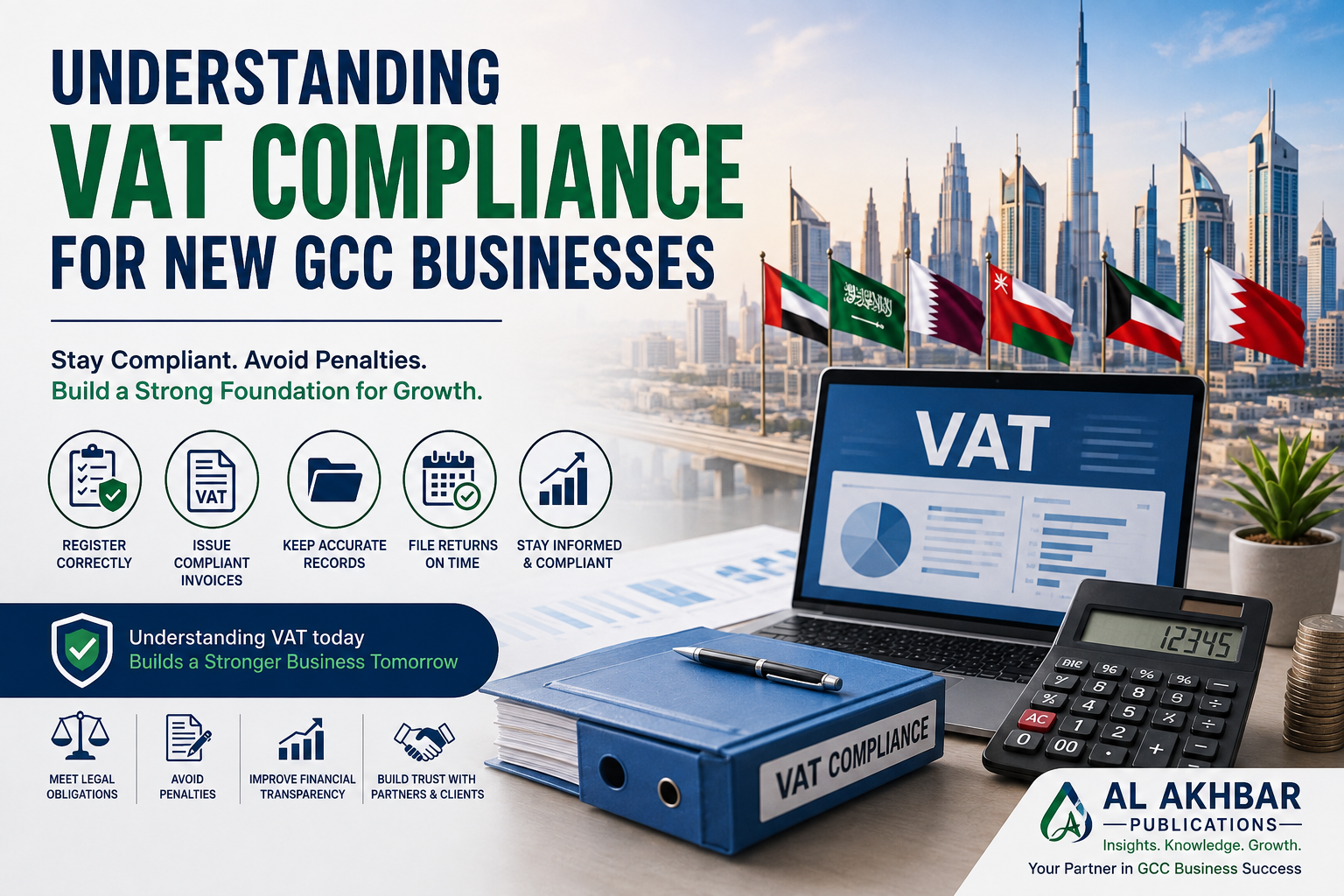
Starting a business in the Gulf Cooperation Council (GCC) offers exciting opportunities, but it also comes with important financial responsibilities. One of the most significant is complying with Value Added Tax (VAT) regulations. While VAT rules differ slightly between GCC countries, businesses are generally expected to understand their obligations, maintain accurate records, and file tax returns on time.
Whether you're launching a startup or expanding into the region, understanding VAT compliance GCC requirements and GCC business tax rules can help you avoid penalties and operate with confidence.
What Is VAT?
Value Added Tax (VAT) is a consumption tax applied to many goods and services.
Businesses typically:
- Charge VAT on taxable sales
- Collect VAT from customers
- Maintain financial records
- Submit VAT returns
- Pay any tax due to the relevant tax authority
VAT systems are designed to tax value added at each stage of the supply chain.
Why VAT Compliance Matters
Proper compliance helps businesses:
- Meet legal obligations
- Avoid penalties
- Maintain accurate financial records
- Improve financial transparency
- Build credibility with customers and partners
Strong tax practices support long-term business stability.
Which Businesses Need to Register?
VAT registration requirements depend on local regulations and turnover thresholds.
Businesses should determine:
- Whether registration is mandatory
- If voluntary registration is available
- Applicable registration deadlines
- Country-specific requirements
Professional advice may be helpful when assessing eligibility.
Understand Your Country's VAT Rules
Although GCC countries share similarities, each jurisdiction has its own regulations.
Areas that may differ include:
- Registration thresholds
- Filing frequency
- Tax rates
- Exempt supplies
- Zero-rated transactions
- Reporting requirements
Always follow the rules applicable in the country where your business operates.
Keep Accurate Financial Records
Good record-keeping is essential for VAT compliance.
Maintain records of:
- Sales invoices
- Purchase invoices
- Credit notes
- Import and export documents
- Expense receipts
- Tax payments
Well-organized records simplify reporting and audits.
Issue VAT-Compliant Invoices
Invoices should generally contain the required tax information.
This often includes:
- Business details
- Customer information
- Invoice number
- Invoice date
- Description of goods or services
- VAT amount
- Total payable
Invoice requirements vary by jurisdiction.
Understand Input and Output VAT
Businesses commonly deal with two types of VAT.
Output VAT
The VAT charged on taxable sales.
Input VAT
The VAT paid on eligible business purchases.
Understanding both helps businesses prepare accurate VAT returns.
File Returns on Time
Timely filing is an important part of VAT compliance GCC.
Late submissions may result in:
- Financial penalties
- Administrative fines
- Additional compliance requirements
Creating a filing calendar helps businesses meet deadlines.
Monitor Cash Flow
VAT obligations affect business finances.
Businesses should:
- Track VAT collected
- Set aside funds for tax payments
- Monitor payment deadlines
- Review financial reports regularly
Good cash flow management supports compliance.
Use Accounting Software
Modern accounting systems can simplify VAT management.
Useful features include:
- VAT calculations
- Digital invoicing
- Financial reporting
- Expense tracking
- Record management
Technology helps reduce manual errors.
Train Your Team
Employees involved in finance should understand VAT responsibilities.
Training may cover:
- Invoice preparation
- Record keeping
- Tax reporting
- Compliance procedures
- Documentation standards
Knowledgeable staff contribute to smoother operations.
Review Cross-Border Transactions
Businesses operating internationally should understand how VAT applies to:
- Imports
- Exports
- International services
- Cross-border sales
Treatment varies depending on local tax regulations.
Prepare for Tax Audits
Authorities may review business records to verify compliance.
Maintain:
- Organized documentation
- Supporting invoices
- Payment records
- Accounting reports
- VAT returns
Preparation makes audits easier to manage.
Common VAT Mistakes
Avoid these common errors:
- Missing registration deadlines
- Incorrect VAT calculations
- Poor record keeping
- Late return submissions
- Incomplete invoices
- Ignoring regulatory updates
Regular reviews help identify potential issues early.
Benefits of Staying Compliant
Strong VAT compliance offers several advantages.
These include:
- Reduced risk of penalties
- Improved financial management
- Better business credibility
- Easier audits
- Greater operational confidence
Compliance supports sustainable business growth.
Keep Up With Regulatory Changes
Tax regulations can evolve over time.
Businesses should:
- Monitor official announcements
- Review updated guidance
- Consult qualified tax professionals when needed
- Update internal procedures
Staying informed helps maintain ongoing compliance.
Tips for New Businesses
If you're launching a new business, remember to:
- Understand local VAT obligations.
- Register when required.
- Maintain organized financial records.
- File returns on time.
- Seek professional advice when necessary.
These practices create a strong foundation for long-term success.
Conclusion
Understanding VAT requirements is an essential part of operating a successful business in the GCC. By maintaining accurate records, issuing compliant invoices, filing returns on time, and staying informed about country-specific regulations, new businesses can reduce compliance risks and focus on growth. While VAT rules vary across the region, establishing strong financial processes from the beginning makes ongoing compliance much easier.
Al Akhbar Publications supports entrepreneurs and business owners by sharing informative articles on GCC business regulations, market developments, and commercial best practices. Whether you're learning about VAT compliance GCC, navigating GCC business tax rules, or exploring opportunities in the region, Al Akhbar Publications provides practical insights to help businesses make informed decisions.