
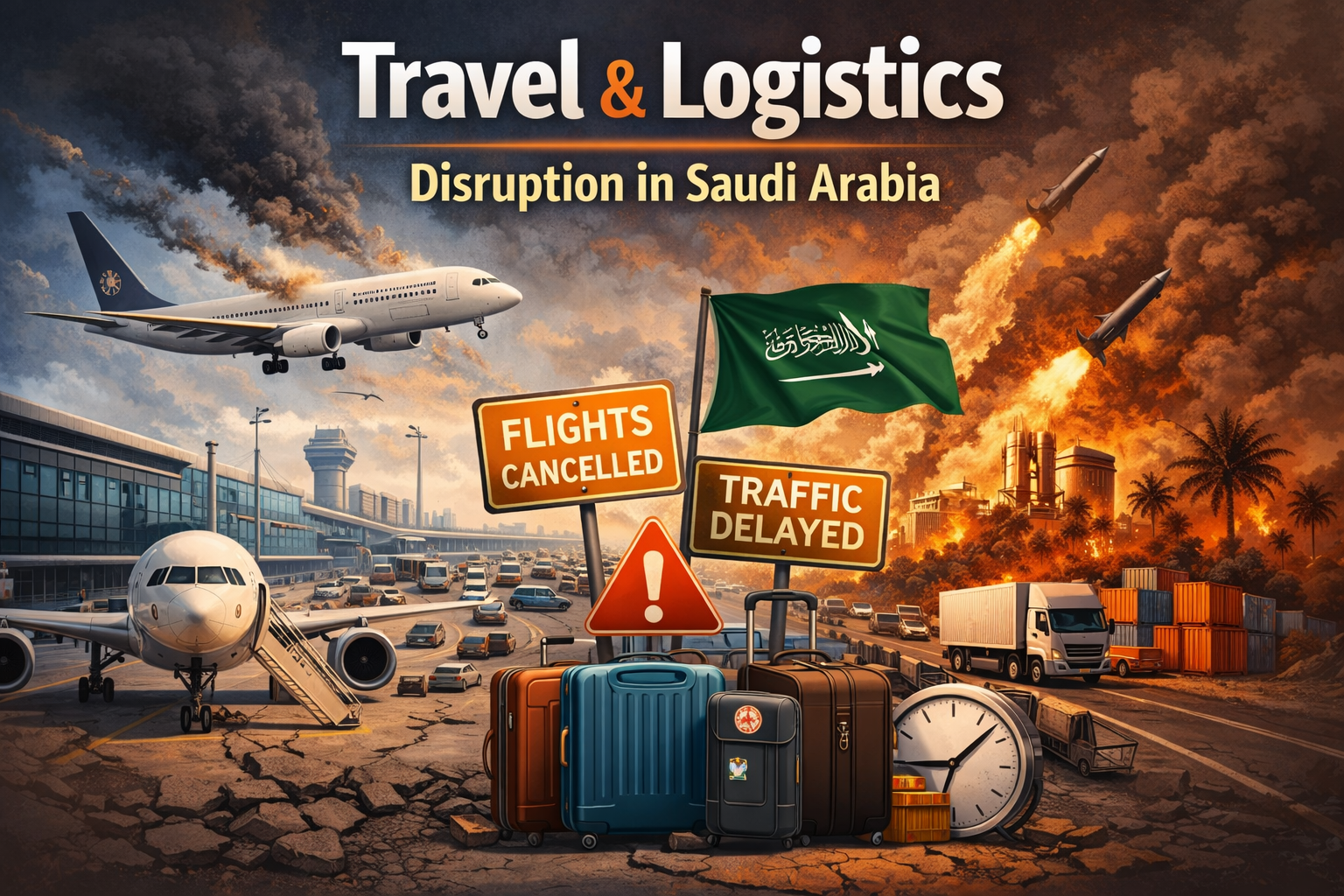
Saudi Arabia, positioned as the logistical hub of the Middle East, is facing unprecedented travel and logistics challenges in 2026. From air travel delays to supply chain bottlenecks, the Kingdom’s transport and logistics sectors are grappling with multiple disruptions. These disruptions are not only impacting local businesses but also affecting regional trade flows, investment confidence, and economic growth projections.
This comprehensive analysis examines the causes, scope, and implications of travel and logistics disruption in Saudi Arabia, explores sector-specific impacts, and highlights strategies for resilience and recovery.
1. The Saudi Travel & Logistics Landscape
Saudi Arabia’s logistics infrastructure has undergone rapid modernization over the past decade. The Kingdom’s strategic location along key trade corridors—linking Asia, Europe, and Africa—has positioned it as a regional hub. Major infrastructure projects, including the King Abdulaziz Port in Dammam, King Khalid International Airport in Riyadh, and the Riyadh Metro, have bolstered domestic and international connectivity.
Moreover, the Saudi government’s Vision 2030 initiative has significantly invested in transport, logistics, and tourism, aiming to make the Kingdom a global logistics and travel powerhouse. Private sector participation, particularly through companies like Saudi Arabian Airlines, Saudi Ports Authority, and regional logistics firms, has expanded operational capacity, digital integration, and international trade linkages.
However, despite this modernization, 2026 has revealed vulnerabilities in the system due to regional tensions, global supply chain disruptions, and changing travel behaviors.
2. Factors Driving Travel Disruption
Several factors have contributed to significant travel disruption in Saudi Arabia:
1. Geopolitical Tensions
While Saudi Arabia remains stable internally, regional tensions in the Middle East continue to influence air and sea routes. Security alerts, temporary airspace closures, and precautionary rerouting have increased flight times and operational costs. Airlines must navigate both domestic safety protocols and international airspace regulations, causing cascading delays for both passenger and cargo transport.
2. Pandemic Aftershocks & Health Regulations
Although COVID-19 restrictions have largely eased, residual health protocols and changing vaccination mandates continue to affect international travelers. Entry regulations fluctuate by nationality, airline, and port of entry, creating uncertainty for inbound and outbound travel. Quarantine requirements, rapid testing mandates, and capacity limits at airports contribute to congestion and operational delays.
3. Infrastructure Strain
Saudi Arabia’s major airports and seaports, though modernized, are currently operating near capacity. The surge in pilgrim travel for Hajj and Umrah, combined with increasing domestic tourism, places enormous pressure on transport hubs. This demand-supply mismatch leads to flight delays, port congestion, and limited cargo handling capacity during peak periods.
4. Cybersecurity & IT Challenges
The Kingdom’s logistics sector is heavily digitized, relying on real-time tracking, automated customs processing, and integrated airline management systems. Any cyber disruption, such as ransomware attacks or system outages, can halt operations. Recent incidents in 2026 have shown that even short IT interruptions can ripple across the supply chain, delaying shipments and stranding travelers.
3. Sea Freight Disruption
Sea freight remains critical for Saudi Arabia, with King Abdulaziz Port, Jeddah Islamic Port, and King Fahd Industrial Port handling the majority of import-export cargo. Disruptions in sea freight affect everything from raw material imports to consumer goods.
1. Port Congestion
High demand and vessel traffic have caused congestion at major ports. Container ships face longer waiting times, often exceeding 5–7 days, which delays the distribution of goods nationwide. Limited yard space, labor shortages, and customs bottlenecks exacerbate these delays.
2. Regional Shipping Challenges
The broader Red Sea region faces maritime security concerns, including piracy risks and temporary naval exercises. Shipping companies have responded by rerouting cargo via longer international routes, increasing fuel costs and transit times. Insurance premiums for maritime cargo have also risen, further raising operational expenses for importers and exporters.
3. Supply Chain Implications
Delays in sea freight affect multiple sectors:
-
Manufacturing: Delayed delivery of components disrupts production schedules.
-
Retail: Consumer goods are delayed, affecting inventory and sales cycles.
-
Healthcare: Medical supplies face critical delivery delays, impacting hospitals and clinics.
4. Air Travel Disruption
Air travel, particularly via Saudi Arabian Airlines and regional carriers, has been heavily affected by a combination of operational and geopolitical factors.
1. Flight Delays and Route Adjustments
Airlines are rerouting flights to avoid congested or restricted airspace, increasing flight durations by 10–20% on average. These changes impact schedules, ticket pricing, and passenger satisfaction. Airlines are also adjusting frequencies on domestic routes, especially between Riyadh, Jeddah, and Dammam, to cope with airspace and operational limitations.
2. Impact on Pilgrimage Travel
Hajj and Umrah travel account for a substantial proportion of annual passenger traffic. Disruptions in airline schedules directly affect pilgrims, leading to logistical challenges for accommodation, transport, and local tourism services. Travel agencies and the Ministry of Hajj have implemented staggered travel windows and digital ticketing to alleviate congestion, but delays remain significant.
3. Cargo Airlift Limitations
Air cargo is critical for high-value goods, pharmaceuticals, and perishables. Operational delays and rerouted flights have led to delivery slowdowns, threatening supply chains that rely on just-in-time inventory models.
5. Road & Rail Logistics Disruption
1. Road Transportation
Saudi Arabia’s road network is extensive, connecting urban centers, industrial zones, and ports. However, heavy traffic, construction projects, and regulatory checkpoints disrupt trucking schedules. Fuel supply fluctuations and driver shortages have further compounded delays.
2. Rail Freight
The Saudi Railway Company (SAR) and the North-South Railway are vital for transporting minerals, petrochemicals, and containerized cargo. Operational disruptions, particularly from technical failures or track maintenance, have slowed freight movement. Rail logistics remains a critical but underutilized buffer against road congestion.
6. Business & Economic Impact
Travel and logistics disruption has cascading effects on Saudi Arabia’s economy:
1. Increased Operational Costs
Businesses face higher costs due to delayed shipments, longer transit routes, and additional handling fees. Small and medium enterprises, in particular, are vulnerable to these financial pressures.
2. Supply Chain Vulnerability
Disruption in logistics affects inventory management, production scheduling, and import-export balance. Industries such as retail, construction, and pharmaceuticals are particularly exposed to delays.
3. Investment & Tourism
Investor confidence is affected when travel and logistics operations face uncertainty. Tourism, a key pillar of Vision 2030, suffers when flight schedules, accommodations, and local transport cannot meet demand reliably.
4. Digital Adaptation
Some companies have accelerated the adoption of digital logistics platforms, real-time tracking systems, and predictive supply chain analytics. This digital transformation is mitigating some disruption effects but requires significant investment.
7. Government & Industry Response
Saudi authorities and industry stakeholders are actively addressing the disruption:
1. Infrastructure Expansion
Investments continue in expanding airport terminals, port capacity, and road networks. Automation and smart logistics technologies are being introduced to streamline operations and reduce bottlenecks.
2. Regulatory Coordination
The Ministry of Transport, Ministry of Hajj, and the Saudi Ports Authority coordinate to optimize schedules, ensure safety, and manage congestion. Temporary exemptions and streamlined customs processes have been implemented to reduce delays.
3. Public-Private Partnerships
Collaboration with private logistics operators is enhancing efficiency. Companies are using predictive analytics and AI-based route optimization to ensure continuity in cargo and passenger transport.
8. Recommendations for Businesses
-
Diversify Supply Chains: Use multiple ports, air routes, and regional hubs to reduce dependency on a single transport channel.
-
Invest in Digital Logistics: Implement tracking, predictive modeling, and AI-based scheduling for more reliable operations.
-
Plan for Peak Travel Periods: Businesses should align inventory and shipping schedules with high-demand periods like Hajj, Ramadan, and tourism seasons.
-
Enhance Collaboration: Work closely with carriers, freight forwarders, and government authorities to anticipate changes in operational protocols.
-
Consider Local Sourcing: Reduce reliance on international imports where feasible to mitigate delays and costs.
9. Future Outlook
Saudi Arabia is poised for long-term growth in travel and logistics. By 2030, Vision 2030 projects the Kingdom to become a global logistics hub. However, the current disruptions highlight the need for resilience strategies:
-
Digital Transformation: Full integration of AI, IoT, and blockchain in logistics management.
-
Infrastructure Redundancy: Additional ports, airports, and rail lines to handle traffic surges.
-
Crisis Preparedness: Contingency planning for geopolitical, health, and technical disruptions.
The combination of infrastructure investment, digital innovation, and regulatory foresight will likely mitigate the impact of travel and logistics disruption, ensuring Saudi Arabia remains a key global logistics hub.
Conclusion
Travel and logistics disruption in Saudi Arabia in 2026 underscores both the vulnerabilities and strengths of the Kingdom’s transportation network. While regional tensions, health protocols, and infrastructure constraints have caused significant challenges, the government’s proactive strategies, private sector innovation, and ongoing infrastructure development offer pathways to resilience.
For businesses and travelers alike, understanding these disruptions and planning accordingly is crucial. Digital adoption, diversified logistics strategies, and collaboration with authorities will define the ability to navigate these turbulent times while supporting Saudi Arabia’s continued economic growth.