
Introduction
Trade and logistics are fundamental drivers of Bahrain’s economy. Due to its strategic location in the Gulf region, Bahrain serves as a gateway for imports, exports, and regional distribution networks.
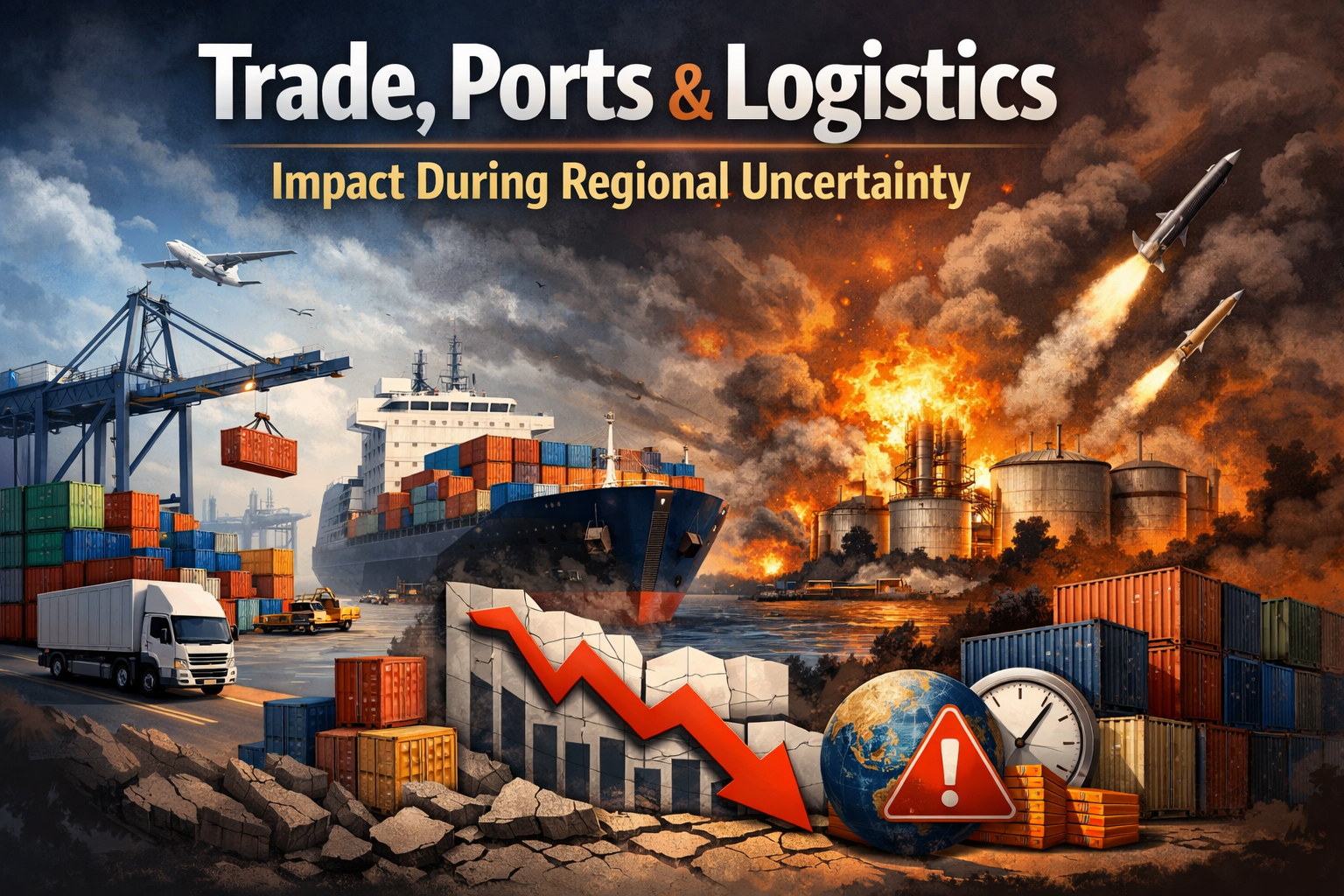
Even though Bahrain is smaller in size compared to some neighboring economies, it plays an important role in regional trade connectivity. During periods of regional uncertainty, trade flows and logistics operations may require adjustments. However, Bahrain’s infrastructure, port efficiency, and regulatory systems help ensure continuity.
This blog provides a detailed analysis of how trade and logistics sectors in Bahrain respond to regional developments.
Bahrain’s Strategic Trade Position
Bahrain benefits from:
-
Proximity to major GCC markets
-
Established maritime infrastructure
-
Integrated land connectivity via the causeway
-
Participation in regional trade frameworks
These advantages allow Bahrain to maintain strong import and export activity.
Because Bahrain relies significantly on international trade, smooth logistics operations are essential for economic stability.
Role of Ports in Bahrain’s Economy
Bahrain’s ports are key infrastructure assets supporting:
-
Container handling
-
Industrial imports
-
Export shipments
-
Commercial goods distribution
Port operations are designed for efficiency, with modern facilities and streamlined customs procedures.
During regional uncertainty, port activities continue operating normally, ensuring uninterrupted trade movement.
Impact of Regional Uncertainty on Shipping Routes
When geopolitical developments occur in the region, global shipping companies may:
-
Review transit routes
-
Adjust voyage planning
-
Coordinate with insurers
-
Evaluate fuel and cost implications
However, Bahrain’s shipping operations remain stable due to strong coordination between port authorities, shipping companies, and logistics providers.
Most adjustments are precautionary rather than disruptive.
Import Dependency and Supply Stability
Bahrain imports a significant portion of:
-
Consumer goods
-
Food products
-
Industrial materials
-
Technology equipment
During uncertain periods, businesses may strengthen inventory management strategies to maintain supply continuity.
Common responses include:
-
Increasing safety stock levels
-
Diversifying suppliers
-
Planning alternative transit options
These steps help ensure market stability.
Export Performance and Industrial Output
Bahrain’s export sector includes:
-
Aluminum products
-
Petroleum-related goods
-
Manufactured items
-
Financial services exports
Export operations continue under established international trade agreements.
While global logistics costs may fluctuate, production activities remain consistent.
Logistics Cost Considerations
Regional developments may influence:
-
Shipping insurance premiums
-
Freight cost structures
-
Fuel planning
-
Delivery scheduling
Businesses in Bahrain respond by optimizing logistics processes and strengthening partnerships with service providers.
Cost management strategies help limit financial impact.
Free Zones and Trade Facilitation
Bahrain offers business-friendly trade environments that support:
-
Efficient customs clearance
-
Simplified documentation
-
Warehouse integration
-
Re-export capabilities
These systems reduce operational delays and support international commerce.
Trade facilitation policies enhance competitiveness even during uncertain periods.
Impact on Small and Medium Enterprises (SMEs)
SMEs rely heavily on logistics efficiency.
During periods of regional adjustment, SMEs may:
-
Work with third-party logistics providers
-
Share warehouse facilities
-
Adjust delivery timelines
-
Use digital freight management systems
Flexibility allows smaller businesses to remain competitive.
Digital Transformation in Trade Operations
Technology plays a growing role in Bahrain’s logistics sector.
Digital systems include:
-
Real-time shipment tracking
-
Automated customs processing
-
Electronic documentation platforms
-
Integrated supply chain software
These tools improve transparency, speed, and coordination.
Digitalization reduces dependency on manual processes and enhances resilience.
Maritime Risk Management and Insurance
Shipping industries globally review risk assessments during uncertain periods.
In Bahrain, companies may:
-
Update cargo insurance coverage
-
Enhance compliance monitoring
-
Coordinate with international insurers
-
Develop contingency routing plans
Risk management practices ensure continuity without disrupting trade.
Infrastructure Strength and Connectivity
Bahrain’s infrastructure supports:
-
Multimodal transport systems
-
Integrated storage facilities
-
Efficient cargo handling
-
Regional distribution networks
Connectivity ensures that goods move smoothly between sea, land, and regional markets.
This infrastructure strength limits potential disruption.
Impact on Retail and Distribution Networks
Retail supply chains depend on steady logistics performance.
During uncertainty:
-
Distribution timelines may be reviewed
-
Inventory management systems may be strengthened
-
Demand forecasting tools may be used more extensively
However, retail operations generally continue without major interruption.
Consumer demand patterns remain stable.
Regional Cooperation and Trade Agreements
Bahrain participates in regional economic cooperation frameworks that promote:
-
Trade integration
-
Customs alignment
-
Cross-border coordination
-
Economic collaboration
These agreements support logistics stability and reduce friction in cross-border trade.
Business Confidence in Trade Sector
Trade businesses maintain confidence due to:
-
Stable regulatory environment
-
Efficient port operations
-
Predictable customs procedures
-
Ongoing infrastructure investment
These factors contribute to long-term economic resilience.
Long-Term Improvements Driven by Challenges
Periods of uncertainty often accelerate innovation.
In Bahrain’s trade and logistics sector, this may result in:
-
Increased automation
-
Advanced tracking systems
-
Improved contingency planning
-
Stronger regional partnerships
Such developments enhance global competitiveness.
Future Outlook for Trade and Logistics
Bahrain’s trade sector is expected to remain stable due to:
-
Continued infrastructure development
-
Digital transformation initiatives
-
Regional integration
-
Strategic economic planning
The country’s focus on efficiency and modernization supports sustainable growth.
Conclusion
Trade and logistics are essential to Bahrain’s economic framework. While regional uncertainty may require operational adjustments, the system remains functional and resilient.
Strong port infrastructure, digital systems, trade facilitation policies, and coordinated risk management ensure that import, export, and distribution activities continue smoothly.
Bahrain’s logistics sector demonstrates adaptability, efficiency, and long-term stability within the regional economic environment.