
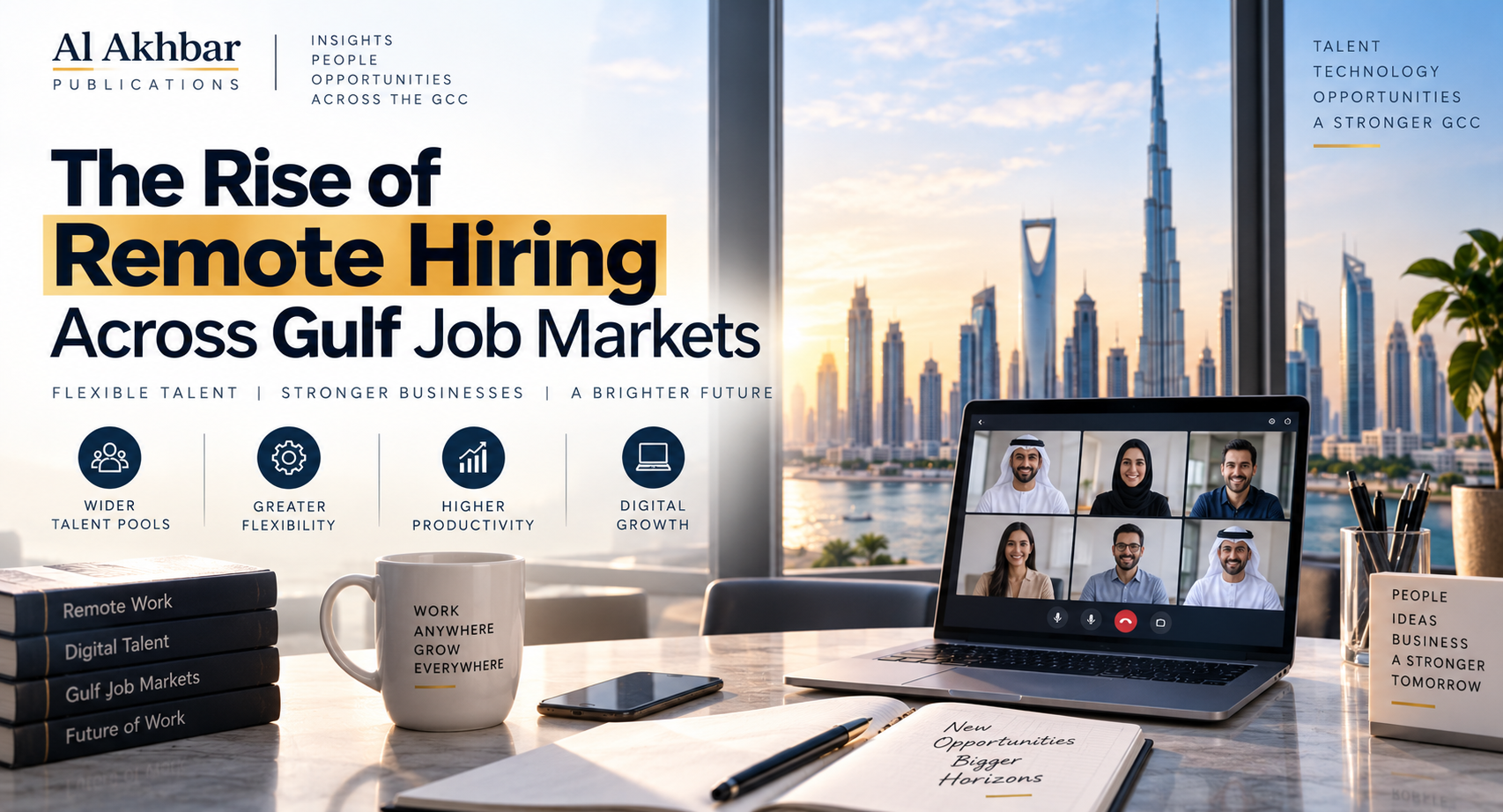
Remote work has evolved from a temporary workplace solution into a long-term employment model across many industries. While traditional office-based roles remain important, businesses throughout the Gulf are increasingly embracing flexible hiring practices to access wider talent pools, improve productivity, and support digital transformation. As technology continues to reshape the workplace, remote employment is becoming a significant part of the region's evolving labour market.
Understanding the growth of remote jobs in GCC and emerging Gulf remote work trends offers valuable insight into how employers and professionals are adapting to the future of work.
Why Remote Hiring Is Growing
Businesses are rethinking how work gets done.
Remote hiring allows organizations to:
- Access wider talent pools
- Improve operational flexibility
- Reduce office costs
- Support business continuity
- Increase workforce scalability
Digital collaboration tools have made remote work more practical than ever.
Digital Transformation Is Driving Change
The Gulf continues to invest heavily in digital infrastructure.
This supports remote work through:
- Cloud computing
- High-speed internet
- Digital communication platforms
- Cybersecurity improvements
- Business automation
Technology has made location less important for many knowledge-based roles.
Industries Leading Remote Hiring
Not every industry can operate remotely, but many professional sectors have expanded flexible work opportunities.
Common industries include:
- Information technology
- Digital marketing
- Customer support
- Finance
- Graphic design
- Content creation
- Human resources
- Consulting
These sectors often rely primarily on digital collaboration.
Growing Demand for Digital Skills
As businesses modernize, demand for digital professionals continues to increase.
Highly valued skills include:
- Software development
- Data analysis
- SEO
- Web development
- Digital advertising
- UX/UI design
- Project management
Professionals with specialized digital expertise often have greater remote work opportunities.
Benefits for Employers
Remote hiring offers several business advantages.
Companies may benefit from:
- Broader recruitment options
- Lower overhead costs
- Faster hiring
- Improved employee satisfaction
- Greater operational flexibility
Many organizations now build hybrid and remote teams to remain competitive.
Benefits for Employees
Remote work also creates opportunities for professionals.
Potential advantages include:
- Better work-life balance
- Reduced commuting time
- Flexible schedules
- Wider career opportunities
- Access to employers beyond their local city
Many professionals appreciate the increased flexibility remote roles provide.
Hybrid Work Is Becoming More Common
Rather than choosing between fully remote or fully office-based work, many employers are adopting hybrid models.
Hybrid arrangements may include:
- Office and home working
- Flexible attendance schedules
- Remote collaboration tools
- Shared workspaces
This approach balances flexibility with in-person collaboration.
Remote Recruitment Is Evolving
Employers increasingly conduct hiring entirely online.
Digital recruitment often includes:
- Virtual interviews
- Online assessments
- Digital onboarding
- Electronic documentation
- Video meetings
These processes make hiring faster and more efficient.
Skills That Matter Most
Successful remote professionals often demonstrate:
- Strong communication
- Time management
- Self-discipline
- Problem-solving
- Adaptability
- Digital literacy
Technical skills remain important, but soft skills also play a significant role.
Challenges of Remote Work
Despite its benefits, remote work also presents challenges.
Organizations may need to address:
- Team communication
- Employee engagement
- Cybersecurity
- Performance management
- Company culture
Clear processes help overcome many of these challenges.
The Importance of Cybersecurity
As remote work expands, protecting business data becomes increasingly important.
Organizations invest in:
- Secure networks
- Multi-factor authentication
- Data encryption
- Employee cybersecurity training
- Cloud security
Strong digital security supports safe remote operations.
How Gulf Governments Support Digital Economies
Many Gulf countries continue investing in knowledge-based industries.
These efforts encourage growth in:
- Technology
- Innovation
- Entrepreneurship
- Smart cities
- Digital infrastructure
Such investments help create an environment where remote work can continue expanding.
What Job Seekers Should Prepare For
Professionals interested in remote jobs GCC should focus on developing competitive skills.
Helpful preparation includes:
- Updating digital skills
- Building a professional online profile
- Learning collaboration software
- Improving communication abilities
- Maintaining an up-to-date CV
Continuous learning improves career opportunities.
The Future of Gulf Remote Work Trends
The future workplace is likely to combine flexibility with technology.
Emerging trends include:
- AI-powered recruitment
- Global remote teams
- Flexible employment models
- Digital collaboration
- Skills-based hiring
Remote work is expected to remain an important part of many industries.
Why Businesses Should Adapt
Companies that embrace flexible hiring may gain advantages such as:
- Improved talent acquisition
- Higher employee retention
- Greater productivity
- Enhanced business resilience
- Faster access to specialized expertise
Adapting to changing workforce expectations supports long-term competitiveness.
Why Follow Al Akhbar Publications?
As employment markets continue to evolve, staying informed is essential. Al Akhbar Publications provides readers with timely coverage of business developments, workforce trends, economic policy, and employment insights across the GCC. From digital transformation to changing recruitment practices, the publication helps professionals and businesses understand the factors shaping the region's future.
Conclusion
Remote hiring is no longer a niche employment model, it has become an important part of the Gulf's changing labour market. Advances in technology, digital transformation, and evolving business priorities are creating new opportunities for employers and professionals alike. As Gulf remote work trends continue to develop, organizations that embrace flexibility and workers who build strong digital skills will be well positioned for future success.
Whether you're exploring remote jobs GCC, following employment trends, or seeking insight into the future of work, Al Akhbar Publications delivers reliable coverage of the economic and workforce developments shaping business across the Gulf region.