
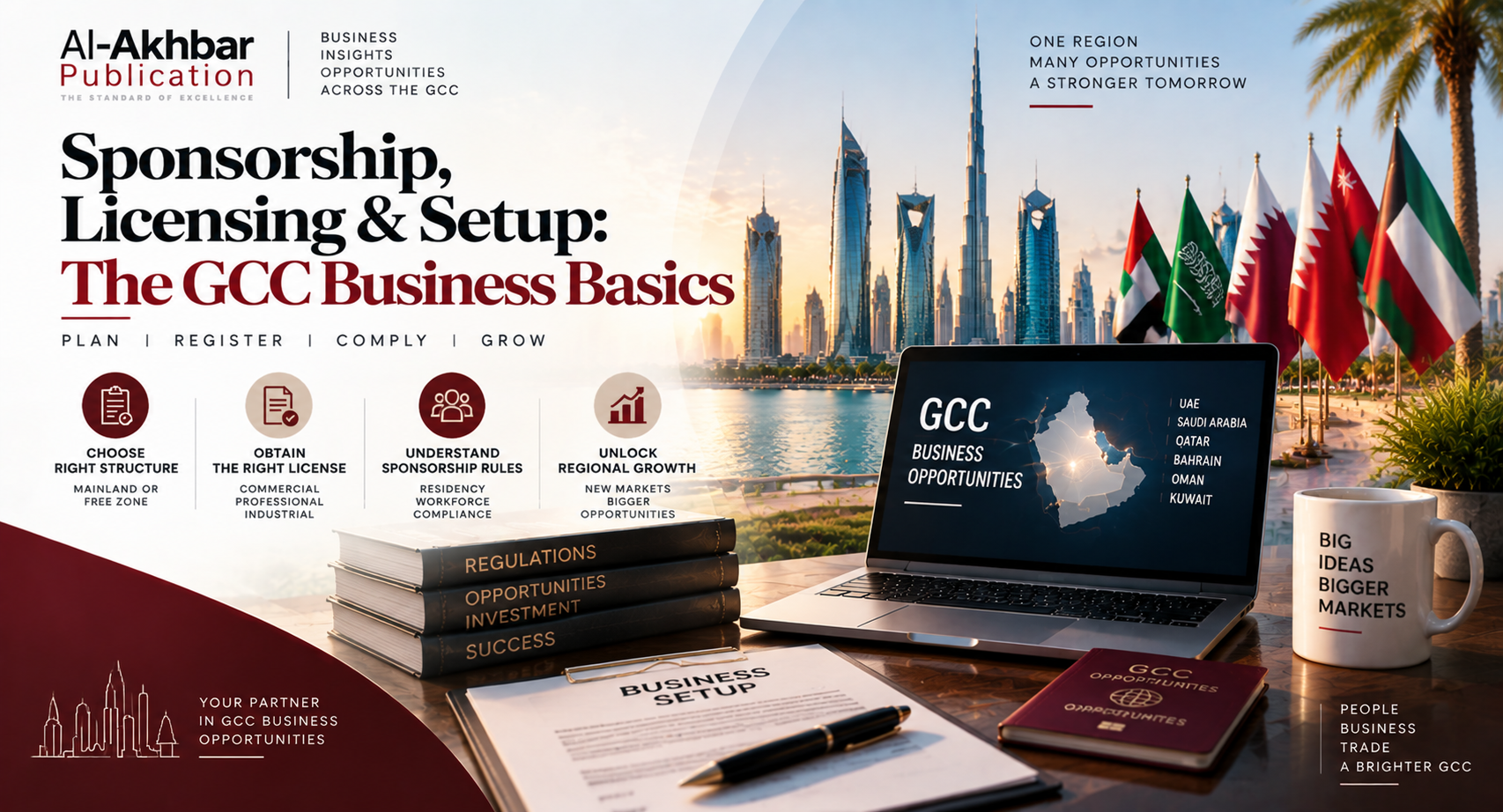
Summary: Thinking about starting a business in the Gulf? Between choosing the right jurisdiction, securing the correct license, and understanding sponsorship rules, GCC business setup involves several important steps. This guide breaks it all down in simple terms to help you plan with confidence.
The Gulf Cooperation Council region has become one of the most attractive places in the world to start a business. Countries like the UAE, Saudi Arabia, Qatar, Bahrain, Oman, and Kuwait continue rolling out reforms designed to attract entrepreneurs and international investors.
But before you can tap into that opportunity, there's a process to understand. From choosing the right legal structure to navigating licensing and sponsorship requirements, GCC business setup involves several interconnected steps that are easy to get wrong without proper guidance.
Let's break down the basics, step by step, so you can approach your Gulf business journey with a clear plan.
Choosing the Right Business Structure
One of the very first decisions you'll need to make is selecting the right legal structure for your business.
- The Limited Liability Company (LLC) remains the most widely used structure across the GCC
- LLCs offer flexibility, legal protection, and operational simplicity for both local and foreign investors
- Businesses must classify their activities according to official industry categories
- Licensing requirements and ownership rules can vary depending on your chosen sector
Getting this classification right early on helps avoid delays later in the registration process.
Mainland vs. Free Zone: Choosing Your Jurisdiction
Once your structure is decided, the next major choice involves selecting where your company will actually operate.
Mainland Companies
- Can conduct business across both local and international markets without major restrictions
- Often preferred by businesses planning to serve domestic customers
- Suitable for companies wanting to participate in government projects
- Allows for physical operations across multiple cities
Free Zone Companies
- Offer 100 percent foreign ownership in most cases
- Provide simplified incorporation procedures and tax incentives
- Include streamlined customs processes for import and export businesses
- May require local distributors for direct trade within mainland markets
Choosing between these two options is one of the most important decisions in the entire GCC business setup process, since it directly affects taxation, market access, and long-term operating costs.
Registering Your Trade Name and Legal Documents
After settling on a structure and jurisdiction, the next step is formally registering your business name and preparing key documentation.
- Trade names must be unique and compliant with local regulations
- Names cannot violate public morality or resemble existing registered entities
- Approval typically comes through the relevant Ministry of Commerce or Free Zone authority
- Core documents include the Memorandum of Association, Articles of Association, and shareholder agreements
For foreign shareholders, documentation often requires notarization and attestation through GCC embassies and local Ministries of Foreign Affairs. Preparing these documents properly from the start helps avoid unnecessary delays.
Understanding Licensing Requirements
Securing the correct commercial license is one of the most important parts of any GCC business setup.
- Commercial licenses are issued to trading businesses
- Professional licenses apply to consultants, service providers, and specialist professions
- Industrial licenses are required for manufacturing operations, often alongside environmental approvals
A common misconception among investors is that a business can operate virtually without any physical premises. In reality, most GCC jurisdictions require a registered office address or lease agreement as part of the licensing process, though Free Zones often offer flexible options like shared offices and co-working spaces to reduce startup costs.
Sponsorship and Immigration: What You Need to Know
Sponsorship licensing Gulf requirements form a core part of how businesses in the region manage residency and workforce planning.
- Companies typically register immigration files to sponsor residency visas for founders, executives, and employees
- Many GCC economies rely heavily on international talent, making sponsorship systems essential to daily operations
- Visa quotas are often based on office size, industry type, and workforce requirements
- Understanding sponsorship licensing Gulf rules early helps businesses plan staffing and residency needs accurately
Some countries have also introduced longer-term residency options. Oman, for example, offers renewable five-year and ten-year residency visas for qualifying investors, while several other GCC nations have introduced golden visa programs to attract skilled professionals and capital.
Workforce Planning and Local Employment Policies
Beyond sponsorship, businesses also need to account for national employment policies that shape hiring decisions across the region.
- Many GCC countries have localization initiatives encouraging the hiring of local talent
- These policies can vary significantly depending on industry and company size
- Workforce planning should factor in both sponsored foreign staff and local hiring requirements
- Staying compliant with these policies is an ongoing part of operating successfully in the region
Understanding sponsorship licensing Gulf regulations alongside local employment expectations helps businesses build a workforce strategy that stays compliant long-term.
Opening a Corporate Bank Account
Once your commercial registration certificate or license is in hand, the next practical step is setting up a corporate bank account.
- Banks typically request incorporation documents, shareholder information, and proof of office address
- Details about business activities and expected transaction volumes are also required
- Early preparation of documentation can significantly reduce approval timelines
- It's worth comparing digital banking capabilities and international transfer options between institutions
This step is often underestimated by foreign entrepreneurs, despite being one of the most important operational requirements in the entire setup process.
Country-Specific Opportunities Across the GCC
Each GCC country brings its own advantages, making location choice an important part of your overall GCC business setup strategy.
- Saudi Arabia continues attracting major foreign investment through economic diversification and infrastructure projects
- The UAE remains a leading destination thanks to advanced infrastructure and globally recognized Free Zones
- Qatar has expanded foreign ownership opportunities across most sectors
- Bahrain is known for fast company registration and cost-effective operating environments
- Oman positions itself as a logistics and industrial hub connecting regional markets
- Kuwait offers opportunities in strategic sectors supported by foreign investment incentives
Understanding these regional differences helps investors choose the jurisdiction that best matches their specific business goals.
Common Mistakes to Avoid During Setup
A few recurring mistakes tend to slow down or complicate the GCC business setup process unnecessarily.
- Underestimating documentation and attestation timelines for foreign shareholders
- Assuming virtual operations can skip physical office requirements entirely
- Overlooking sponsorship licensing Gulf rules when planning workforce needs
- Delaying corporate banking preparation until after licensing is complete
Avoiding these pitfalls early on can save significant time and reduce unnecessary back-and-forth during registration.
Why Choose Al Akhbar Publication?
Navigating GCC business setup and sponsorship requirements can feel overwhelming without the right resources and guidance. Al Akhbar Publication makes this journey easier for entrepreneurs and businesses across the region.
- A trusted Strategic Business Hub connecting industrial leaders, local sellers, and consumers across the GCC
- Verified directory access to reliable services and information across the region
- A commercial-first platform focused on transparency and informed decision-making
- Strong B2B networking support that helps facilitate cross-border trade and strategic partnerships
Whether you're researching GCC business setup requirements or looking to connect with the right regional partners, Al Akhbar Publication provides the resources and network to help you move forward with confidence.
Conclusion:
Successfully navigating GCC business setup takes careful planning, from choosing the right structure and jurisdiction to understanding licensing and sponsorship requirements. While the process involves multiple steps, thorough preparation and the right guidance can help entrepreneurs enter one of the world's most dynamic markets with confidence.
Ready to explore business opportunities across the Gulf? Visit Al Akhbar Publication today for verified resources and regional insights to support your GCC business setup journey