
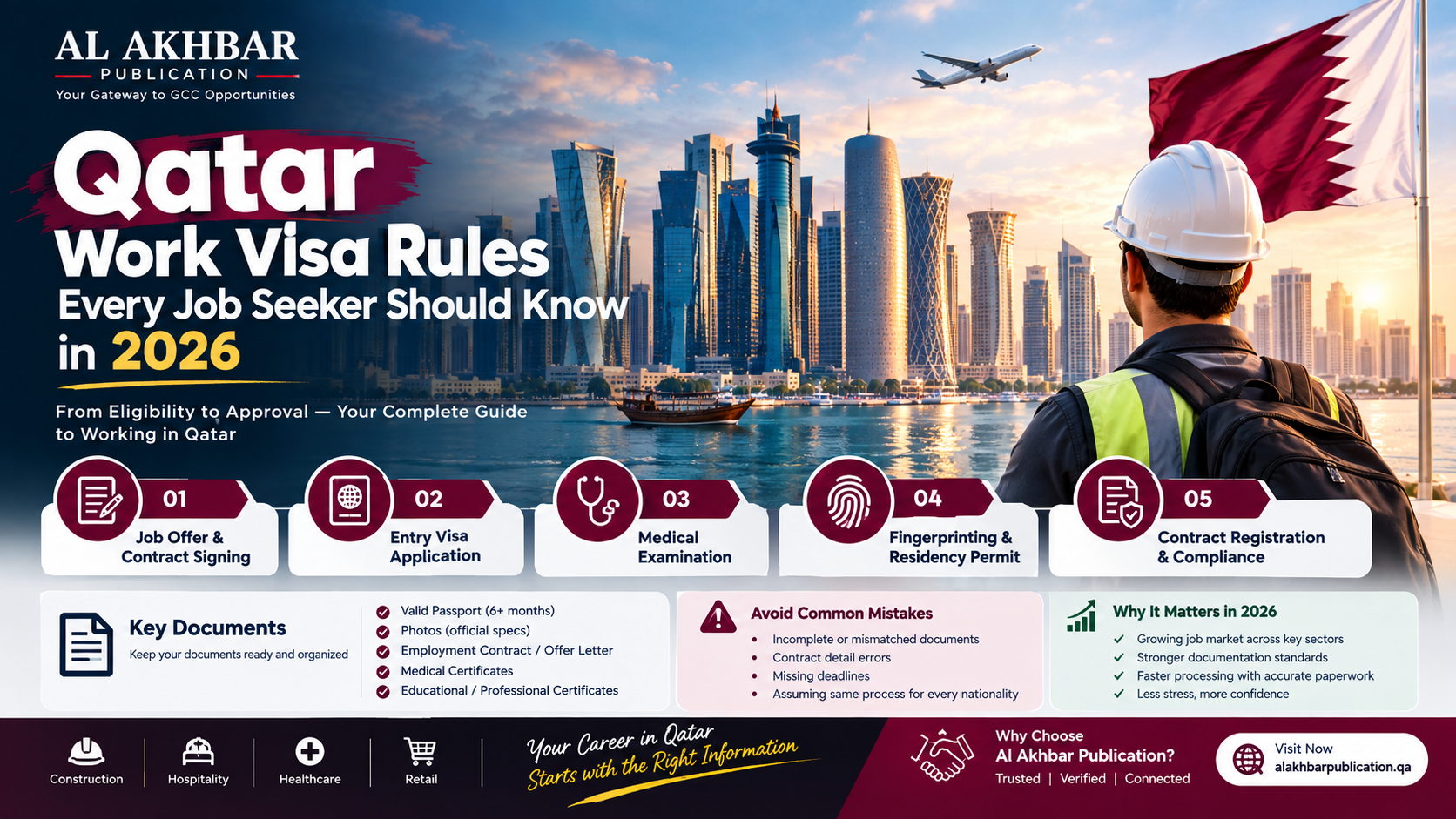
Summary: Planning to work in Qatar? Understanding the Qatar work visa rules in 2026 can save you time, stress, and unnecessary delays. This guide breaks down eligibility, required documents, and the step-by-step process every job seeker should know before applying.
Qatar continues to attract job seekers from around the world, especially in sectors like construction, hospitality, healthcare, and retail. But before you pack your bags, it's important to understand exactly how the visa process works.
Many job seekers assume the process is simple, only to run into confusion over documents, sponsorship, or timelines. Knowing the Qatar work visa rules in 2026 ahead of time can help you avoid these common pitfalls entirely.
Let's walk through everything you need to know, from eligibility to final approval, so you can approach your job search with confidence.
Understanding How the Qatar Work Visa Works
Unlike a tourist visa, a work visa in Qatar cannot be applied for independently. It requires an employer in Qatar to sponsor your application from start to finish.
- Your employer must hold a valid trade license and company registration
- The company must apply for labor quota approval before hiring
- This quota determines how many foreign workers a company can legally employ
- Once approved, the employer manages most of the visa process on your behalf
This employer-driven structure is one of the most important Qatar employment visa requirements to understand from the very beginning.
Step 1: Job Offer and Contract Signing
The process officially begins once you're selected for a role. At this stage, your future employer issues a formal offer.
- The employment contract should clearly outline your job role, responsibilities, and salary
- Both parties must sign the contract before moving forward
- Contract details must match exactly across every future document
- Any mismatch between your contract and later paperwork can cause delays
Reviewing your contract carefully before signing helps prevent complications later in the process.
Step 2: Entry Visa Application
Once your contract is signed, your employer applies for your entry visa. This step activates the formal visa process with Qatari authorities.
- Passport copies, contracts, and other documents must match precisely
- Even small errors, like a misspelled name, can cause processing delays
- Once approved, you're legally permitted to travel to Qatar
- For most nationalities, this stage also connects with Qatar's entry permission system
This is one of the most document-sensitive stages, so accuracy here truly matters.
Step 3: Medical Examination
After arriving in Qatar, you'll need to complete a medical examination as part of standard entry requirements.
- Blood tests and chest scans confirm your health eligibility
- Health clearance is mandatory under Qatar's labor law
- Skipping or delaying this step can lead to penalties or processing setbacks
- This step applies to nearly all work visa applicants, regardless of industry
Completing your medical check promptly keeps your overall timeline on track.
Step 4: Fingerprinting and Residency Permit
Once your medical results clear, the next step is biometric registration, followed by your residency permit application.
- Fingerprinting registers you officially in the national system
- Your residency permit application must be submitted within strict deadlines
- Missing these deadlines can result in fines or temporary work restrictions
- Without a residency permit, legal employment in Qatar isn't possible
This step is often where employers manage appointments and documentation closely, since timing here is critical.
Step 5: Contract Registration and Compliance
The final step involves officially registering your employment contract with Qatar's labor authorities.
- This registration protects both your rights and your employer's obligations
- Wage payments must follow Qatar's approved salary systems
- Any mismatch between registered documents and actual employment terms can trigger compliance issues
- Full legal responsibility falls on the employer once this stage is complete
Understanding this final step helps job seekers see how thoroughly the Qatar employment visa requirements are enforced.
Key Documents You'll Need
Having your documents ready in advance makes the entire process smoother. Here's what's typically required.
- A valid passport, generally with at least six months of validity remaining
- Passport-sized photographs meeting official specifications
- A signed employment contract or job offer letter
- Medical certificates confirming fitness to work
- Educational or professional certificates, where applicable
Keeping digital and physical copies of each document organized saves significant time during each stage of the process.
Common Mistakes Job Seekers Should Avoid
Understanding common pitfalls can help you avoid unnecessary delays throughout the process.
- Submitting incomplete or mismatched passport copies
- Overlooking small contract detail errors before signing
- Missing fingerprinting or residency permit deadlines
- Assuming the process works the same way across every nationality
Being aware of these mistakes early on puts you ahead of many other applicants.
Why These Rules Matter for Job Seekers in 2026
Qatar's labor market continues to grow across construction, hospitality, healthcare, and retail sectors. With this growth comes a stronger emphasis on structured, transparent hiring practices.
- Employers are increasingly expected to follow strict documentation standards
- Job seekers benefit from faster processing when their paperwork is accurate
- Understanding the Qatar work visa rules in 2026 helps you set realistic expectations
- Being informed reduces stress and uncertainty throughout your job search journey
Knowing what to expect at each stage puts you in a stronger position, whether you're applying independently or through a recruitment partner.
Tips for a Smoother Application Process
A few simple habits can make your visa journey significantly less stressful.
- Double-check that your contract details match your passport information exactly
- Keep track of every deadline, especially for fingerprinting and residency registration
- Complete your medical examination as early as possible after arrival
- Stay in regular contact with your employer or sponsor throughout the process
Small, proactive steps like these often make the biggest difference in avoiding delays.
Why Choose Al Akhbar Publication?
Navigating Qatar's job market and visa requirements can feel overwhelming without the right guidance and resources. Al Akhbar Publication makes this easier for job seekers and businesses alike.
- A trusted Strategic Business Hub connecting job seekers, employers, and service providers across the GCC
- Verified directory access to reliable services and information across the region
- A commercial-first platform focused on transparency and informed decision-making
- A growing network that bridges local businesses with the modern consumer base
Whether you're researching Qatar employment visa requirements or exploring opportunities across the region, Al Akhbar Publication connects you with the right information and resources.
Conclusion:
Understanding the Qatar work visa rules in 2026 doesn't have to feel overwhelming once you know the process step by step. From contract signing to residency registration, each stage plays an important role in getting you legally settled and working in Qatar.
Ready to explore job opportunities and stay informed on Qatar's employment landscape? Visit Al Akhbar Publication today for verified resources and the latest regional insights