
Introduction
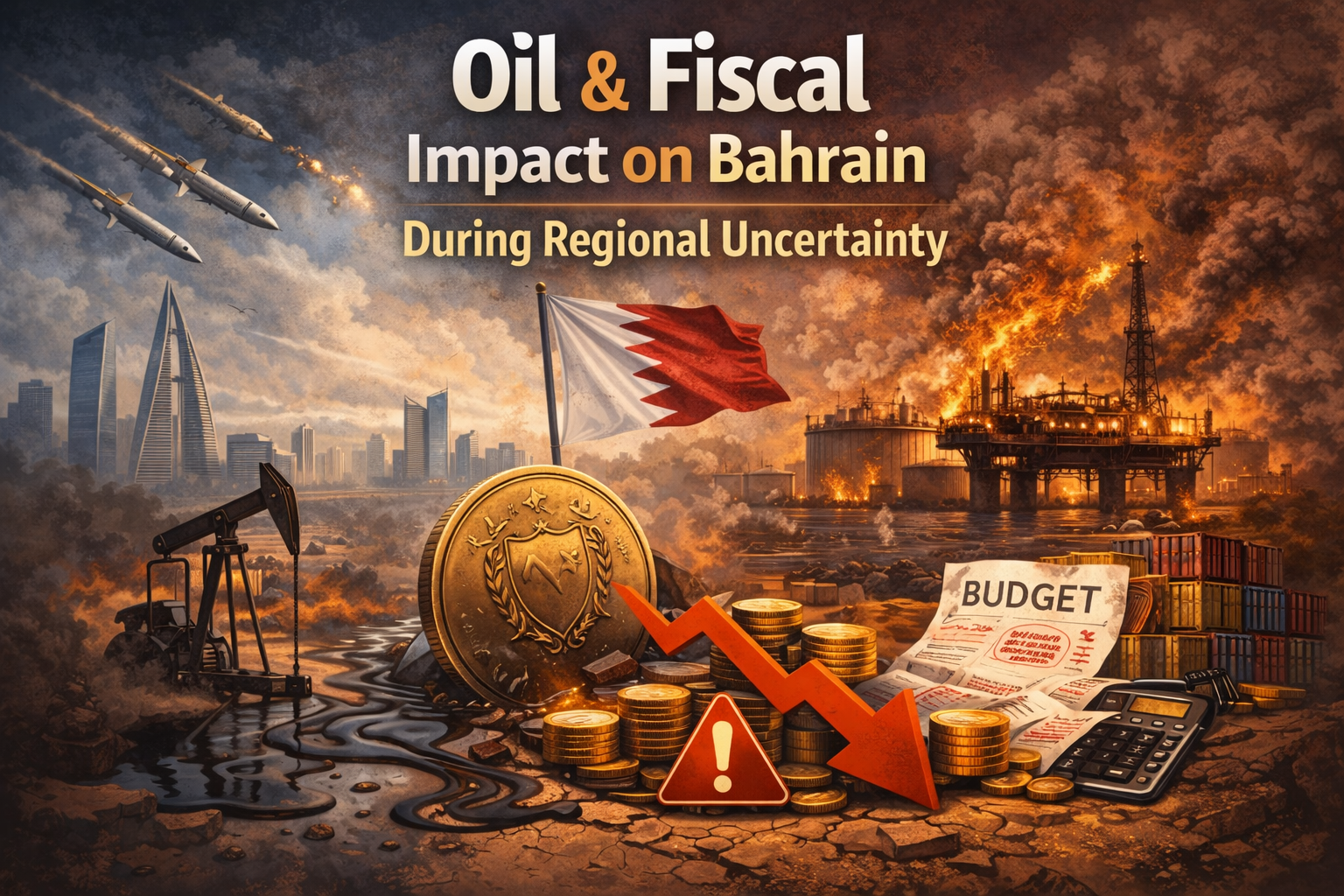
Oil remains an important component of Bahrain’s economic structure, although the country has diversified significantly over the years. Government revenue, fiscal planning, and economic development strategies are still influenced by energy market conditions.
During periods of regional uncertainty, global oil prices can fluctuate due to supply risk perceptions, investor sentiment, and international demand expectations. These fluctuations may affect fiscal outlooks, revenue projections, and budget planning.
This blog provides a detailed analysis of how oil price movements and fiscal dynamics influence Bahrain’s economy.
Bahrain’s Oil Sector Overview
Bahrain’s oil production is smaller compared to some neighboring GCC countries, but it remains strategically important.
The oil sector contributes to:
-
Government revenue
-
Export earnings
-
Energy supply stability
-
Industrial development
In addition to crude production, Bahrain also operates refining activities that add value to energy resources.
Impact of Global Oil Price Movements
During regional uncertainty, oil prices may experience:
-
Short-term increases due to supply risk concerns
-
Increased volatility in global markets
-
Adjustments in investor expectations
If prices rise, government revenue expectations may improve in the short term. However, high volatility can create planning challenges.
Oil price stability is generally more beneficial for long-term fiscal forecasting.
Revenue and Budget Planning
Government budgets depend on predictable revenue streams.
Oil price fluctuations may influence:
-
Fiscal balance projections
-
Public expenditure planning
-
Infrastructure investment timing
-
Long-term financial strategies
To manage this, Bahrain uses structured budget planning frameworks and diversification initiatives to reduce dependency on energy income.
Economic Diversification Strategy
One of Bahrain’s key long-term goals is economic diversification.
Efforts focus on expanding:
-
Financial services
-
Manufacturing
-
Logistics
-
Technology
-
Tourism
-
Digital industries
Diversification reduces vulnerability to oil price fluctuations and strengthens overall economic resilience.
Fiscal Stability Measures
To maintain fiscal balance during uncertain periods, Bahrain may implement:
-
Efficient expenditure management
-
Strategic investment allocation
-
Public-private partnerships
-
Long-term infrastructure planning
These measures help maintain financial stability even when energy markets fluctuate.
Impact on Investment in Energy Sector
Regional uncertainty can influence global energy investment patterns.
Possible effects include:
-
Adjusted capital expenditure plans
-
Review of exploration strategies
-
Increased focus on operational efficiency
However, existing projects continue under regulatory supervision and established agreements.
Energy Market Sentiment and Bahrain
Investor sentiment in energy markets is influenced by:
-
Global demand expectations
-
International trade flows
-
Supply chain stability
-
Regional geopolitical developments
Bahrain’s energy sector performance is therefore connected to broader global trends rather than only regional events.
Refining and Industrial Contribution
Bahrain’s refining operations add value to its oil sector.
Refining supports:
-
Export growth
-
Industrial development
-
Employment opportunities
-
Trade revenue
Operational efficiency in this sector contributes to overall economic stability.
Fiscal Buffering and Economic Planning
To manage potential fluctuations, governments often rely on:
-
Strategic reserves
-
Long-term financial planning
-
Diversified revenue streams
-
Structured capital allocation
These mechanisms help smooth out short-term volatility in energy income.
Impact on Public Projects
Energy revenue contributes to funding:
-
Infrastructure development
-
Education initiatives
-
Healthcare systems
-
Economic transformation projects
Stable fiscal management ensures continuity of public services even during global price shifts.
Long-Term Energy Outlook
The global energy market is evolving due to:
-
Renewable energy expansion
-
Technological advancements
-
Efficiency improvements
-
Environmental policies
Bahrain continues aligning with international energy trends while maintaining economic balance.
Relationship Between Oil and Financial Markets
Oil price movements can influence:
-
Investor confidence
-
Banking sector sentiment
-
Stock market performance
-
Economic growth forecasts
Because Bahrain’s economy is interconnected, energy trends may indirectly affect financial and trade sectors.
Resilience Through Diversification
Bahrain’s resilience strategy includes:
-
Expanding non-oil GDP contribution
-
Strengthening private sector growth
-
Supporting fintech innovation
-
Enhancing regional trade integration
These policies reduce long-term exposure to oil market volatility.
Comparison with Regional Economies
Compared to larger oil-producing countries, Bahrain has:
-
Smaller production scale
-
Greater focus on diversification
-
Strong financial sector development
This structure helps balance energy dependence with service-sector growth.
Future Fiscal Strategy
Bahrain’s future economic strategy emphasizes:
-
Sustainable development
-
Efficient public spending
-
Private sector expansion
-
Investment attraction
Energy revenues will continue playing a role, but diversification remains central to planning.
Conclusion
Oil price movements during regional uncertainty can influence Bahrain’s fiscal outlook and revenue projections. However, structured financial planning, diversification efforts, and long-term development strategies help maintain stability.
Bahrain continues to strengthen non-oil sectors while managing energy resources responsibly.
The combination of fiscal discipline and economic modernization supports resilience in changing global conditions.