
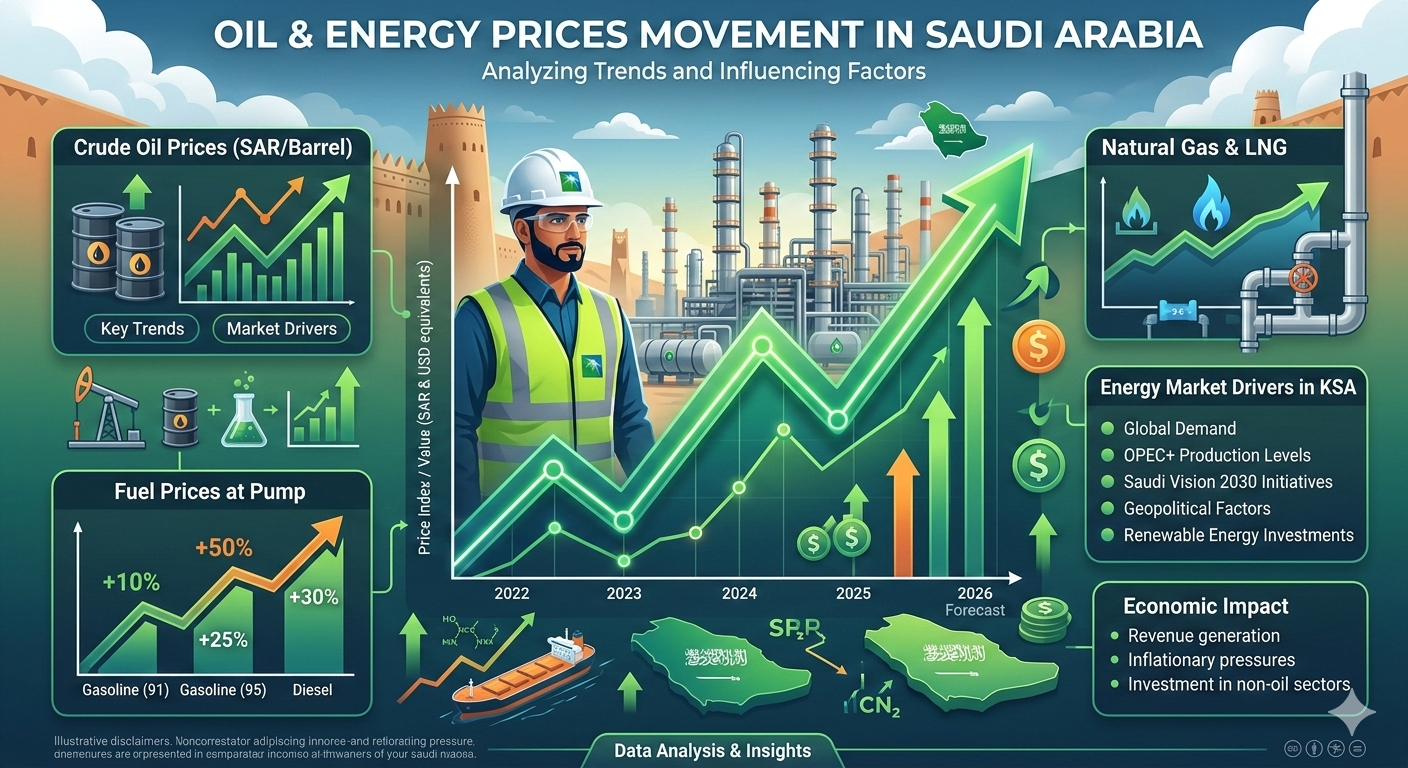
Saudi Arabia, as the world’s leading oil producer, plays a pivotal role in global energy markets. The movement of oil and energy prices within the Kingdom not only reflects local economic dynamics but also significantly impacts international markets.
Current Trends in Oil Prices
Over the past few months, Saudi Arabia has experienced fluctuations in crude oil prices, largely influenced by OPEC+ production decisions, global demand shifts, and geopolitical tensions. The Kingdom’s benchmark, Arab Light Crude, has seen steady movements in line with Brent and WTI trends, reflecting both international supply constraints and regional energy policies.
Drivers of Energy Price Movements
Several factors contribute to the volatility of energy prices in Saudi Arabia:
-
OPEC+ Decisions: Adjustments in production quotas directly affect global oil supply and, consequently, local price dynamics. Saudi Arabia, as a leading member, often sets the tone for market expectations.
-
Global Demand: Industrial growth in Asia, particularly China and India, continues to be a major driver of crude oil consumption, impacting Saudi exports.
-
Geopolitical Factors: Regional conflicts, sanctions, and maritime disruptions in the Gulf influence both perception and actual availability of oil, triggering price spikes or dips.
-
Energy Policy & Subsidies: Domestic fuel prices are occasionally adjusted in line with international benchmarks, reflecting the government’s efforts to balance economic stability with energy accessibility.
Impact on the Saudi Economy
Energy price movements have a direct effect on government revenues, investment flows, and consumer prices. Fluctuating oil revenues influence Saudi Arabia’s budget allocations for mega-projects under Vision 2030, impacting infrastructure, renewable energy development, and social programs.
Looking Ahead
Analysts predict that Saudi Arabia will continue to navigate a delicate balance between sustaining production levels and responding to global market volatility. Investments in renewable energy and diversification efforts indicate a gradual shift toward a more resilient energy landscape, mitigating the risks associated with oil price fluctuations.
Conclusion
Monitoring oil and energy price trends in Saudi Arabia is crucial for businesses, investors, and policymakers. With the Kingdom’s influence on global markets, even small shifts in pricing can have far-reaching implications, reinforcing the importance of strategic planning and market awareness.