
When geopolitical tensions escalate, the focus often remains on military strategy, energy markets, or diplomatic statements. However, beyond political calculations, the most immediate and lasting impact is often felt by civilians.
In situations involving countries such as Iran, Israel, and the United States, the humanitarian dimension deserves careful and neutral attention. Regardless of political perspectives, the protection of civilians, infrastructure, and basic human needs remains a universal concern.
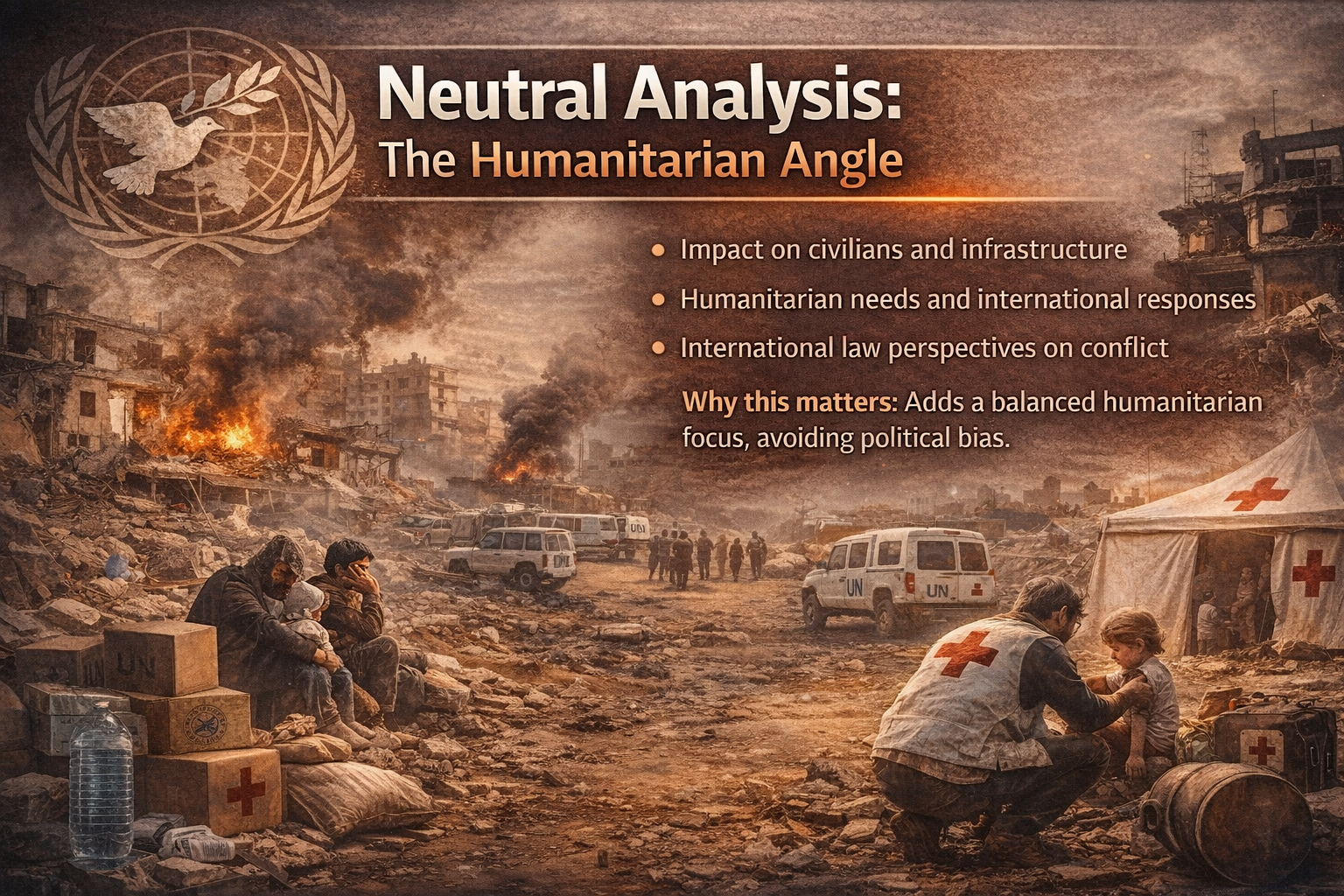
This section examines the impact on civilians and infrastructure, humanitarian needs and responses, and relevant international law principles—while maintaining a balanced, non-political tone.
1. Impact on Civilians and Infrastructure
Even when military targets are the stated objective, civilians are often indirectly affected.
A. Civilian Safety Risks
In periods of escalation:
Air defense systems may be activated in populated areas
Missile or drone interceptions can cause debris-related damage
Heightened security operations increase tension and fear
While governments typically emphasize defensive measures, civilians experience uncertainty and psychological stress during such periods.
B. Damage to Critical Infrastructure
Modern societies rely on interconnected infrastructure systems. Conflict-related disruptions may affect:
Electricity grids
Water supply networks
Airports and transport hubs
Communication systems
Even limited damage or precautionary shutdowns can interrupt daily life, business operations, and emergency services.
In densely populated regions, infrastructure vulnerability increases humanitarian risk.
C. Displacement and Mobility Concerns
If tensions intensify, residents in affected areas may temporarily relocate to safer regions. Although large-scale displacement may not always occur, even short-term relocation can:
Disrupt education
Interrupt employment
Strain housing availability
Increase pressure on local resources
Mobility restrictions due to airspace closures or border controls can also complicate travel for families and workers.
2. Humanitarian Needs and International Responses
During periods of instability, humanitarian preparedness becomes a priority.
A. Emergency Medical Services
Hospitals and medical centers often increase readiness levels to handle potential casualties. Preparedness may include:
Stockpiling medical supplies
Coordinating emergency response teams
Establishing contingency plans for mass casualty scenarios
The goal is prevention and readiness rather than reaction.
B. Role of International Organizations
Global humanitarian bodies, including the United Nations and the International Committee of the Red Cross, typically monitor situations closely during heightened tensions.
Their focus areas include:
Protection of civilians
Compliance with humanitarian law
Facilitation of medical and relief access
Advocacy for de-escalation
These organizations operate on principles of neutrality and impartiality, aiming to assist civilians regardless of political alignment.
C. Regional Cooperation Efforts
Neighboring countries may coordinate to:
Ensure border stability
Prepare contingency support for displaced individuals
Maintain essential supply flows
Even when diplomatic relations are strained, humanitarian coordination often continues.
3. International Law Perspectives on Conflict
International humanitarian law (IHL), often referred to as the law of armed conflict, provides a framework for protecting civilians during hostilities.
A. Core Principles
Key principles include:
Distinction – Parties must distinguish between military targets and civilians.
Proportionality – Attacks must avoid excessive civilian harm relative to military advantage.
Precaution – All feasible precautions must be taken to minimize civilian damage.
These principles apply universally, regardless of the parties involved.
B. Protection of Civilian Infrastructure
Critical infrastructure such as hospitals, water facilities, and residential areas receives special protection under international law.
Damage to such facilities can have long-term humanitarian consequences, particularly in urban environments.
C. Accountability and Oversight
International mechanisms exist to review alleged violations of humanitarian law. While interpretations and enforcement vary, the underlying goal remains the protection of civilian life and dignity.
4. Psychological and Social Impact
Beyond physical harm, prolonged instability can affect mental health and social cohesion.
A. Anxiety and Public Fear
Frequent security alerts, air defense activity, and emergency announcements can create ongoing stress for residents—even if direct violence remains limited.
B. Economic Stress on Households
If instability disrupts employment or raises living costs (for example, through higher fuel prices), families may face financial strain.
Small business owners, in particular, may worry about customer activity and revenue stability.
5. Media and Information Responsibility
During periods of conflict, accurate information becomes essential.
Misinformation can:
Cause unnecessary panic
Spread fear beyond affected areas
Escalate tensions further
Responsible reporting and official communication help maintain public calm and prevent rumor-driven instability.
6. Why This Matters
Focusing on the humanitarian angle ensures that discussions about conflict remain grounded in human reality.
While geopolitical strategies and economic consequences are important, civilian well-being is equally central. Protecting infrastructure, maintaining medical readiness, and upholding international humanitarian principles are not political positions—they are global standards of responsibility.
For policymakers, humanitarian considerations shape diplomatic decisions.
For businesses, understanding civilian impact helps guide corporate responsibility efforts.
For communities, it reinforces the importance of resilience and preparedness.
Conclusion
In times of geopolitical tension involving countries such as Iran, Israel, and the United States, it is essential to look beyond strategic narratives and consider the humanitarian dimension.
Civilians may face infrastructure disruptions, psychological stress, and economic challenges—even if direct hostilities remain limited. International organizations monitor compliance with humanitarian law and prepare to assist where needed.
A neutral humanitarian analysis reminds us that stability is not only about borders and markets—it is about protecting people, preserving essential services, and maintaining human dignity during uncertain times.