
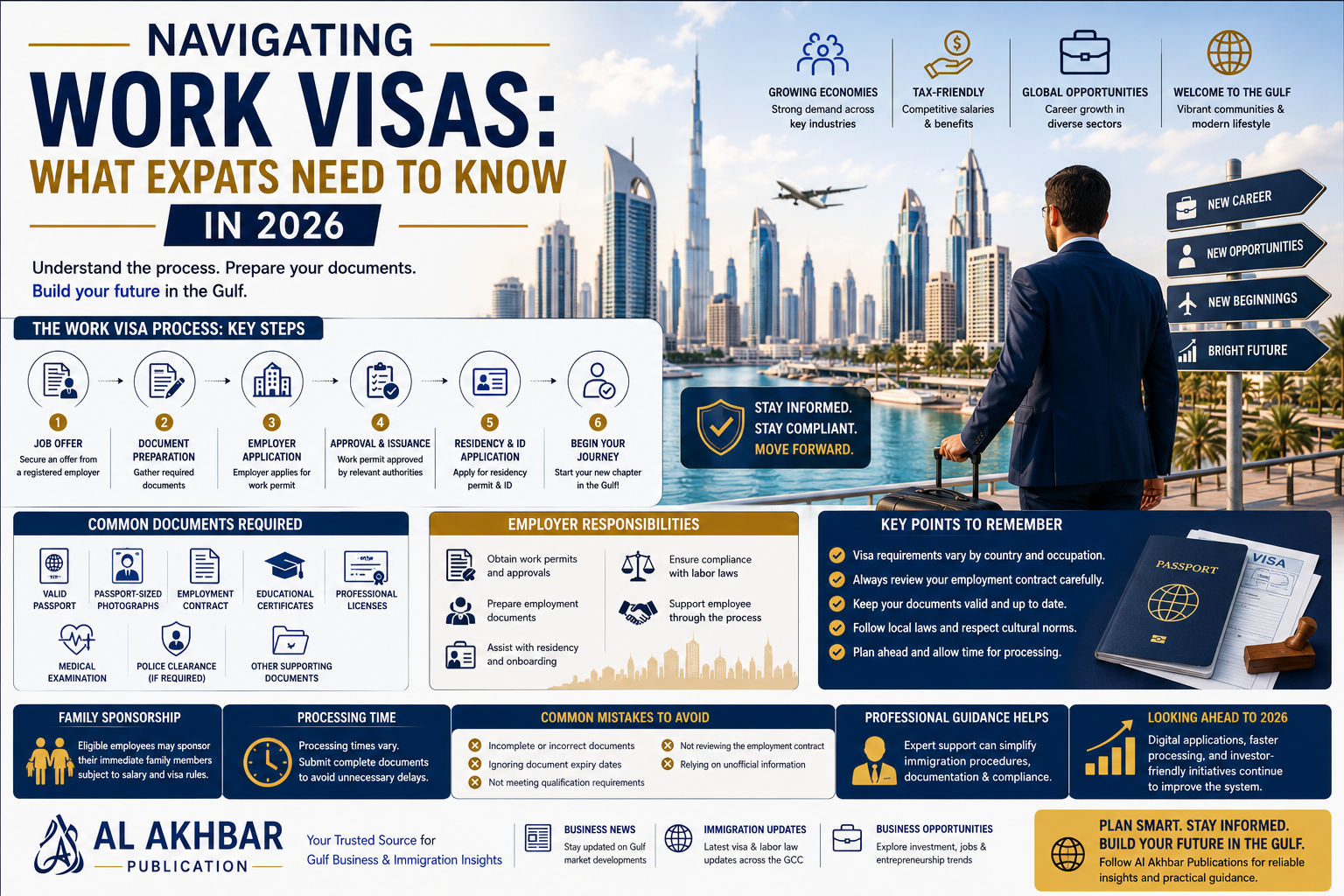
The Gulf continues to attract professionals from around the world with its growing economy, tax-friendly environment, and expanding industries. Whether you're relocating for a new career opportunity or launching a business, understanding the work visa process is essential before making the move. Immigration requirements can differ between Gulf countries, and regulations continue to evolve to support economic growth while ensuring compliance with local labor laws.
If you're applying for an expat work permit Gulf, knowing the key steps, required documents, and employer responsibilities can help make the transition smoother and reduce unnecessary delays.
Why the Gulf Remains a Popular Destination
The Gulf offers opportunities across many industries.
Popular employment sectors include:
- Construction
- Healthcare
- Technology
- Finance
- Hospitality
- Education
- Logistics
Growing investment continues to create demand for skilled international professionals.
What Is an Expat Work Permit?
A work permit is an official authorization that allows a foreign national to work legally in a Gulf country.
It is generally linked to:
- An approved job offer
- Employer sponsorship (where applicable)
- Immigration approval
- Compliance with labor regulations
Requirements vary depending on the country and employment category.
Understand Employer Sponsorship
In many Gulf countries, employers play a key role in the visa process.
Responsibilities may include:
- Applying for work permits
- Preparing employment documents
- Coordinating immigration procedures
- Assisting with residency applications
- Supporting onboarding requirements
Always review your employment contract carefully before accepting an offer.
Documents Commonly Required
While requirements differ, applicants are often asked to provide:
- Valid passport
- Passport-sized photographs
- Employment contract
- Educational certificates
- Professional licenses (if applicable)
- Medical examination results
- Police clearance (where required)
Submitting accurate documentation helps avoid processing delays.
Verify Qualification Requirements
Certain professions require recognized qualifications or professional licensing.
These may include:
- Medical professionals
- Engineers
- Teachers
- Accountants
- Legal professionals
Check the specific requirements for your occupation before applying.
Medical Examinations
Many Gulf countries require medical screening during the immigration process.
The examination may include:
- General health assessment
- Blood tests
- Chest X-ray
- Other required screenings
Applicants should follow the instructions provided by the relevant authorities.
Understand Residency Requirements
In many cases, receiving a work permit is followed by obtaining a residence permit or residency visa.
This may allow expatriates to:
- Live legally in the country
- Access certain public services
- Open bank accounts
- Rent accommodation
- Sponsor eligible family members where permitted
Requirements vary by jurisdiction.
Know Your Employment Contract
Before relocating, carefully review your contract.
Important details include:
- Job title
- Salary
- Working hours
- Leave entitlement
- Benefits
- Contract duration
- Notice periods
Understanding your agreement helps avoid misunderstandings later.
Family Sponsorship Options
Some expatriates may be eligible to sponsor immediate family members.
Eligibility often depends on:
- Salary requirements
- Residency status
- Local immigration rules
- Relationship documentation
Check the latest regulations in your destination country.
Prepare for Processing Times
Visa approval timelines vary depending on:
- Country
- Occupation
- Documentation
- Government processing
- Employer readiness
Submitting complete applications can help reduce delays.
Stay Updated on Immigration Rules
Immigration policies continue to evolve.
Before relocating:
- Monitor official government announcements.
- Confirm current visa requirements.
- Verify document validity.
- Stay informed about policy updates.
Using current information supports a smoother application process.
Understand Workplace Rights
Expatriate employees should familiarize themselves with:
- Employment contracts
- Working hours
- Leave policies
- Health insurance provisions
- End-of-service benefits
- Local labor regulations
Knowing your rights and responsibilities contributes to a positive employment experience.
Tips for a Smooth Relocation
Before moving:
- Organize important documents.
- Keep digital copies.
- Plan temporary accommodation.
- Arrange finances.
- Learn about local customs.
- Research transportation options.
Preparation makes settling into a new country easier.
Common Mistakes to Avoid
Avoid these common errors:
- Submitting incomplete documents
- Ignoring document expiry dates
- Overlooking qualification requirements
- Failing to review employment contracts
- Relying on unofficial information
Careful planning helps minimize complications.
Why Professional Guidance Can Help
Immigration procedures can sometimes be complex.
Professional support may assist with:
- Document preparation
- Business setup guidance
- Immigration procedures
- Regulatory updates
- Administrative processes
Seeking reliable advice can simplify the relocation journey.
Business Opportunities for Expats
Many Gulf countries continue introducing policies that encourage entrepreneurship.
Popular sectors include:
- E-commerce
- Professional services
- Technology
- Consulting
- Retail
- Manufacturing
Business-friendly initiatives continue to attract foreign investment across the region.
Looking Ahead to 2026
Work visa systems continue becoming more efficient through:
- Digital applications
- Faster processing
- Online document management
- Improved government services
- Investor-friendly initiatives
These developments support both employers and international professionals.
Conclusion
Relocating to the Gulf for work offers exciting professional opportunities, but understanding visa requirements, employer responsibilities, residency procedures, and employment regulations is essential for a successful transition. Preparing your documents, staying informed about immigration policies, and carefully reviewing your employment contract can help make the process more straightforward and reduce unnecessary delays.
Whether you're applying for an expat work permit Gulf, exploring business opportunities, or planning a long-term move, Al Akhbar Publications provides informative resources covering Gulf business regulations, immigration updates, and entrepreneurship trends. Through practical insights and reliable guidance, Al Akhbar Publications helps expatriates and business professionals stay informed as they navigate the evolving Gulf market.