
Introduction
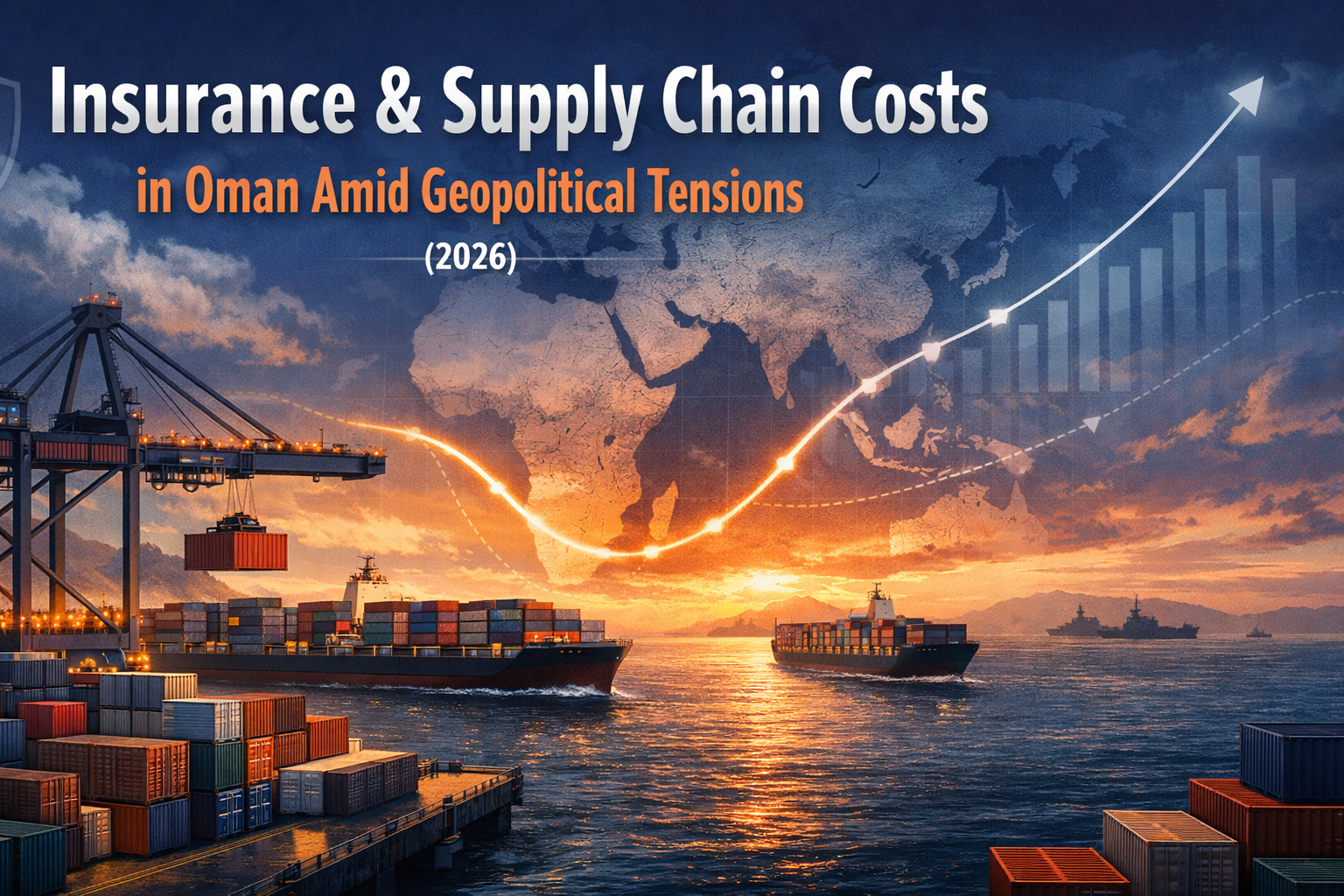
The geopolitical tensions between Iran, Israel, and the USA have reverberated across global markets, with Oman, as a strategically located country in the Gulf, not being immune to the ripple effects. One of the most significant areas of impact has been the shipping and logistics industries, which are facing increased insurance premiums, altered shipping routes, and supply chain disruptions. As the tension in the Middle East grows, global insurers are repricing risk for companies operating in this region, affecting not just import/export businesses but the entire cost structure across industries.
This blog aims to provide a comprehensive overview of the current state of the shipping and logistics sectors in Oman, the impact on insurance costs, and how the broader supply chain in the country is adapting to these changes. It will explore the consequences for businesses, the logistical challenges faced by Omani exporters, and the strategies that companies are implementing to mitigate these increased costs.
1. The Rising Risk in Middle Eastern Shipping Corridors
The Middle East, particularly the Strait of Hormuz, is one of the most critical shipping routes in the world, with over 20% of the world’s oil passing through it. The ongoing geopolitical tensions between Iran, Israel, and the USA have placed these vital maritime routes under increasing strain, prompting insurers to reassess their risk exposure in the region.
Impact on Shipping Routes
As the conflict escalates, shipping companies that rely on these routes for the transport of goods face the threat of blockades, military confrontations, or other disruptions. As a result, shipping insurers are now repricing risk for vessels passing through the Gulf, leading to higher premiums for companies engaged in trade via the region. Moreover, shipping companies are altering their routes to avoid high-risk areas, leading to increased travel distances, longer delivery times, and higher fuel consumption.
-
Re-routing of Ships: Some shipping companies have begun rerouting their vessels around the Cape of Good Hope (instead of using the Strait of Hormuz), which significantly increases the distance traveled, leading to higher fuel consumption and longer delivery times.
-
Risk of Conflict: Insurers are factoring in the possibility of military engagement in the region, increasing the cost of insuring vessels that transit through the area. The higher premiums are being passed on to businesses that rely on maritime shipping, ultimately affecting Oman’s import and export costs.
Oman’s Strategic Position and its Impact
Oman, with its Sohar and Salalah ports, serves as an essential transit point for goods entering and leaving the Gulf. While Oman’s ports are not directly involved in the military conflict, they are heavily reliant on shipping corridors that pass through the Strait of Hormuz and surrounding areas. Any disruption in the oil and general goods supply chain affects Oman’s trade volume, leading to higher costs and potential delays in imports and exports.
2. The Impact of Increased Insurance Costs on Omani Businesses
In response to heightened risks in the region, global insurers have significantly increased premiums for shipping and logistics companies operating in or around the Gulf. These increased costs are primarily the result of perceived risks of military conflict, piracy, shipping lane blockages, and the general instability in the Middle East.
Rising Insurance Premiums
Shipping insurance companies are now calculating premiums based on a more conservative risk assessment. Oman’s maritime industry, which is vital for its economic infrastructure, has seen its insurance costs soar, which, in turn, has led to higher operational costs for businesses relying on international trade routes.
Some of the consequences of higher insurance premiums include:
-
Increased Costs for Import/Export Businesses: Companies that import raw materials or export finished goods via sea routes must account for the higher insurance premiums in their cost structures.
-
Price Hikes for Consumers: As shipping costs rise, businesses are likely to pass on the increased costs to consumers, which could lead to higher prices for goods across various sectors, including retail, electronics, automotive, and construction.
-
Impact on Small and Medium Enterprises (SMEs): Smaller companies, which are less likely to absorb higher insurance costs, could face marginal profits or even shutdowns if the higher costs push them out of business.
Air Cargo and Insurance Implications
In addition to shipping, air cargo routes, which are critical for time-sensitive goods like electronics, pharmaceuticals, and perishable items, have also been affected. The rise in air cargo insurance premiums is driving up costs for importers and exporters that rely on quick air transport.
-
Higher Risk in Air Travel: Due to the risk of airspace closure, global insurance companies have started pricing air cargo in high-risk regions at a premium. This affects Omani businesses involved in importing goods by air, particularly industries like technology and pharmaceuticals, where timely delivery is crucial.
3. Supply Chain Disruptions: Bottlenecks and Delays
The disruptions in shipping routes and increased insurance premiums are not the only issues affecting Oman’s supply chains. The rising geopolitical tensions have caused a cascade of bottlenecks and delays in the global supply chain, significantly affecting Oman’s trade.
Longer Lead Times
With the rerouting of ships to avoid high-risk zones and the increased waiting time at ports, lead times for both imports and exports have increased. This delay impacts businesses in Oman that rely on just-in-time inventory systems to maintain stock and meet customer demands.
For example:
-
Manufacturers in Oman who depend on raw materials from countries like China or the USA face delays in receiving shipments, affecting production timelines and increasing the cost of inventory.
-
Retail businesses experience stock shortages as the disruption in supply chains leads to longer waiting periods for replenishing inventory.
Shipping Delays and Stock Shortages
The logistics industry in Oman has been facing significant delays in shipping schedules due to both the rising insurance costs and the ongoing risk of conflict in the region. This affects consumer goods and manufacturing industries that rely on quick, cost-efficient imports.
The consequences include:
-
Stock shortages of critical goods, such as construction materials, electronics, and automotive parts.
-
Rising prices for goods due to the supply chain bottlenecks and increased shipping costs.
Container Shortages and Port Congestion
A key issue that has emerged in recent months is the shortage of containers due to disrupted global supply chains. Oman’s ports have seen a backlog of shipping containers that are either delayed or unable to be offloaded quickly, causing congestion at key ports like Sohar and Salalah.
4. Strategies for Mitigating Disruptions: Oman's Response
Investments in Port Infrastructure
Oman has long recognized the importance of its ports in the global trade network and has continually invested in improving port infrastructure. These upgrades are designed to improve logistical efficiency and reduce the effects of congestion, container shortages, and delays. By improving port facilities, Oman hopes to ensure that its businesses can continue importing and exporting goods in a more timely and cost-efficient manner, despite the regional instability.
-
Sohar Port has seen continued expansion, and the Salalah Port has upgraded its container terminals to increase cargo handling capacity. These investments are aimed at reducing bottlenecks and improving Oman’s trade competitiveness.
Relying on Alternative Routes
Shipping companies in Oman have been exploring alternative trade routes to mitigate the risk of disruptions through the Strait of Hormuz. The Cape of Good Hope is a viable alternative, although it increases transportation times and costs. Oman is also looking into rail networks and overland trade routes to diversify the way goods are transported into and out of the country.
Digital Transformation of Supply Chains
Oman is also investing in the digitization of its logistics sector, aiming to streamline operations, improve tracking and monitoring systems, and increase transparency. This move towards digital logistics helps businesses in Oman better manage inventory, track shipments in real-time, and reduce manual errors in their supply chains.
5. Long-Term Outlook: Navigating Geopolitical and Supply Chain Challenges
While the ongoing geopolitical tensions between Iran, Israel, and the USA continue to cause disruptions in Oman’s supply chains, the country’s efforts to improve its logistics infrastructure and diversify its trade routes offer hope for the future. Oman’s economic diversification strategy, as laid out in its Vision 2040, will be crucial for reducing its dependency on traditional shipping routes and making its trade systems more resilient to future geopolitical instability.
Conclusion: Navigating Supply Chain Disruptions in Oman
The geopolitical tensions between Iran, Israel, and the USA have underscored the vulnerabilities of the global supply chain, especially in the shipping and logistics sectors. Oman, strategically located between the Arabian Sea and the Strait of Hormuz, is heavily impacted by these disruptions, which have caused increased insurance premiums, longer shipping times, and supply chain bottlenecks.
However, Oman’s long-term investments in port infrastructure, alternative trade routes, and digital logistics solutions are positioning the country to weather the current storm and emerge stronger. By adapting to these challenges and diversifying its economy, Oman can continue to maintain its position as a vital trade hub in the region, despite the ongoing geopolitical uncertainty.