
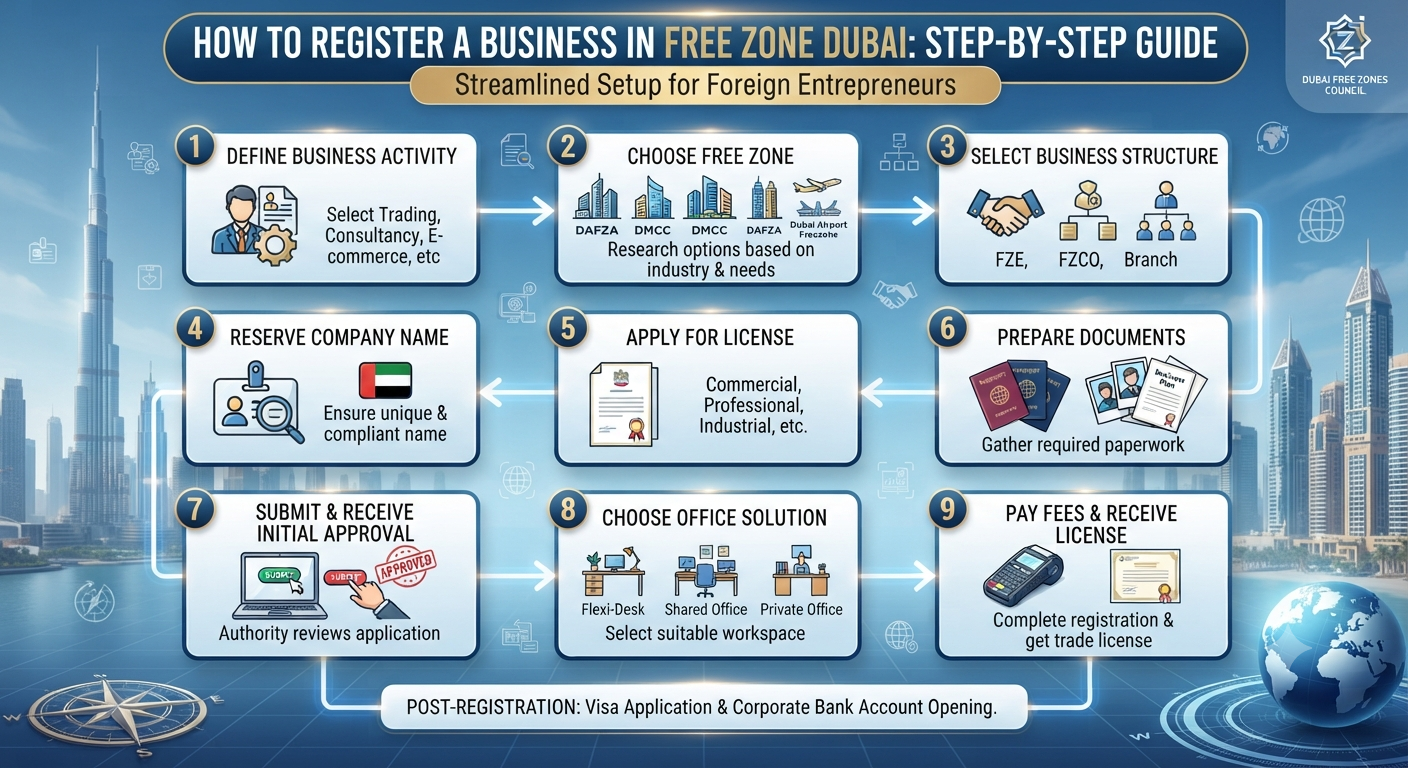
Starting a business in Dubai has become increasingly attractive for international entrepreneurs due to its strategic location, business-friendly regulations, and tax advantages. One of the most popular options is establishing a company in one of the UAE's many free zones, which offer streamlined registration processes and benefits tailored to foreign investors.
Whether you're planning a startup, consultancy, trading company, or technology business, understanding the registration process can help you launch your venture with confidence. If you're considering a free zone company setup, this guide explains each stage of the process and what to expect.
Why Choose a Dubai Free Zone?
Free zones are designated business areas that offer incentives to encourage local and international investment.
Some of the key benefits include:
- 100% foreign ownership
- Full repatriation of profits and capital
- Simplified business registration
- Modern business infrastructure
- Access to global markets
- Industry-specific business ecosystems
- Flexible office solutions
These advantages make company formation UAE free zones an attractive option for entrepreneurs across various industries.
Understand What a Free Zone Is
A free zone is a special economic area that operates under its own regulatory authority. Each free zone is designed to support specific industries, such as technology, media, healthcare, logistics, finance, manufacturing, or education.
Depending on your business activities, choosing the right free zone can provide networking opportunities, specialized facilities, and industry-focused support.
Step 1: Define Your Business Activity
The first step is determining exactly what your company will do.
Common business activities include:
- Trading
- E-commerce
- Consultancy
- Marketing
- Information technology
- Media services
- Manufacturing
- Education
- Healthcare
- Logistics
Your selected activity determines the type of license you need and the free zones available for registration.
Step 2: Choose the Right Free Zone
Dubai offers numerous free zones, each serving different industries and business models.
When selecting a free zone, consider:
- Your business activity
- Licensing options
- Office requirements
- Registration costs
- Visa allocation
- Business support services
- Proximity to customers or suppliers
Choosing the right jurisdiction helps support future growth and operational efficiency.
Step 3: Select Your Business Structure
Foreign entrepreneurs can choose from different legal structures depending on their business needs.
Common options include:
- Free Zone Establishment (FZE)
- Free Zone Company (FZCO)
- Branch of a foreign company
- Branch of a UAE company
Each structure has different ownership and operational requirements.
Step 4: Reserve a Company Name
Your company name must comply with UAE naming regulations.
Generally, the name should:
- Be unique
- Avoid offensive language
- Reflect business activities where applicable
- Follow free zone naming guidelines
- Avoid restricted terms without approval
Submitting multiple name choices can help avoid delays.
Step 5: Apply for the Appropriate Business License
The license depends on your company's activities.
Common license types include:
- Commercial License
- Professional License
- Industrial License
- Service License
- E-commerce License
- Media License
- Educational License
Selecting the correct license ensures legal compliance from the beginning.
Step 6: Prepare Required Documents
Documentation requirements vary slightly between free zones but commonly include:
- Passport copies
- Passport-sized photographs
- Visa copy (if applicable)
- Emirates ID (for UAE residents)
- Business plan (where required)
- Application forms
- Proof of address
Ensuring documents are complete helps speed up approval.
Step 7: Submit the Application
After gathering documentation, submit your application to the selected free zone authority.
The authority typically reviews:
- Business activity
- Company name
- Shareholder information
- Required documents
- License application
Incomplete applications may require additional clarification before approval.
Step 8: Receive Initial Approval
Once the authority reviews your application, you'll receive initial approval if all requirements are met.
This approval generally allows you to proceed with:
- License processing
- Office selection
- Registration formalities
- Payment procedures
Approval timelines vary depending on the chosen free zone.
Step 9: Choose an Office Solution
Most free zones require businesses to have a registered address.
Available options often include:
- Flexi desks
- Shared offices
- Private offices
- Executive suites
- Warehouses
- Commercial units
The office type may influence visa eligibility and operational flexibility.
Step 10: Pay Registration and License Fees
Business registration typically includes several costs.
These may include:
- Registration fee
- License fee
- Office rental
- Visa processing
- Administrative charges
Understanding the complete cost structure helps with financial planning.
Step 11: Receive Your Business License
After completing registration and payment, the free zone authority issues your business license.
With the license, you can generally:
- Operate your business legally
- Open a corporate bank account
- Apply for visas
- Sign commercial contracts
- Begin business operations
Apply for Residency Visas
Many free zone companies are eligible to sponsor visas for:
- Business owners
- Employees
- Dependents (subject to eligibility)
The number of available visas often depends on your chosen office package and free zone regulations.
Open a Corporate Bank Account
Once your company is registered, you can begin the process of opening a corporate bank account.
Banks may request:
- Trade license
- Company incorporation documents
- Shareholder information
- Passport copies
- Business activity details
Requirements vary by financial institution.
Maintain Ongoing Compliance
After registration, businesses must continue meeting regulatory obligations.
These may include:
- License renewal
- Office lease renewal
- Visa renewals
- Accounting records
- Regulatory reporting
- Compliance with free zone rules
Regular compliance helps businesses avoid unnecessary penalties.
Common Mistakes to Avoid
Many first-time entrepreneurs experience delays due to avoidable errors.
Common mistakes include:
- Choosing the wrong business activity
- Selecting an unsuitable free zone
- Submitting incomplete documents
- Underestimating registration costs
- Ignoring visa requirements
- Choosing the wrong office package
- Delaying license renewals
Proper planning makes the registration process smoother.
Tips for Foreign Entrepreneurs
Before starting your business, consider these best practices:
- Research multiple free zones.
- Understand licensing requirements.
- Prepare all documents in advance.
- Budget for registration and operational costs.
- Choose a scalable office solution.
- Review visa eligibility carefully.
- Seek professional guidance when needed.
These steps help reduce delays and support long-term business success.
Is a Free Zone Right for Every Business?
While free zones offer many advantages, they may not be the ideal choice for every business model.
A free zone setup is often suitable for:
- International trading
- Consulting firms
- Technology startups
- Digital businesses
- Professional service providers
- E-commerce companies
Businesses planning extensive operations within the UAE mainland should carefully evaluate whether a mainland structure better suits their objectives.
Conclusion
A free zone company setup Dubai offers foreign entrepreneurs a straightforward path to establishing a business in one of the world's leading commercial hubs. From selecting the right business activity and free zone to obtaining a license and maintaining compliance, each step plays an important role in building a successful company.
Understanding the process in advance helps minimize delays, avoid common mistakes, and make informed business decisions. Whether you're exploring company formation UAE free zones for a startup, consultancy, or international trading business, choosing the right structure can support long-term growth and operational flexibility.