
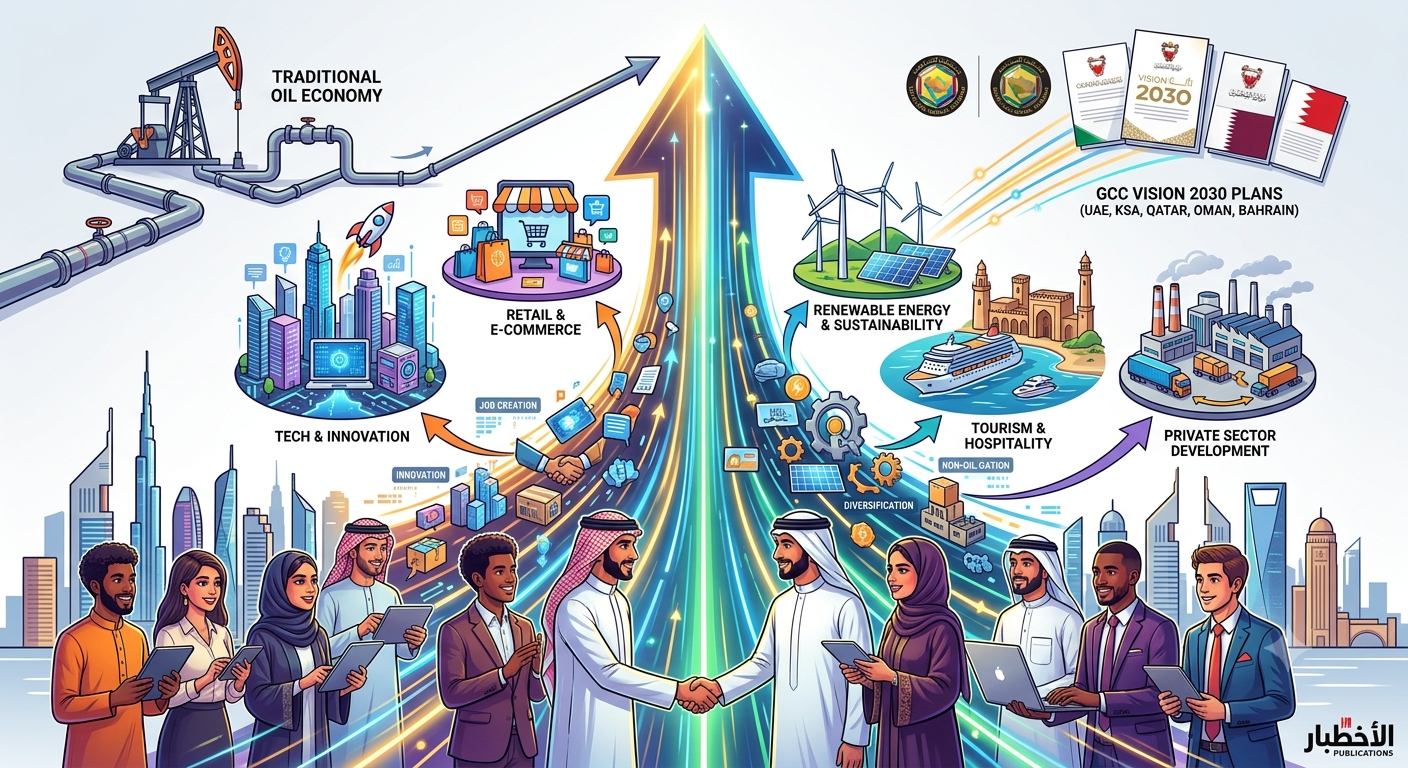
Across the Gulf Cooperation Council (GCC), a quiet but powerful transformation is reshaping the region’s economic identity. Small and Medium Enterprises (SMEs) are no longer just supporting players, they are becoming central engines of growth, innovation, and diversification.
From Saudi Arabia’s Vision 2030 agenda to the UAE’s long-term economic strategies, governments across the GCC are actively empowering SMEs to reduce dependency on oil revenues and build more resilient, knowledge-based economies.
At Al Akhbar Publications, we examine how this SME-driven shift is redefining entrepreneurship, employment, and long-term economic sustainability across the region.
Why SMEs Matter More Than Ever in the GCC
SMEs form the backbone of most global economies, but in the GCC, their importance has grown significantly over the past decade.
They matter because they:
- Create large-scale employment opportunities
- Encourage innovation and competition
- Support non-oil sector development
- Strengthen local supply chains
- Increase private sector participation
In many GCC countries, SMEs now represent the majority of registered businesses, highlighting their critical role in economic activity.
The Shift from Oil Dependency to Diversified Economies
Historically, GCC economies relied heavily on oil exports. However, volatility in global energy markets has made diversification a strategic necessity.
Governments have responded with long-term transformation plans:
- UAE Vision 2031
- Saudi Vision 2030
- Qatar National Vision 2030
- Oman Vision 2040
- Bahrain Economic Vision 2030
All of these frameworks emphasize reducing oil dependency and strengthening private sector contribution, where SMEs play a central role.
Key Sectors Where SMEs Are Thriving
SMEs are expanding rapidly across multiple non-oil industries in the GCC.
1. Technology and Digital Services
The rise of digital transformation has opened opportunities in:
- Software development
- E-commerce platforms
- Digital marketing agencies
- FinTech solutions
- AI-driven startups
These sectors require agility and innovation, areas where SMEs excel.
2. Retail and E-Commerce
Online shopping adoption has surged across the GCC, enabling SMEs to reach wider audiences without heavy infrastructure costs.
Key growth drivers include:
- Mobile commerce adoption
- Social media selling
- Cross-border logistics improvements
- Digital payment systems
3. Tourism and Hospitality
Countries like the UAE and Saudi Arabia are investing heavily in tourism infrastructure, creating opportunities for SMEs in:
- Travel services
- Boutique hospitality
- Event management
- Cultural experiences
4. Renewable Energy and Sustainability
As GCC nations invest in clean energy, SMEs are contributing through:
- Solar energy solutions
- Waste management innovations
- Green consulting services
- Sustainability tech startups
Government Support for SMEs Across the GCC
Governments in the region are actively supporting SME growth through policy reforms and funding initiatives.
Common support mechanisms include:
- Business incubators and accelerators
- SME-friendly licensing systems
- Tax incentives and exemptions
- Access to government procurement contracts
- Startup funding programs and grants
These initiatives reduce entry barriers and encourage entrepreneurship across local and expatriate communities.
The Role of Digital Transformation in SME Growth
Digital infrastructure has become a major enabler for SME expansion in the GCC.
SMEs now leverage:
- Cloud computing for scalability
- Social media for marketing and sales
- AI tools for customer insights
- E-commerce platforms for distribution
- Remote work systems for talent acquisition
This digital-first environment allows small businesses to compete with larger corporations more effectively than ever before.
Challenges Facing SMEs in the GCC
Despite strong growth, SMEs still face structural challenges.
1. Access to Funding
While funding programs exist, early-stage startups often struggle to secure consistent investment.
2. Market Competition
Large corporations and international brands dominate key sectors, making market entry difficult.
3. Talent Acquisition
Attracting skilled professionals can be challenging due to competition from multinational companies.
4. Regulatory Complexity
Although improving, regulatory frameworks can still vary across GCC countries.
Why SMEs Are Central to Vision 2030 and Beyond
Saudi Arabia’s Vision 2030 and similar GCC initiatives are heavily reliant on SME growth.
SMEs contribute to:
- Job creation for young populations
- Innovation in non-oil sectors
- Increased GDP diversification
- Private sector expansion
- Entrepreneurship culture development
In Saudi Arabia alone, SME development is a core pillar of economic transformation strategy.
The Rise of Entrepreneurial Ecosystems in the GCC
One of the most significant developments in the region is the emergence of strong startup ecosystems.
Cities like Dubai, Riyadh, and Doha are now recognized hubs for entrepreneurship due to:
- Startup-friendly regulations
- International investor interest
- Accelerators and innovation hubs
- Access to regional markets
- Strong digital infrastructure
These ecosystems are helping SMEs scale faster and attract global attention.
How SMEs Are Changing Employment Trends
SME growth is also reshaping the labor market.
Instead of traditional corporate employment, more professionals are now working in:
- Startups
- Freelance roles
- Contract-based projects
- Digital businesses
- Remote-first companies
This shift is creating a more flexible and skills-driven job market across the GCC.
The Future of SMEs in the GCC Economy
The long-term outlook for SMEs in the GCC is highly positive.
Future trends include:
- Increased AI integration in small businesses
- Expansion of cross-border e-commerce
- Greater venture capital participation
- Stronger digital payment ecosystems
- Growth in green and sustainable SMEs
As diversification efforts continue, SMEs will remain central to economic transformation strategies across the region.
Final Thoughts
SMEs are no longer secondary contributors in the GCC, they are becoming the foundation of economic diversification. By driving innovation, creating jobs, and strengthening non-oil industries, small and medium enterprises are reshaping the future of the region.
At Al Akhbar Publications, we continue to observe how these businesses are influencing policy, investment flows, and long-term economic planning across the Gulf Cooperation Council.
The shift is clear: the future of the GCC economy will not be defined by size alone, but by agility, innovation, and the strength of its SME ecosystem.