
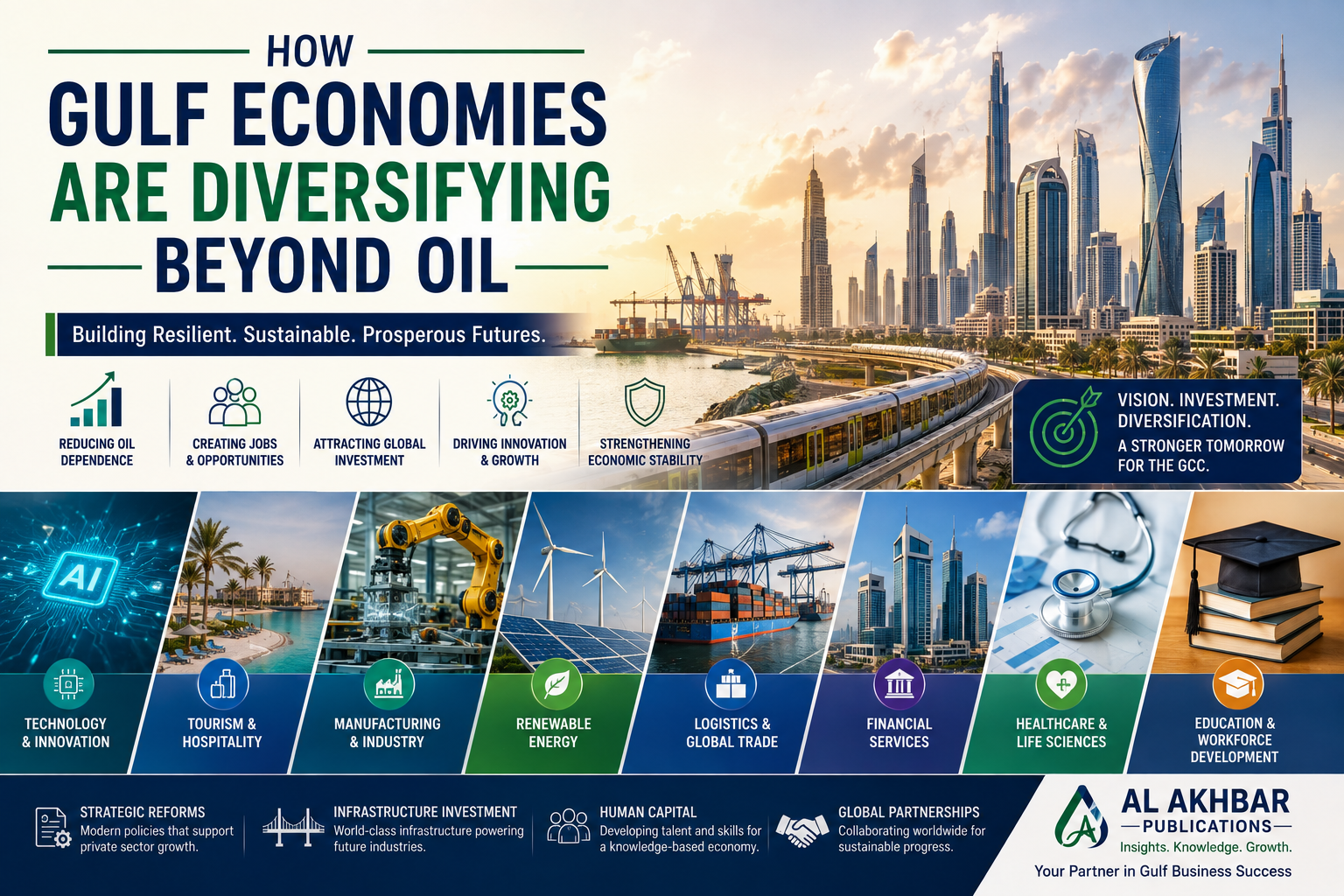
For decades, oil and gas revenues have played a central role in the economic development of Gulf countries. While hydrocarbons remain important, governments across the region are increasingly investing in new industries to build more resilient and sustainable economies. Through large-scale reforms, infrastructure investments, and policies that encourage private sector growth, the Gulf is steadily expanding beyond its traditional energy sector.
Understanding GCC economic diversification and the growth of the Gulf non-oil economy offers valuable insight into how the region is preparing for long-term economic competitiveness in a rapidly changing global landscape.
Why Economic Diversification Matters
Economic diversification involves expanding multiple industries instead of relying heavily on one source of income.
Its objectives include:
- Reducing dependence on oil revenue
- Creating new employment opportunities
- Attracting foreign investment
- Supporting innovation
- Strengthening long-term economic stability
- Increasing global competitiveness
Diversification helps economies become more adaptable to changing market conditions.
The Gulf's Changing Economic Landscape
Across the GCC, governments are investing in sectors beyond energy.
Major growth areas include:
- Technology
- Tourism
- Manufacturing
- Logistics
- Financial services
- Renewable energy
- Healthcare
- Education
These industries contribute to a more balanced economic structure.
Why Reducing Oil Dependence Is Important
Oil markets can experience price fluctuations due to global demand, supply changes, and geopolitical events.
Expanding the Gulf non-oil economy helps countries:
- Diversify government revenue
- Encourage private investment
- Improve economic resilience
- Support sustainable development
A broader economy is generally better positioned to manage global economic uncertainty.
Vision Strategies Driving Growth
Many Gulf countries have introduced long-term national development plans.
These strategies commonly focus on:
- Economic modernization
- Private sector development
- Innovation
- Digital transformation
- Human capital development
- Infrastructure expansion
These initiatives are shaping the region's future economy.
Tourism Continues to Expand
Tourism has become a significant contributor to economic diversification.
Investments include:
- Luxury hotels
- Cultural attractions
- Entertainment venues
- Sporting events
- Heritage tourism
- Business tourism
Growing visitor numbers support hospitality and retail industries.
Technology and Innovation
Technology is becoming a major economic driver.
Governments continue supporting:
- Artificial intelligence
- Fintech
- Smart cities
- Cybersecurity
- Digital services
- Research and development
Innovation ecosystems help attract startups and international businesses.
Renewable Energy Investments
While oil remains important, renewable energy projects continue expanding.
Key investment areas include:
- Solar power
- Wind energy
- Hydrogen technologies
- Energy efficiency
- Sustainable infrastructure
These initiatives support long-term environmental and economic objectives.
Manufacturing Growth
Manufacturing is playing a larger role in regional development.
Growing industries include:
- Food processing
- Pharmaceuticals
- Petrochemicals
- Construction materials
- Industrial equipment
Local production helps strengthen supply chains and diversify exports.
Logistics and Global Trade
The Gulf's strategic geographic location supports international trade.
Governments continue investing in:
- Modern ports
- Airports
- Free zones
- Distribution centers
- Transport infrastructure
Efficient logistics strengthen the region's position as a global trade hub.
Free Zones Encourage Investment
Free economic zones continue attracting international companies.
Benefits often include:
- Simplified business registration
- Foreign ownership opportunities
- Tax incentives (where applicable)
- Modern infrastructure
- Business-friendly regulations
These zones encourage entrepreneurship and international investment.
Growth of the Financial Sector
Financial services continue expanding throughout the Gulf.
Areas of development include:
- Digital banking
- Investment management
- Islamic finance
- Insurance
- Venture capital
- Capital markets
A strong financial sector supports broader economic growth.
Small Business Development
Governments increasingly support entrepreneurs and SMEs.
Programs often encourage:
- Startup funding
- Innovation
- Business incubation
- Skills development
- Digital entrepreneurship
Small businesses contribute to job creation and economic diversity.
Education and Workforce Development
Developing local talent remains a long-term priority.
Investments include:
- Universities
- Technical education
- Professional training
- Digital skills
- Research institutions
Education supports the evolving needs of modern industries.
Healthcare Expansion
Healthcare continues attracting investment across the GCC.
Growth areas include:
- Private hospitals
- Medical technology
- Specialized healthcare
- Telemedicine
- Pharmaceutical production
Healthcare contributes to both economic development and public well-being.
Digital Transformation Across Industries
Businesses throughout the Gulf are adopting digital technologies.
Examples include:
- Cloud computing
- E-commerce
- Automation
- Artificial intelligence
- Digital government services
Technology improves efficiency across multiple sectors.
Foreign Investment Opportunities
International investors continue exploring opportunities across diversified industries.
Popular sectors include:
- Real estate
- Renewable energy
- Manufacturing
- Tourism
- Financial technology
- Healthcare
Investment-friendly reforms continue attracting global businesses.
Challenges of Diversification
Economic transformation requires long-term planning.
Common challenges include:
- Global market uncertainty
- Workforce development
- Technology adoption
- Infrastructure investment
- Regulatory modernization
Governments continue addressing these challenges through strategic reforms.
Future Outlook for the Gulf
The future of GCC economic diversification is expected to focus on:
- Knowledge-based industries
- Sustainable development
- Innovation
- Advanced manufacturing
- Digital economies
- International partnerships
These priorities aim to support long-term economic resilience and competitiveness.
Conclusion
The Gulf region is undergoing a significant economic transformation by expanding beyond its traditional reliance on oil. Through investments in technology, tourism, manufacturing, renewable energy, logistics, healthcare, and financial services, GCC countries are building more diverse and resilient economies capable of adapting to global changes. Continued support for entrepreneurship, digital innovation, and foreign investment is expected to strengthen the Gulf non-oil economy in the years ahead.
Al Akhbar Publications provides readers with informative coverage of Gulf business trends, economic developments, investment opportunities, and regional policy changes. By delivering timely insights into GCC economic diversification and emerging industries, Al Akhbar Publications helps business leaders, investors, and entrepreneurs stay informed about the evolving economic landscape of the Gulf region.