
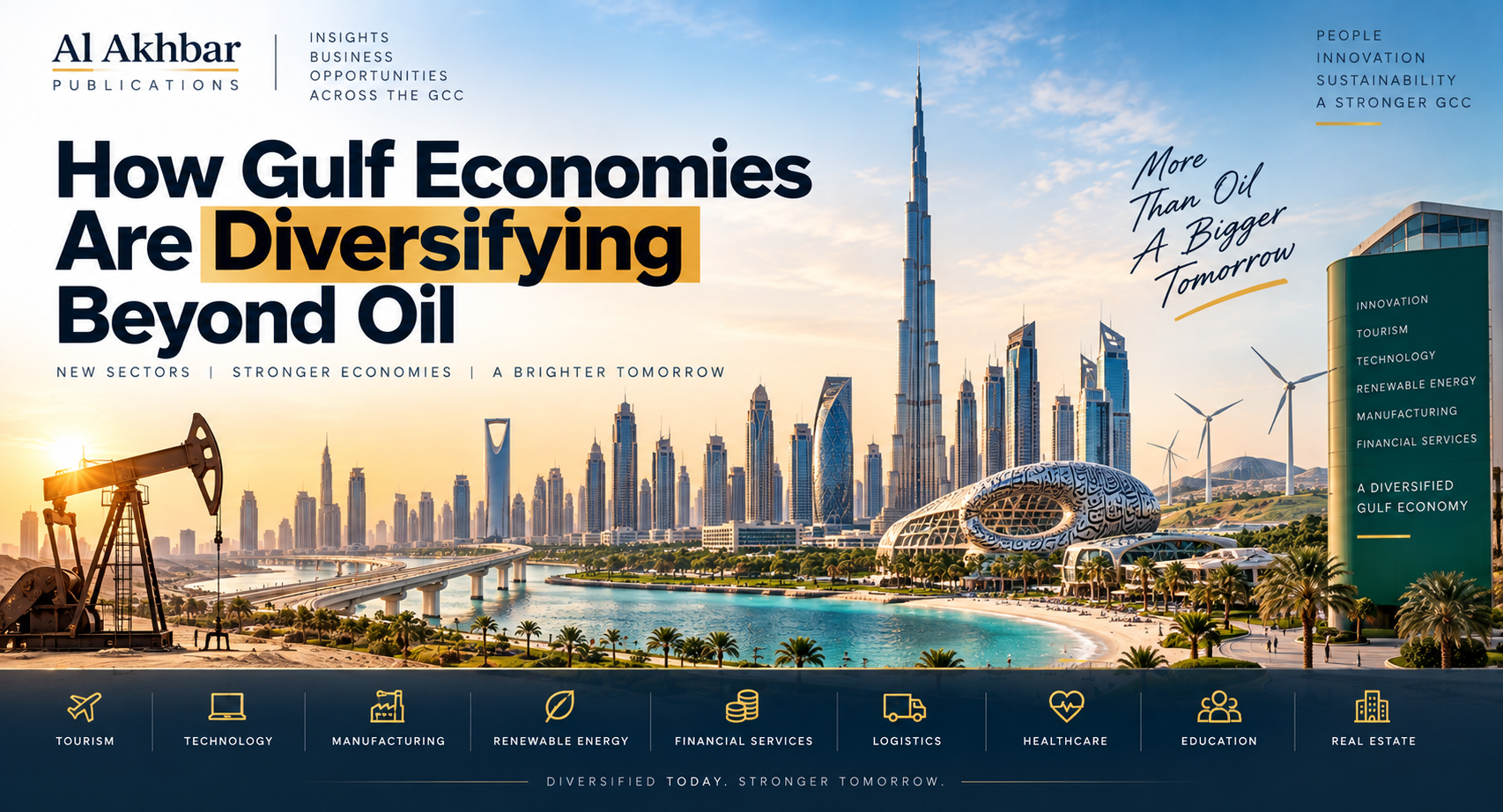
For decades, oil has been the primary driver of economic growth across the Gulf Cooperation Council (GCC). Today, however, countries throughout the region are investing heavily in new industries to create more balanced and sustainable economies. From tourism and technology to renewable energy and financial services, governments are expanding opportunities that reduce dependence on hydrocarbons while encouraging innovation, entrepreneurship, and foreign investment.
Understanding GCC economic diversification and the growth of the Gulf non-oil economy provides valuable insight into how the region is preparing for long-term economic resilience.
Why Economic Diversification Matters
Diversification helps countries reduce reliance on a single source of income.
Its key objectives include:
- Expanding economic sectors
- Creating employment opportunities
- Encouraging private investment
- Supporting innovation
- Building long-term stability
A diversified economy is generally better positioned to adapt to changing global market conditions.
Growth of the Non-Oil Economy
The Gulf non-oil economy continues to expand through investment in multiple industries.
Growing sectors include:
- Tourism
- Technology
- Healthcare
- Manufacturing
- Logistics
- Financial services
These industries contribute to broader economic development and increased business opportunities.
Tourism as a Major Economic Driver
Tourism has become one of the fastest-growing sectors across the GCC.
Governments are investing in:
- Luxury hotels
- Cultural attractions
- Entertainment destinations
- Sports events
- Business tourism
- Heritage projects
The expansion of tourism supports local businesses and job creation.
Technology and Digital Transformation
Digital innovation is playing a central role in GCC economic diversification.
Investment areas include:
- Artificial intelligence
- Cloud computing
- Smart cities
- Cybersecurity
- Digital payments
- E-commerce
Technology supports productivity and attracts new investment.
Supporting Entrepreneurship
Many Gulf countries are encouraging startups and small businesses.
Initiatives often focus on:
- Business incubators
- Startup funding
- Innovation hubs
- Simplified business registration
- Entrepreneur support programs
A thriving startup ecosystem contributes to long-term economic growth.
Expanding Financial Services
The financial sector continues to grow across the region.
Development includes:
- Digital banking
- Fintech innovation
- Investment management
- Insurance services
- Capital markets
Modern financial services strengthen business confidence and investment activity.
Manufacturing and Industrial Development
Governments are increasing investment in advanced manufacturing.
Priority industries include:
- Food production
- Pharmaceuticals
- Industrial equipment
- Construction materials
- Chemicals
Domestic production supports economic resilience and supply chain security.
Renewable Energy Investments
The Gulf is investing significantly in clean energy projects.
Key areas include:
- Solar power
- Wind energy
- Green hydrogen
- Energy efficiency
- Sustainable infrastructure
Renewable energy complements traditional energy resources while supporting environmental goals.
Logistics and Global Trade
The GCC's strategic location makes it a major logistics hub.
Investments include:
- Modern ports
- Airports
- Warehousing
- Transport infrastructure
- Supply chain technology
Efficient logistics support international trade and regional connectivity.
Education and Workforce Development
A skilled workforce is essential for diversification.
Governments continue to invest in:
- Higher education
- Technical training
- Digital skills
- Research programs
- Professional development
Education prepares future talent for emerging industries.
Real Estate and Infrastructure
Large-scale infrastructure projects continue to reshape Gulf cities.
Examples include:
- Mixed-use developments
- Commercial districts
- Smart communities
- Public transportation
- Urban regeneration
Infrastructure investment stimulates broader economic activity.
Healthcare Expansion
Healthcare has become another important growth sector.
Investment supports:
- Hospitals
- Medical technology
- Specialized clinics
- Health research
- Digital healthcare services
Growing healthcare systems improve quality of life while creating new business opportunities.
Foreign Investment Opportunities
Many GCC countries continue to attract international investors through business-friendly reforms.
These efforts may include:
- Investment incentives
- Regulatory improvements
- Free zones
- Simplified licensing processes
- Public-private partnerships
Foreign investment supports innovation and economic expansion.
Challenges Along the Way
Diversification also brings challenges.
These may include:
- Global economic uncertainty
- Workforce transformation
- Technology adoption
- International competition
- Infrastructure demands
Careful planning helps address these evolving needs.
The Future of the Gulf Economy
Looking ahead, continued investment is expected in:
- Artificial intelligence
- Renewable energy
- Advanced manufacturing
- Digital services
- Tourism
- Innovation
These sectors are likely to play an increasingly important role in regional growth.
Why Diversification Benefits Businesses
A broader economy creates opportunities for both local and international companies.
Potential benefits include:
- New investment opportunities
- Expanded consumer markets
- Greater industry diversity
- Increased innovation
- Long-term economic resilience
Businesses that understand these trends are better positioned to identify future opportunities.
Conclusion
The Gulf's transition toward a more diversified economy reflects a long-term vision focused on innovation, sustainability, and resilience. While oil remains an important economic pillar, continued investment in technology, tourism, healthcare, manufacturing, logistics, and renewable energy is creating a stronger and more balanced economic landscape. As the Gulf non-oil economy grows, businesses and investors can expect new opportunities across a wide range of sectors.
Al Akhbar Publications provides readers with informative coverage of regional business developments, economic trends, and investment insights across the GCC. Whether you're exploring GCC economic diversification, following the growth of the Gulf non-oil economy, or seeking updates on emerging industries, Al Akhbar Publications delivers practical analysis to help readers stay informed about the region's evolving economic future.