
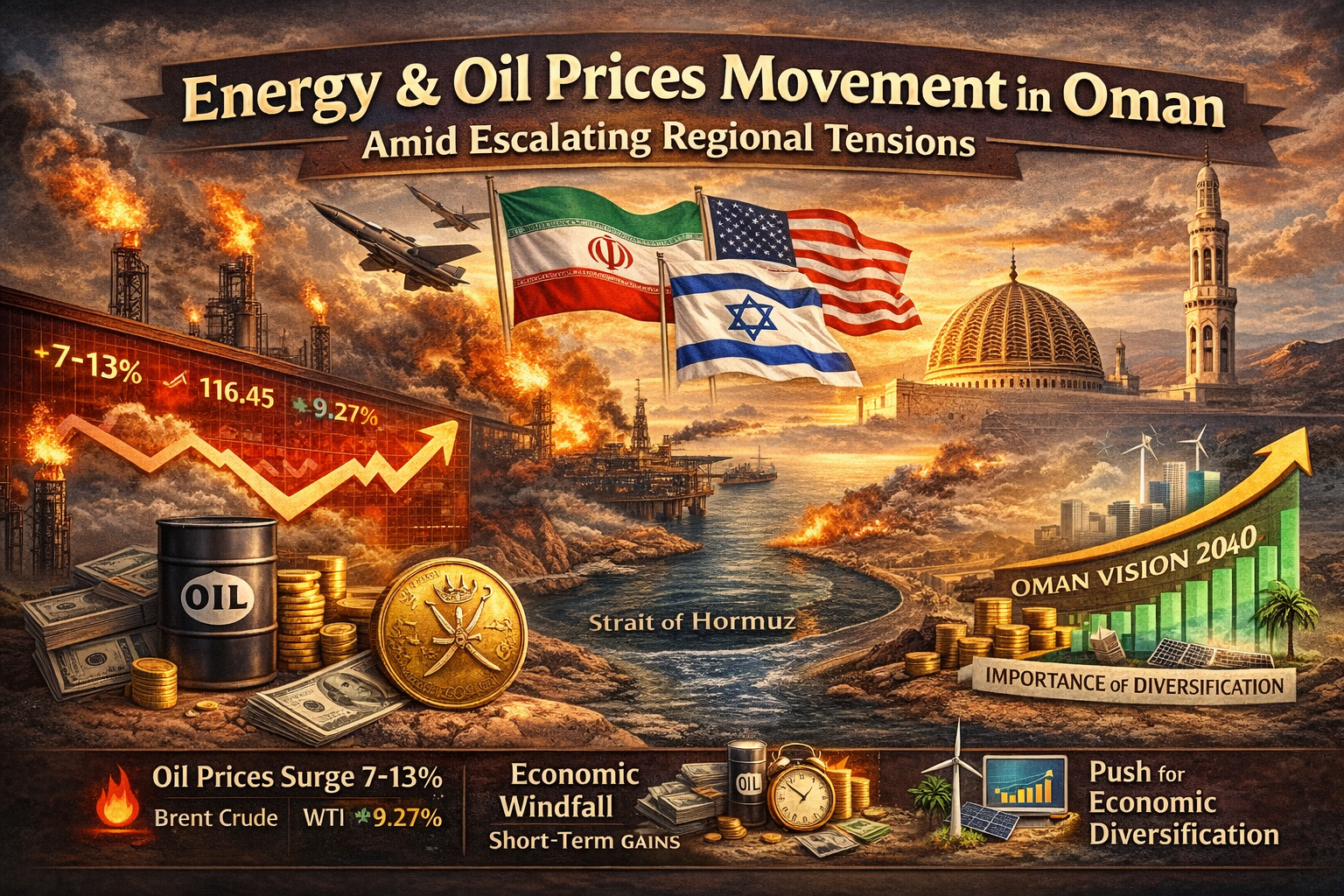
The Iran–Israel–USA conflict that has been brewing for decades has once again reached new heights in 2026, with increasing military actions, airstrikes, and retaliatory measures. This escalation has had profound effects on the global energy market, particularly in the Gulf Cooperation Council (GCC) region, which includes Oman. As a critical oil-exporting country, Oman is heavily reliant on its energy sector for government revenues, business confidence, and economic stability.
In this blog, we will explore how the escalating geopolitical situation in the Middle East is affecting oil prices, Oman’s oil sector, and the broader economic landscape. From price surges and volatile market trends to the long-term implications for Oman's fiscal health, this piece will provide a comprehensive understanding of how oil price fluctuations are shaping Oman’s future.
Oil Prices Surge Amid Heightened Geopolitical Risks
As the conflict between Iran, Israel, and the USA intensified, oil prices spiked sharply, triggering concerns about the global energy supply and the future stability of energy markets. Oil remains a critical export for most Gulf States, and Oman is no exception. It is one of the major oil producers in the region, with petroleum exports forming the backbone of its economy.
Immediate Impact on Oil Prices: Surge in Prices
When geopolitical tensions escalate, markets react by adjusting expectations regarding the availability of oil and energy resources. With the Strait of Hormuz (a vital shipping route for global oil trade) being at the heart of the conflict, concerns about potential disruptions in oil flow have caused significant volatility in oil prices. Since the onset of the latest escalation, Brent Crude and West Texas Intermediate (WTI), two major oil benchmarks, saw price increases of 7–13%, as traders and investors reacted to the potential risk to global energy supplies.
These price surges occurred for several reasons:
-
Supply Chain Disruptions: The Strait of Hormuz is a strategic passageway for nearly 20% of the world’s oil supply. Any military conflict near the strait raises fears about a blockade or disruptions in shipping.
-
Increased Demand Amid Scarcity: As the conflict escalates, speculation about oil shortages increases, which leads to higher demand for oil futures. This demand spike pushes oil prices up.
-
Fear of Further Escalation: There is always a risk of conflict spilling into other parts of the Gulf region, affecting more significant production facilities, which causes prices to surge.
For Oman, this sudden increase in oil prices brings both opportunities and challenges. The immediate boost in oil revenues is beneficial for the government, especially as it grapples with ongoing fiscal deficits from prior low oil prices. However, this volatility can create significant challenges in terms of budget planning and investment forecasting for the long term.
Oman’s Oil-Dependent Economy Faces Mixed Impact
Oil Revenue Surge and Government Budgeting
For Oman, which is heavily reliant on oil exports for government revenue, the price surge presents a short-term financial windfall. Higher oil prices directly translate to increased oil revenue, which can help bridge the government’s fiscal deficit and fund public projects and social programs. The Omani government is already engaged in efforts to diversify its economy, but oil remains the dominant source of revenue, making fluctuations in global oil prices a crucial factor in Oman’s economic planning.
Short-Term Gains
-
Increased Government Revenues: As oil prices rise, Oman’s revenue from oil exports increases, providing a short-term financial cushion. This extra revenue is vital for the country, especially as it continues efforts to balance its budget amidst fiscal challenges.
-
Stimulus for Key Sectors: Higher oil prices can stimulate growth in key sectors such as construction, infrastructure development, and public services, all of which are funded by the government’s oil revenue.
Long-Term Concerns
However, oil price volatility is a double-edged sword. The long-term uncertainty that comes with price fluctuations creates challenges for future planning. If oil prices remain high for an extended period, Oman may become dependent on these revenues to fund its budget, making the economy vulnerable to future market crashes.
Additionally, while short-term increases are welcomed, price crashes—if they occur in the future—could devastate Oman’s economy. This is particularly true for a country whose efforts to diversify away from oil are still in their early stages.
The Broader Economic Effects on Oman’s Businesses
The fluctuations in oil prices do not just affect the government’s budget but also have a profound impact on Oman’s businesses. Many private sector firms depend on the steady income generated from the oil industry for their own operations, supply chains, and employment.
Impact on Business Confidence
In a country where the oil sector accounts for about 70% of export earnings, businesses that rely on oil-related activities face both benefits and risks depending on oil price movements. The volatility brought on by geopolitical risks leads to uncertainty among business owners, investors, and entrepreneurs, who must adapt to changing market conditions.
Oil-Related Sectors
Oman’s energy sector, which includes both oil and gas companies, is directly impacted by rising oil prices. These companies benefit from increased demand for oil, leading to higher profits and the ability to expand operations or reinvest in projects. However, non-oil companies that rely on oil supply chains or deal in imports and exports face higher costs.
For instance:
-
Construction Firms: These firms are often closely tied to the energy sector as oil-related projects require raw materials like steel, cement, and machinery. If oil prices increase, so do costs for these raw materials, raising the cost of construction projects.
-
Manufacturing: For Oman’s manufacturing businesses, higher oil prices result in increased transportation and logistics costs, which affect the price of imported raw materials. These rising costs could be passed on to consumers, leading to inflation.
Investment Strategy Adjustments
The rise in oil prices might prompt investors to re-evaluate their portfolios. Investors who initially shifted toward safer assets, like government bonds, during periods of low oil prices may now look at re-entering the oil sector, given the attractive returns that higher prices offer. However, the risk of future price crashes keeps cautious investors from fully embracing this sector.
The Long-Term Shift Toward Economic Diversification
While Oman stands to benefit from the current surge in oil prices, long-term stability lies in the country’s diversification strategy. Oman’s Vision 2040 outlines the shift from an oil-dependent economy to one driven by sectors like tourism, renewable energy, technology, and logistics.
The current volatility in global energy markets highlights the importance of reducing Oman’s dependence on oil. The ongoing price spikes could push the government to reaffirm its commitment to diversification.
Renewable Energy and Non-Oil Sectors
Oman has renewable energy goals in its Vision 2040, and global oil price volatility reinforces the importance of these efforts. By reducing reliance on oil and fostering new energy sectors, Oman can buffer itself from future price shocks.
Non-Oil Sector Expansion
Key sectors such as tourism, logistics, and information technology are part of Oman’s plan to achieve sustainable long-term growth. Higher oil prices provide the government with additional funds to reinvest in these sectors while gradually reducing its dependence on the oil sector.
Technology and Digital Transformation
The rise of digital economies and the expansion of IT infrastructure can provide Oman with a more stable source of income. Initiatives to attract foreign investment in these areas, along with the country’s efforts to develop a knowledge-based economy, could offer Omani businesses more resilience against future oil price fluctuations.
The Future Outlook: Oil Price Volatility and Oman’s Strategy
The ongoing geopolitical tensions between Iran, Israel, and the United States underscore the importance of stabilizing Oman’s economy beyond oil. Although the immediate surge in oil prices has been beneficial for Oman, it is essential for the country to develop mechanisms for navigating future price fluctuations and geopolitical instability.
Geopolitical Risk and Oil Price Volatility
In the long run, geopolitical uncertainty will continue to impact global oil prices. Oman will need to balance the benefits of higher oil revenues with the risks associated with a market that is easily susceptible to political instability.
A Diversified Economy: The Key to Resilience
The key to Oman’s future stability lies in economic diversification. By focusing on industries such as tourism, renewable energy, and digital business solutions, Oman can reduce its vulnerability to oil price shocks. The surge in oil prices, while beneficial in the short term, serves as a reminder that Oman must remain committed to diversification to ensure long-term resilience.
Conclusion: Navigating Oil Price Volatility in Oman’s Future
The recent surge in oil prices due to heightened tensions in the Middle East highlights Oman’s dependence on the energy sector and the vulnerability of oil-dependent economies. However, the short-term revenue boost is a reminder of the importance of oil to Oman’s financial health. Despite these gains, volatility remains a concern, and Oman’s ongoing efforts toward economic diversification will help it navigate future crises.
Ultimately, Oman’s future depends not just on how it handles oil price fluctuations, but also on its ability to adapt and diversify its economy, ensuring a more stable and resilient future beyond its dependence on oil.