
Introduction
The Gulf Cooperation Council (GCC) countries, including Oman, have long recognized the need to diversify their economies away from the traditional reliance on oil exports. The boom-and-bust cycle of global oil prices has underscored the vulnerability of oil-dependent economies to market fluctuations, especially in times of geopolitical instability. The ongoing tensions between Iran, Israel, and the USA have brought this issue into sharper focus, highlighting the importance of building resilient, diversified economies that can withstand external shocks.
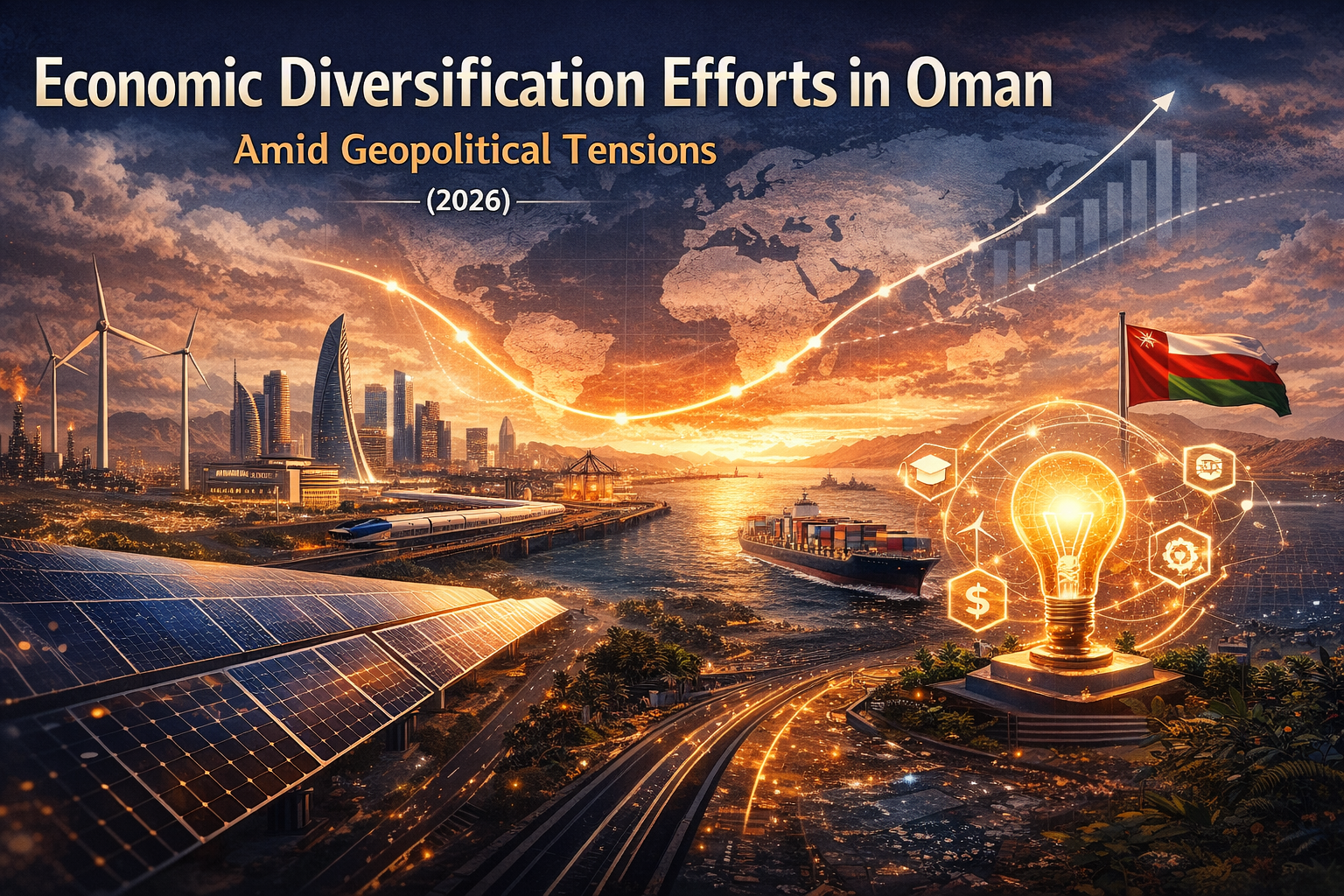
This blog will explore the economic diversification efforts in Oman and the broader GCC region, focusing on the challenges and opportunities these nations face in moving away from oil dependence. It will also examine how current geopolitical conditions are testing these diversification strategies and reinforcing the importance of knowledge-based economies, renewable energy, and service-oriented growth.
1. The Necessity of Economic Diversification in Oman and GCC States
Why Diversification Is Crucial
For decades, GCC countries such as Oman, Saudi Arabia, the UAE, Kuwait, Bahrain, and Qatar have been heavily dependent on oil revenues to sustain their economies. The oil sector has not only been a major source of income but also the foundation upon which infrastructure, employment, and development have been built. However, as global energy markets have become more volatile, the need for economic diversification has become clear.
Oman, in particular, has faced challenges in sustaining its oil production levels and has recognized that continuing to rely on this finite resource is unsustainable in the long term. This has led to a renewed focus on creating an economy that is less reliant on fossil fuels and more centered on sectors such as tourism, technology, finance, manufacturing, and renewable energy.
Challenges of Oil Dependency
Oman's over-reliance on oil has exposed it to a range of challenges:
-
Oil Price Volatility: Global oil prices can swing dramatically, influenced by factors like geopolitical tensions, supply-demand imbalances, and OPEC policies.
-
Environmental Concerns: As the world increasingly shifts towards sustainability, nations dependent on oil face mounting pressure to reduce carbon emissions and embrace cleaner energy sources.
-
Resource Depletion: Oil is a finite resource. Over time, the costs of extracting oil rise, and reserves can deplete, leaving countries vulnerable if they do not find alternative sources of revenue.
Oman’s efforts to diversify are part of a larger GCC strategy to mitigate these vulnerabilities and ensure long-term economic stability.
2. Oman’s Vision 2040: A Path to Economic Diversification
The Roadmap for Diversification
Oman’s Vision 2040 is a comprehensive plan designed to transition the country from an oil-dependent economy to one that is based on knowledge, innovation, and sustainable industries. The plan outlines several key areas of focus:
-
Economic Diversification: Moving beyond oil to develop sectors such as tourism, manufacturing, and services.
-
Renewable Energy: Investing in solar and wind energy to reduce reliance on fossil fuels and make Oman a regional leader in clean energy.
-
Technology and Innovation: Fostering a knowledge-based economy by investing in education, digital transformation, and startups in the tech sector.
Oman’s investment in infrastructure, including modern ports, airports, and logistics hubs, is also integral to its diversification efforts. The Sohar Port and Salalah Port, for example, are part of Oman's strategy to become a regional logistics hub, facilitating trade between the East and West and creating new opportunities for business growth.
Fostering Key Sectors for Growth
The tourism industry is a key focus in Oman’s diversification strategy. The country’s unique culture, rich history, and natural beauty position it as a tourist destination for international visitors. The government has been investing in hotels, resorts, and other tourism infrastructure to attract foreign investment and tourists.
In addition, Oman is targeting industries like finance and manufacturing to ensure that it can maintain stable economic growth without relying on oil exports.
3. Geopolitical Tensions and Their Impact on Diversification
While Oman and other GCC states have made significant strides in diversifying their economies, the recent geopolitical tensions between Iran, Israel, and the USA have brought the vulnerabilities of regional economies into sharp focus.
Impact on Oil Markets and Revenues
The escalation of tensions in the Middle East has led to increased oil price volatility, which directly affects Oman’s oil revenues. Higher oil prices can provide a temporary boost to the economy, but they also contribute to economic instability due to the unpredictability of the global oil market.
For example:
-
Increased oil prices can help fund diversification projects in the short term.
-
Oil price crashes can lead to deficits and financial instability, particularly if the country is still highly dependent on oil for government income.
As a result, the current geopolitical instability is underscoring the importance of economic diversification. While oil revenue can provide a cushion, the long-term economic health of Oman will depend on how well it develops and sustains its non-oil sectors.
Regional Instability and Investor Confidence
Oman’s efforts to diversify are also being tested by regional instability. Foreign investors may be cautious about investing in sectors like tourism, real estate, and manufacturing in Oman if they perceive the region as too volatile. The political risks posed by conflicts between Iran and Israel, as well as the broader tensions with the USA, have made potential investors more hesitant.
However, Oman’s stable political environment and its commitment to neutrality in international affairs have helped it maintain some investor confidence. The safety and security of Oman as a country have allowed it to continue attracting investment in key sectors, despite the challenges posed by regional instability.
4. The Importance of Knowledge-Based Economies
Building a Knowledge Economy
In order to reduce reliance on oil, Oman is focusing on building a knowledge-based economy through investments in education, research and development (R&D), and technology. The technology sector is a key area of focus, as the country seeks to position itself as a hub for innovation and digital transformation in the GCC region.
Oman is actively encouraging startups in technology and innovation, and digital infrastructure projects are being rolled out across the country. The goal is to foster an environment where entrepreneurs can thrive and new business models can emerge that are less dependent on oil.
Promoting Education and Research
Oman is investing in its education system to provide its citizens with the skills needed to succeed in a digital economy. Universities and research institutions are being supported to promote STEM education (Science, Technology, Engineering, and Mathematics) and develop cutting-edge research in artificial intelligence, renewable energy, and other forward-looking fields.
Tech Hubs and E-commerce Growth
The growth of the e-commerce sector in Oman is another key aspect of the country’s economic diversification. Oman is positioning itself as a hub for e-commerce in the GCC, with initiatives that encourage online retail, fintech innovation, and digital services. The COVID-19 pandemic accelerated the adoption of digital business models, and these trends are expected to continue.
5. Renewable Energy and Green Technologies
As part of its diversification strategy, Oman is heavily investing in renewable energy. The country’s abundant sunshine and wind resources make it an ideal location for solar and wind energy projects. Oman has set ambitious targets for renewable energy generation as it seeks to reduce its dependence on oil and gas.
The Role of Solar and Wind Power
Oman has already begun to roll out large-scale solar projects, with several solar farms already in operation. The government aims to generate 10% of its energy from renewable sources by 2025 and 30% by 2030. Additionally, Oman is working on expanding its wind energy capacity in areas like Duqm and Salalah.
By embracing renewable energy, Oman can not only reduce its carbon footprint but also position itself as a regional leader in clean energy. This is crucial for ensuring that Oman’s economy is sustainable and competitive in the global marketplace.
6. The Future of Economic Diversification in Oman
Despite the challenges posed by geopolitical instability, Oman’s diversification efforts remain on track. The ongoing regional tensions serve as a reminder of the risks associated with oil dependency, underscoring the importance of Oman’s long-term strategy to build a more resilient and diversified economy.
As Oman continues to invest in knowledge-based industries, renewable energy, and infrastructure, it will likely see more stability in the long term. The transition to a diversified economy is a gradual process, but Oman’s commitment to economic diversification through its Vision 2040 and the ongoing development of non-oil sectors provide a strong foundation for future growth.
Conclusion: Reinforcing the Importance of Diversified Economic Growth
The geopolitical tensions between Iran, Israel, and the USA have placed additional pressure on the GCC states to accelerate their economic diversification efforts. For Oman, these challenges have reinforced the importance of building a knowledge-based economy, investing in renewable energy, and creating resilient, non-oil industries.
By continuing to focus on education, innovation, sustainability, and economic diversification, Oman can position itself as a regional leader in the post-oil era. While the current geopolitical instability tests Oman’s diversification strategy, the country’s long-term vision and commitment to economic growth through diversification will ensure its prosperity in the years to come.