
Summary
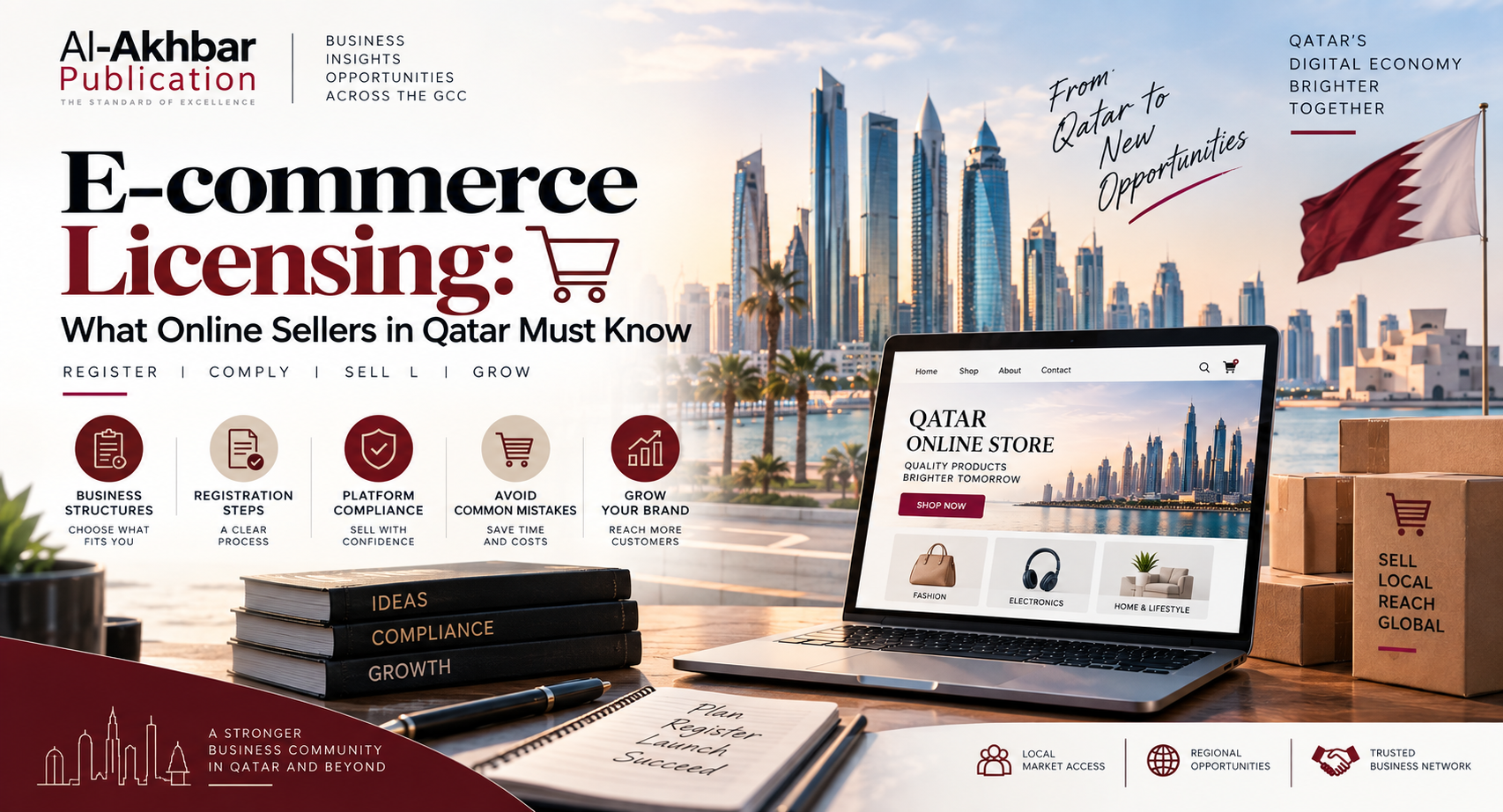
Selling online in Qatar now requires a valid e-commerce license, regardless of business size. This guide covers business structures, registration steps, platform compliance rules, and common mistakes to avoid — helping sellers register correctly and build trust with customers across Qatar's growing digital marketplace.
Thinking about selling online in Qatar? You're not alone. More people are shopping through websites, apps, and even Instagram than ever before, and Qatar's digital market is growing fast. But before you list your first product, there's one thing you absolutely cannot skip: getting the right paperwork in order.
If you're searching for clarity on how to get an e-commerce license in Qatar, this guide breaks it all down in plain, simple language — no confusing legal jargon, just what you actually need to know.
Why Qatar Is a Great Place to Sell Online
Before we get into the legal side of things, let's talk about why so many entrepreneurs are choosing Qatar for their online business.
- High internet and smartphone use: Most people in Qatar shop online regularly, from groceries to electronics to fashion.
- Strong digital payment systems: Cashless payments are the norm, with apps and bank gateways making checkout smooth and secure.
- Great location: Qatar connects easily to the wider GCC region, giving your business access to a much bigger customer base.
- More flexible setup options: You no longer need an expensive physical office just to start selling — digital and home-based licenses have made things far more affordable.
These factors make Qatar an exciting place to launch an online store. But excitement aside, the law is very clear: you can't legally sell without proper registration.
The Law Has Changed — And It Applies to Everyone
Here's something a lot of new sellers don't realize: Qatar recently tightened its rules around online selling. A new ministerial decision now requires anyone conducting commercial activity online — whether through a website, app, or even a WhatsApp broadcast list — to hold a valid license.
This isn't limited to big businesses. If you're running a consistent, income-generating online store, even a small one, you need to be licensed. The only real exception is for occasional personal sales, like selling a used item once in a while. If you're doing regular business, that exception doesn't apply to you.
This shift means getting an e-commerce license in Qatar isn't optional anymore — it's a legal requirement for anyone serious about selling online.
Choosing the Right Business Structure
One of the first decisions you'll make is where and how to set up your business. This choice affects your ownership rights, costs, and how you can sell.
Mainland Company
Registering through Qatar's Ministry of Commerce and Industry (MoCI) lets you sell directly to local customers and lease commercial space anywhere in the country. This route has become more flexible over the years, with more opportunities now available for full foreign ownership in many sectors.
Free Zone Setup
If your focus is international shipping or a regional trading hub, Qatar's free zones offer full foreign ownership and simpler setup. Keep in mind, though, that selling directly into the local Qatari market from a free zone often requires working with a local distributor.
Qatar Financial Centre (QFC)
This option suits fintech and advanced digital service companies more than typical retail e-commerce. It offers full ownership and operates under a well-established legal framework, but it isn't usually the right fit for a standard online store.
Home License
For eligible residents, a home-based license allows certain business activities to run without renting separate office space — a budget-friendly way to get started.
Step-by-Step: How to Register Your Online Business
Getting your online business registration in Qatar sorted doesn't have to be overwhelming if you follow the right order of steps.
- Reserve your trade name — Choose a business name that fits your activity and meets MoCI naming rules.
- Get your Commercial Registration (CR) — This is the foundation of your entire business setup.
- Secure a business address — Even a shared or virtual office can meet this requirement in many cases.
- Apply for your e-commerce license — Clearly declare your business activities and the exact platforms you'll be selling through.
- Get sector-specific approvals — If you're selling regulated products like food, health items, or supplements, extra approvals may apply.
- Register your domain and protect your brand — Secure a local domain name and consider trademark registration.
- Open a business bank account and connect a payment gateway — This lets you actually accept payments from customers online.
Completing these steps in order helps you avoid delays and rejected applications — one of the most common frustrations for first-time online sellers.
One License Per Platform — Yes, Really
Here's a detail that catches a lot of sellers off guard: your e-commerce license only covers the specific platform it's registered for. If you sell through your website, an Instagram shop, and a third-party marketplace, you'll need a separate license for each one.
This applies even to small, casual-looking setups. Selling through Instagram or WhatsApp is treated exactly like running a retail business — because legally, that's exactly what it is.
What Your Website or Store Must Show Customers
Once licensed, your platform needs to display certain information clearly and honestly. This isn't just good practice — it's a legal requirement tied to consumer protection rules.
Make sure your platform includes:
- Your Commercial Registration and e-commerce license numbers
- Verified contact details and customer support information
- Clear, detailed product or service descriptions
- Return, exchange, and refund policies
- A working complaint-handling process
- Secure, functioning electronic payment options
- Transparent pricing with no hidden fees
Missing any of these can lead to penalties or even suspension, so it's worth double-checking your site before you go live.
Common Mistakes to Avoid
Many new business owners run into the same avoidable issues. Watch out for these:
- Being vague about your business activity when applying, which often leads to rejected applications
- Assuming one license covers every platform you use
- Thinking the license is the finish line, when banking, payment setup, and logistics still need attention
- Skipping mandatory website details, like your CR number or refund policy
- Choosing the wrong jurisdiction, then struggling to sell into the local market later
Avoiding these mistakes early saves you time, money, and a lot of unnecessary stress.
Why Choose Al Akhbar Publication?
Navigating online business registration in Qatar is easier when you have the right partners and the right information — and that's exactly where Al Akhbar Publication comes in.
We've built more than a media platform. Al Akhbar Publication is a Strategic Business Hub connecting industrial leaders, local sellers, and everyday consumers across the GCC and beyond. Our focus is entirely commercial, giving sellers the visibility they need and giving consumers the transparency they deserve.
Here's what makes us different:
- Sellers Enablement: We provide high-impact digital visibility, real market insights, and direct access to regional consumers looking for trustworthy sellers.
- Consumer Assurance: Our verified directory helps shoppers find reliable, credible businesses across the GCC with confidence.
- B2B Networking: We connect businesses across borders, helping fuel partnerships and industrial growth throughout the region.
Whether you're just starting your online store or scaling an established brand, Al Akhbar Publication helps you get seen by the right audience — at the right time.
Conclusion:
Selling online in Qatar comes with huge opportunity, but it also comes with real legal responsibility. From choosing the right business structure to securing your e-commerce license in Qatar and completing proper online business registration in Qatar, each step matters. Skipping the paperwork might seem like a shortcut, but it usually leads to bigger headaches — fines, blocked accounts, or lost customer trust.
Take the process seriously, follow the steps in order, and make sure your platform meets every requirement before you launch.
Ready to grow your online business the right way? Partner with Al Akhbar Publication and connect with the GCC's growing digital marketplace today