
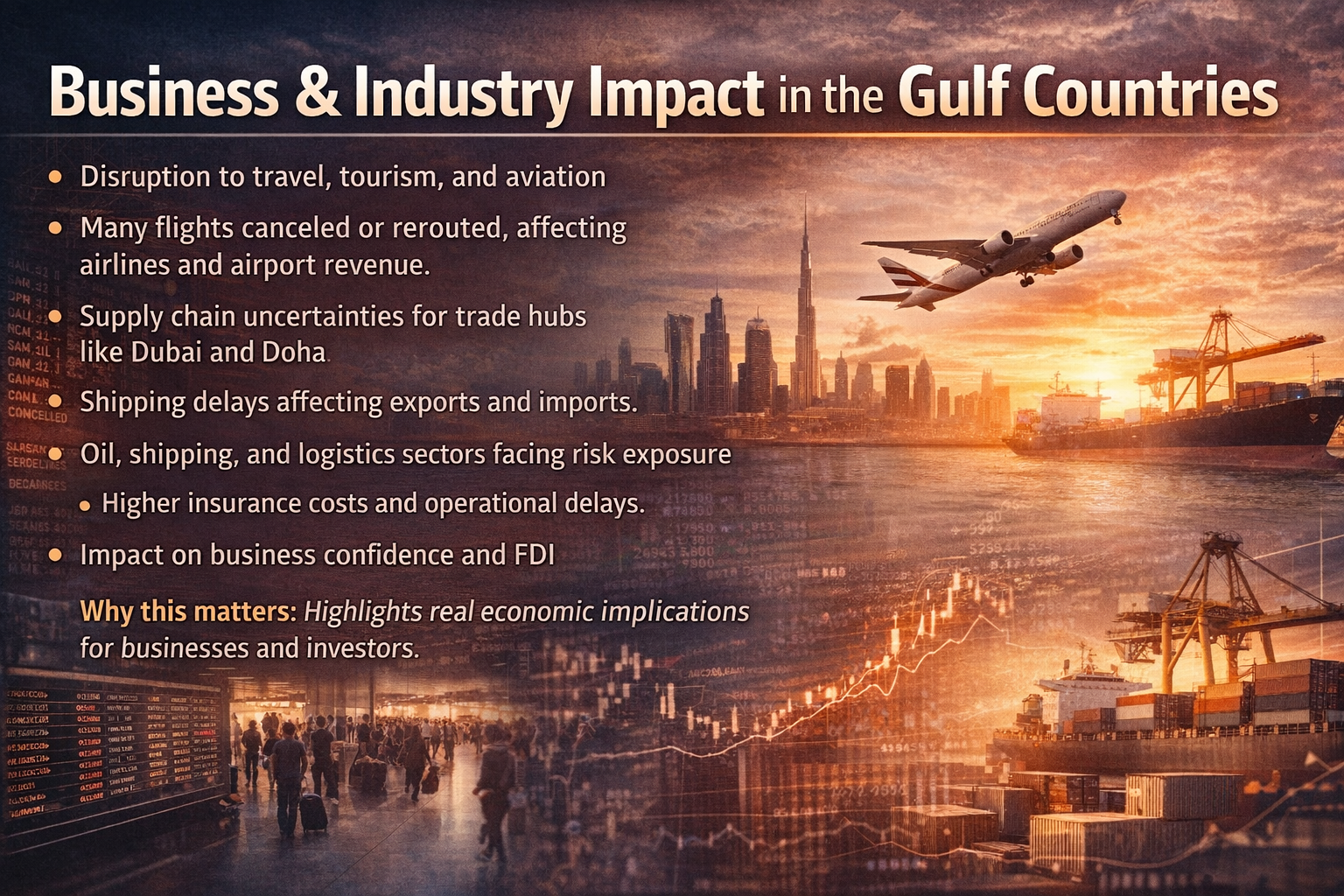
Geopolitical tension in the Gulf does not only affect governments and energy markets—it directly influences businesses, investors, airlines, logistics companies, and trade hubs. Countries such as the United Arab Emirates and Qatar have built global reputations as stable commercial gateways. When regional instability rises, even temporarily, the economic ripple effects can be significant.
This section explores how travel, tourism, aviation, supply chains, oil shipping, and foreign investment are being impacted—and why these shifts matter for global investors.
Disruption to Travel, Tourism, and Aviation
The Gulf region is home to some of the world’s busiest aviation corridors. Rising tensions often lead to immediate operational adjustments in air travel.
1. Flight Cancellations and Rerouting
Airlines frequently reroute flights to avoid potentially risky airspace. Even precautionary changes can result in:
Longer flight times
Increased fuel costs
Delays and cancellations
Higher operational expenses
Major aviation hubs like Dubai International Airport and Hamad International Airport serve as key transit points between Europe, Asia, and Africa. If routes are disrupted, airline schedules and passenger volumes can be affected.
Airlines such as Emirates and Qatar Airways operate extensive international networks. Rerouting increases fuel consumption and crew costs, directly impacting profitability.
2. Tourism Sector Pressure
Tourism contributes significantly to Gulf economies, particularly in cities like Dubai and Doha. When international media coverage highlights regional tensions:
Some travelers postpone trips
Travel insurance premiums rise
Business conferences may be rescheduled
Even if local safety conditions remain stable, perception alone can temporarily slow tourism momentum.
Supply Chain Uncertainties for Major Trade Hubs
The Gulf region is a vital logistics bridge connecting Asia, Europe, and Africa.
1. Dubai and Doha as Global Trade Gateways
Dubai, in particular, is a re-export hub for goods flowing into the Middle East, Africa, and South Asia. Doha has also expanded its logistics infrastructure in recent years.
When shipping risks increase:
Cargo may be delayed
Freight rates can rise
Delivery timelines become unpredictable
Even small disruptions can complicate “just-in-time” supply chains used by retailers and manufacturers.
2. Shipping Delays and Maritime Risk
Tensions near the Strait of Hormuz affect maritime confidence. Shipping companies may slow transit speeds or wait for naval escorts in high-risk scenarios.
Consequences include:
Port congestion
Increased demurrage charges (fees for delayed cargo)
Higher insurance premiums for vessels
Trade hubs thrive on reliability. Uncertainty reduces efficiency and raises operational costs.
Oil, Shipping, and Logistics Sectors Facing Risk Exposure
Energy-exporting Gulf countries are closely tied to maritime stability.
1. Higher Insurance and Operational Costs
When insurers categorize a region as higher risk:
War-risk premiums increase
Shipping insurance costs rise
Charter rates for vessels go up
Even without direct conflict, these additional expenses reduce profit margins for exporters and shipping firms.
2. Operational Delays
Oil tankers and cargo ships may experience:
Longer inspection procedures
Security clearance requirements
Naval convoy coordination
All of these factors slow operations and increase costs.
Impact on Business Confidence and Foreign Direct Investment (FDI)
The Gulf region has spent decades positioning itself as a stable investment destination. Confidence is key.
1. Investor Risk Assessments
Global corporations regularly conduct geopolitical risk evaluations before expanding operations. Rising tensions can prompt:
Delayed investment decisions
Temporary pause in expansion projects
Increased due diligence
Even if long-term confidence remains intact, short-term hesitation can slow capital flows.
2. Consulting and Financial Advisory Warnings
Major global consulting and financial advisory firms often issue regional risk briefings during periods of instability. These reports may highlight:
Supply chain vulnerabilities
Insurance cost trends
Currency volatility risks
Scenario planning for multinational firms
Such assessments influence boardroom decisions worldwide.
Sector-Specific Business Impacts
1. Aviation and Hospitality
Hotels, airlines, and event organizers may experience booking fluctuations. Corporate travel policies sometimes tighten during uncertain periods.
2. Retail and E-Commerce
Retailers dependent on imported goods could face delayed shipments, increasing inventory management challenges.
3. Construction and Infrastructure
Mega-projects in the Gulf rely heavily on imported materials. Shipping delays or cost increases can affect timelines and budgets.
Balancing Risk with Resilience
Despite temporary disruption risks, Gulf economies have built strong financial buffers and diversified sectors.
Key resilience factors include:
Sovereign wealth funds
Modern infrastructure
Strong regulatory frameworks
Strategic economic diversification initiatives
This structural strength helps mitigate the long-term impact of short-term instability.
Why This Matters
The Gulf region is not only an energy exporter—it is a global business hub. When geopolitical tension rises:
Airlines face operational cost increases
Shipping companies manage higher risk premiums
Trade hubs confront logistical uncertainty
Investors reassess expansion strategies
These factors influence global supply chains, corporate earnings, and international investment flows.
For businesses operating in or trading through the Gulf, monitoring geopolitical developments is not optional—it is part of strategic planning.
Conclusion
Rising regional tensions create measurable business and industry impacts across the Gulf. Travel disruptions, aviation rerouting, shipping delays, and higher insurance costs all contribute to operational challenges.
Trade hubs like Dubai and Doha depend on stability and efficiency. Even limited disruptions can influence airline revenues, port activity, supply chains, and investor sentiment.
However, the region’s diversified economies and strong financial systems provide resilience. While short-term volatility is possible, long-term economic fundamentals remain a stabilizing force.
For businesses and investors, understanding these dynamics helps transform uncertainty into informed decision-making—turning geopolitical awareness into strategic advantage.