
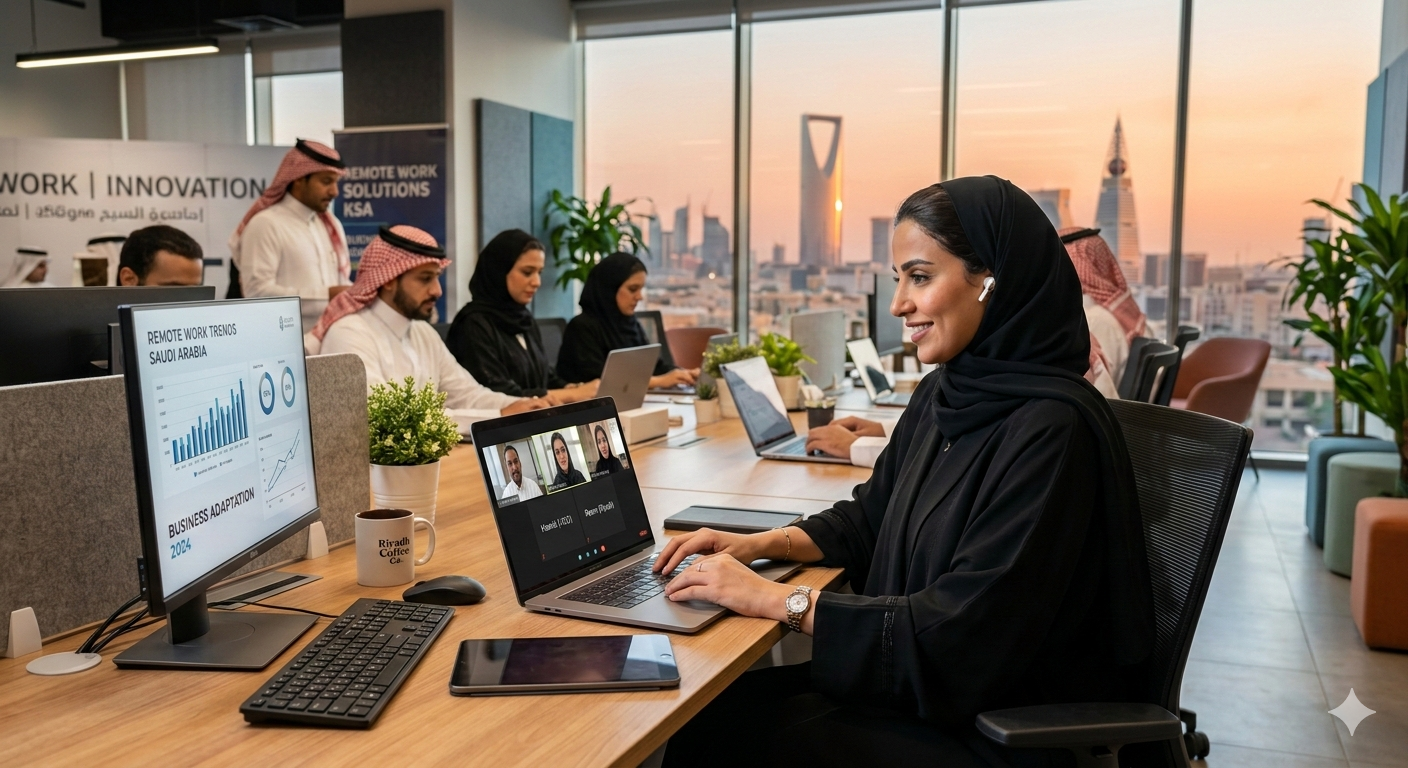
The Kingdom of Saudi Arabia (KSA) is experiencing one of the most transformative periods in its economic and business history. Fueled by Vision 2030 initiatives, a diversification strategy away from hydrocarbon dependency, and an unprecedented acceleration of digital adoption, Saudi businesses are adapting rapidly to evolving market dynamics. Among these shifts, the rise of remote work and hybrid business models has become a defining feature of the post-pandemic and technologically advanced Saudi workplace. This analysis explores how businesses in Saudi Arabia are adapting to new work paradigms, the trends driving remote work, and the long-term implications for productivity, talent acquisition, and organizational culture.
1. Saudi Arabia’s Economic Diversification and Business Resilience
The Saudi economy, long characterized by its reliance on oil revenues, has been steadily diversifying under the Vision 2030 framework. The government has actively promoted sectors such as finance, logistics, healthcare, tourism, entertainment, and technology. This diversification has created fertile ground for business innovation, enabling organizations to explore flexible work arrangements and digital-first operational strategies.
-
Sectoral Growth: According to recent reports by the Saudi Ministry of Economy, the non-oil sector contributed over 65% of GDP growth in 2025, indicating a shift toward knowledge-based and service-oriented industries.
-
Investment in Digital Infrastructure: Saudi Arabia’s significant investments in 5G networks, cloud computing, and cybersecurity solutions have provided businesses with the backbone necessary for remote work and digital collaboration.
As businesses expand beyond traditional models, adaptability has become a critical determinant of success. Companies that embrace flexible operations, digital collaboration, and workforce agility are better positioned to thrive amid global uncertainties.
2. Remote Work in the Saudi Context: Current Landscape
Remote work, once a niche or experimental concept in Saudi Arabia, has now become mainstream across multiple industries. This shift was accelerated by the COVID-19 pandemic, which forced organizations to rethink traditional office-centric models. The Kingdom’s progressive regulatory environment has further facilitated this transition:
-
Regulatory Support: The Saudi Ministry of Human Resources and Social Development (HRSD) introduced guidelines supporting flexible work arrangements, including remote contracts and hybrid employment policies.
-
Corporate Adoption: Large corporations, particularly in finance, IT, consulting, and e-commerce sectors, have implemented remote work strategies to maintain business continuity, improve employee satisfaction, and optimize operational costs.
-
SME Engagement: Small and medium enterprises (SMEs) have increasingly adopted remote work solutions to access talent beyond local labor markets and reduce infrastructure expenses.
Today, research by PwC and local think tanks indicates that over 35% of Saudi employees in the private sector engage in some form of remote work, with hybrid models dominating organizational policies.
3. Drivers of Remote Work Adoption
Several interlinked factors are driving the widespread adoption of remote work in Saudi Arabia:
a. Technology and Digital Infrastructure
Advanced communication platforms, cloud computing, and cybersecurity tools have enabled seamless collaboration across geographies. Organizations are leveraging platforms like Microsoft Teams, Zoom, Slack, and Saudi-based cloud providers to maintain productivity and ensure secure data handling.
b. Talent Acquisition and Retention
Remote work allows companies to access a broader talent pool, including highly skilled professionals who may not be located near corporate hubs such as Riyadh, Jeddah, or Dhahran. It also aligns with younger professionals’ expectations for work-life balance and flexible arrangements, which are increasingly influencing retention strategies.
c. Cost Optimization
Remote and hybrid models reduce the need for large physical offices, cutting expenses related to real estate, utilities, and on-site support staff. For SMEs and startups, this shift can be pivotal in achieving financial sustainability during early growth phases.
d. Resilience Against Disruption
Remote work models have enhanced organizational resilience, allowing businesses to maintain continuity during disruptions such as global crises, extreme weather, or regional instability. This capability aligns with Saudi Arabia’s broader economic objective of building a resilient, future-ready business ecosystem.
4. Challenges of Remote Work in Saudi Arabia
Despite the clear benefits, Saudi businesses face specific challenges in implementing remote work:
-
Cultural Adaptation: Traditional workplace culture in Saudi Arabia values in-person supervision and hierarchical reporting. Transitioning to a results-driven, remote work culture requires leadership mindset shifts and clear communication strategies.
-
Digital Literacy Gaps: Not all employees possess the same level of proficiency with digital tools, creating disparities in productivity and collaboration effectiveness.
-
Cybersecurity Concerns: Remote work increases exposure to cyber threats. Businesses must invest in secure VPNs, endpoint protection, and staff training to mitigate risks.
-
Work-Life Boundaries: Remote work can blur the line between personal and professional life, potentially leading to burnout. Saudi organizations are beginning to implement guidelines for working hours, mental health support, and digital wellness initiatives.
5. Emerging Remote Work Models in Saudi Businesses
Saudi organizations are exploring multiple hybrid and remote work models tailored to their operational needs:
-
Fully Remote Teams: Common in IT, software development, and creative sectors, where employees operate exclusively from home or co-working spaces.
-
Hybrid Work Models: Employees split their time between the office and remote locations, combining flexibility with structured collaboration.
-
Project-Based Remote Assignments: Professionals engage remotely for specific projects, especially in consulting, research, and international collaborations.
-
Flexible Scheduling: Companies allow employees to choose working hours while ensuring alignment with core business objectives.
These models are increasingly supported by enterprise resource planning (ERP) solutions, digital task management systems, and AI-driven productivity tools that allow managers to track outcomes rather than micromanage processes.
6. Sector-Specific Insights
Finance and Banking
Saudi banks and financial institutions have embraced remote advisory services, digital account management, and fintech platforms. Hybrid models allow senior staff to balance client engagement with strategic planning while reducing the need for large branch operations.
Technology and IT Services
Tech companies are at the forefront of remote work adoption. Many startups and established IT firms employ global teams, emphasizing asynchronous workflows and cloud-based development environments.
Healthcare and Education
Telemedicine and e-learning platforms have surged in Saudi Arabia, enabling healthcare professionals and educators to operate remotely. This trend is particularly pronounced in urban centers, where infrastructure and connectivity support digital engagement.
Government and Public Sector
While traditionally office-centric, some government agencies have piloted hybrid models to enhance service delivery and employee productivity, especially in sectors like digital governance and administrative services.
7. The Role of Leadership and Organizational Culture
Successful adaptation to remote work in Saudi Arabia requires proactive leadership and a shift in organizational culture:
-
Trust-Based Management: Leaders are transitioning from supervising presence to evaluating output and results.
-
Transparent Communication: Frequent updates, virtual town halls, and digital collaboration platforms maintain team cohesion.
-
Employee Wellbeing: Mental health, ergonomics, and digital wellness programs are becoming integral components of remote work policies.
-
Upskilling and Training: Continuous training in digital tools, cybersecurity, and collaboration software ensures employees remain efficient in remote settings.
Companies that embrace these cultural and operational shifts are seeing higher engagement, improved productivity, and stronger talent retention.
8. Economic and Strategic Implications
Remote work in Saudi Arabia carries broader economic and strategic implications:
-
Workforce Nationalization (Saudization): Remote work enables Saudi organizations to attract talent from across the Kingdom, supporting nationalization goals by providing flexible employment opportunities for Saudi nationals.
-
Regional Competitiveness: By adopting modern work practices, Saudi businesses improve their competitiveness in the Gulf Cooperation Council (GCC) and global markets.
-
Sustainability: Reduced commuting and smaller office footprints contribute to environmental sustainability, aligning with Vision 2030’s ecological objectives.
-
Innovation Acceleration: Remote work facilitates collaboration with international teams, exposing Saudi companies to global best practices, advanced technologies, and new business models.
9. Future Outlook
The trajectory of remote work in Saudi Arabia suggests sustained growth and evolution. Analysts predict that by 2030:
-
Hybrid work models will dominate corporate policy across most sectors.
-
Digital-first organizational structures will become the norm, with AI, automation, and cloud computing further enhancing remote productivity.
-
Talent acquisition will increasingly transcend geographic boundaries, with a focus on skills rather than location.
-
Cultural adaptation will continue to evolve, blending traditional Saudi workplace norms with global standards for flexibility and innovation.
As businesses continue to adapt, remote work will not merely be a contingency measure—it will become a strategic lever for growth, resilience, and global competitiveness.
Conclusion
Saudi Arabia is at a pivotal juncture where economic diversification, digital transformation, and evolving workforce expectations converge. Businesses that effectively integrate remote work, hybrid models, and flexible operational strategies are likely to emerge stronger, more resilient, and more competitive in both local and global markets.
The Kingdom’s journey toward a knowledge-based economy is closely intertwined with its ability to embrace innovation, agility, and flexible work paradigms. Remote work, once considered a temporary measure, has become an essential element of Saudi Arabia’s modern business landscape—a catalyst for organizational transformation and sustainable growth in the years to come.