
Introduction
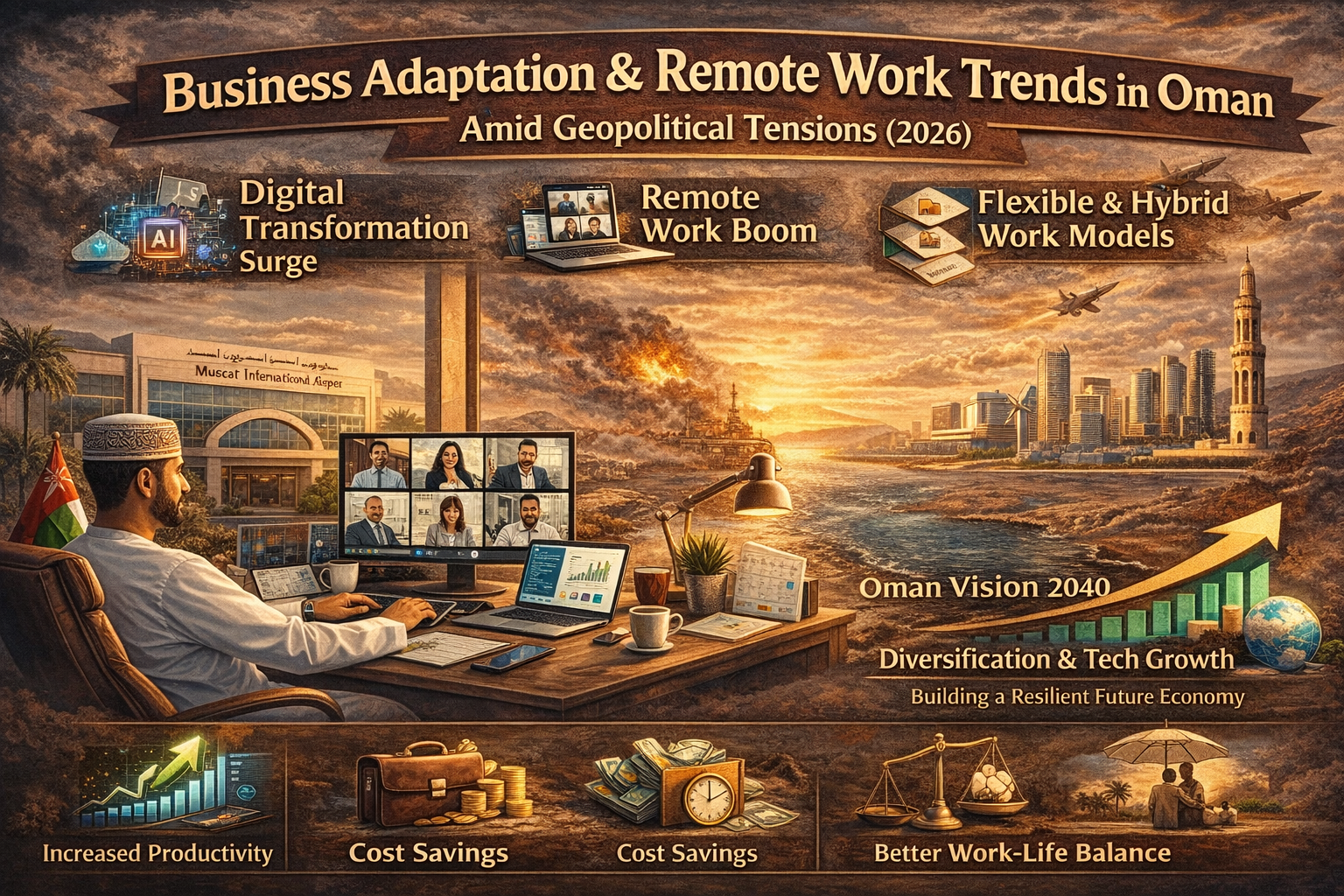
As tensions between Iran, Israel, and the USA escalate, the Gulf Cooperation Council (GCC) countries, including Oman, are experiencing significant disruptions in trade, travel, and business operations. This geopolitical instability, along with the economic uncertainty it brings, has forced companies in Oman and across the region to adapt quickly to the changing landscape. One of the most noticeable changes has been the acceleration of digital transformation, the adoption of remote work models, and the shift towards flexible work arrangements.
In this blog, we will explore how businesses in Oman and the GCC have been adapting to the new normal in response to external shocks. From embracing digital technologies to remote collaboration tools, businesses are finding ways to ensure continuity and resilience in uncertain times. By examining current trends and the future of work, we will see how Oman is positioning itself to emerge stronger in the post-conflict world.
1. The Need for Digital Transformation in Oman’s Business Landscape
The geopolitical instability caused by the escalating tensions between Iran, Israel, and the USA has highlighted the vulnerability of businesses that rely on traditional models. The need for digital transformation has never been more apparent. In Oman, businesses are quickly adopting digital solutions to ensure continuity and efficiency in operations.
The Role of Technology in Business Continuity
Oman’s economy, which has traditionally been heavily reliant on its oil and gas sector, has seen a significant push for digital innovation across various industries. The disruptions caused by regional instability have accelerated the adoption of technologies that enable businesses to function remotely and with greater operational agility. These technologies include:
-
Cloud Computing: Enabling businesses to store and access data remotely.
-
Artificial Intelligence (AI): Improving decision-making and automating routine tasks.
-
Business Intelligence (BI): Helping companies understand market trends and customer behavior.
-
Enterprise Resource Planning (ERP): Streamlining business processes and improving coordination.
The COVID-19 pandemic had already set the foundation for this digital shift, but the ongoing geopolitical crisis has further underscored the importance of remote work capabilities, cloud-based infrastructure, and virtual collaboration tools.
Oman’s Digital Transformation Efforts
As part of Oman Vision 2040, the country is working to reduce its dependence on oil revenues and move towards a knowledge-based economy. This vision is aligned with the regional trend of digital adoption and the emphasis on becoming less reliant on traditional, location-dependent business models. The Omani government has been proactive in encouraging businesses to embrace technology through tax incentives, smart city projects, and partnerships with tech firms.
Businesses in Oman, particularly in sectors such as banking, healthcare, education, and retail, have been quick to invest in digital tools that allow them to maintain operations remotely. These investments in cloud technologies, cybersecurity, and online customer service platforms have enabled companies to pivot to more flexible, technology-driven models of working.
2. Remote Work: A Paradigm Shift in Oman and GCC Businesses
The Shift Towards Remote Work
The Iran-Israel-USA tensions have further accelerated the trend of remote working in Oman and the broader GCC region. As companies face disruptions in traditional office models due to travel restrictions, supply chain challenges, and market instability, remote work has become not just a temporary solution but a long-term strategy.
Remote work allows companies to:
-
Maintain operations despite external shocks: Political instability and military conflicts often disrupt business continuity. By embracing remote work, businesses can continue to operate without being tied to physical office locations.
-
Reduce operational costs: Companies can save on costs associated with maintaining physical office spaces, utilities, and infrastructure.
-
Attract global talent: With digital tools in place, companies can access a global talent pool, no longer limited by geographical boundaries.
How Oman’s Businesses Are Adapting to Remote Work
Oman’s businesses, particularly those in the finance, telecommunications, and education sectors, have seen the immediate benefits of shifting to remote work. The adoption of tools such as Zoom, Microsoft Teams, Slack, and Google Workspace has enabled seamless communication, collaboration, and productivity.
The Omani government has also played a key role in promoting remote work by supporting policies that encourage digital literacy, online education, and virtual government services. Initiatives like e-government services have allowed the public sector to continue providing essential services without disruption.
3. Remote Collaboration Tools: Enabling Efficient Communication
In response to the regional instability and the shift to remote work, businesses in Oman and the GCC have increasingly relied on remote collaboration tools to maintain communication and productivity. These tools allow employees to work together in real-time, regardless of location, and enable businesses to streamline operations across multiple time zones.
Key Remote Collaboration Tools in Oman
Some of the most widely used remote collaboration tools in Oman include:
-
Microsoft Teams: Facilitates communication and collaboration across departments and teams, enabling file sharing, video conferencing, and project management in one platform.
-
Slack: A messaging app that connects teams for more efficient communication and workflow management.
-
Zoom: A video conferencing platform that allows businesses to conduct virtual meetings, webinars, and client calls.
-
Trello/Asana: Project management tools that help teams coordinate tasks, monitor progress, and meet deadlines.
By integrating these tools into their daily operations, businesses in Oman can stay connected and continue their work without being constrained by geographical limitations or the disruption caused by political conflict.
4. Flexible Work Arrangements: The New Normal
In addition to remote work, flexible work arrangements are becoming increasingly popular in Oman and the GCC as companies adapt to ongoing uncertainty. Hybrid work models—where employees split their time between working remotely and working in-office—have emerged as a solution to maintain work-life balance while also ensuring business continuity.
The Benefits of Flexible Work Arrangements
-
Increased Employee Satisfaction: Flexible work models allow employees to have greater control over their schedules, which can lead to higher job satisfaction and increased productivity.
-
Work-Life Balance: The flexibility to work from home or choose when to come into the office enables employees to balance personal commitments and work responsibilities more effectively.
-
Cost Savings for Businesses: By offering flexible working options, companies can reduce the need for large office spaces and lower costs associated with office maintenance.
GCC Countries Embrace Flexible Work Models
Countries in the GCC, including Oman, have long embraced flexible work arrangements, particularly in sectors like consulting, tech, and media. The recent geopolitical tensions have made this shift even more urgent. Oman’s Vision 2040 plan is also aligned with fostering flexible work arrangements, allowing businesses to create environments that are more adaptable, innovative, and resilient.
5. The Future of Work in Oman: A Long-Term Perspective
The Shift to a Digital Economy
Oman’s long-term economic diversification strategy is in line with the ongoing global digital transformation. With increased reliance on remote work, digital collaboration, and automation, Oman is well-positioned to develop a more resilient, knowledge-based economy. By investing in digital infrastructure, skills development, and technology adoption, Oman can not only weather the current geopolitical crisis but also prepare for the future of work.
Oman’s Vision 2040: A Future of Digital Economy
As part of Vision 2040, Oman aims to reduce its dependency on oil revenues and transition toward a more diversified economy. The rise of digital platforms, remote work tools, and flexible work arrangements plays a crucial role in achieving this goal. By integrating technology into key sectors such as finance, healthcare, education, and logistics, Oman can continue to grow its non-oil industries and global competitiveness.
The shift towards a digital economy also presents opportunities for local innovation, where startups and small businesses in Oman can thrive by offering digital services and tech solutions. Oman’s growing e-commerce sector, online education platforms, and digital healthcare solutions are just a few examples of this transformation.
Conclusion: Resilience Through Digital Transformation
The recent geopolitical tensions between Iran, Israel, and the USA have forced businesses in Oman and across the GCC to rethink their traditional operating models. With disruptions in travel, supply chains, and market uncertainty, businesses have turned to digital transformation, remote work, and flexible arrangements to ensure continuity.
The accelerated shift to digital tools, remote collaboration platforms, and flexible work arrangements has allowed businesses to adapt quickly to external shocks. As Oman continues to pursue its Vision 2040 and diversify its economy, these changes in business practices will play a crucial role in securing long-term growth and stability.
The future of work in Oman looks digital-first, flexible, and resilient, helping businesses not just survive but thrive in an increasingly volatile world. By embracing the new normal, Oman’s economy can continue its journey toward innovation, diversification, and global competitiveness.