
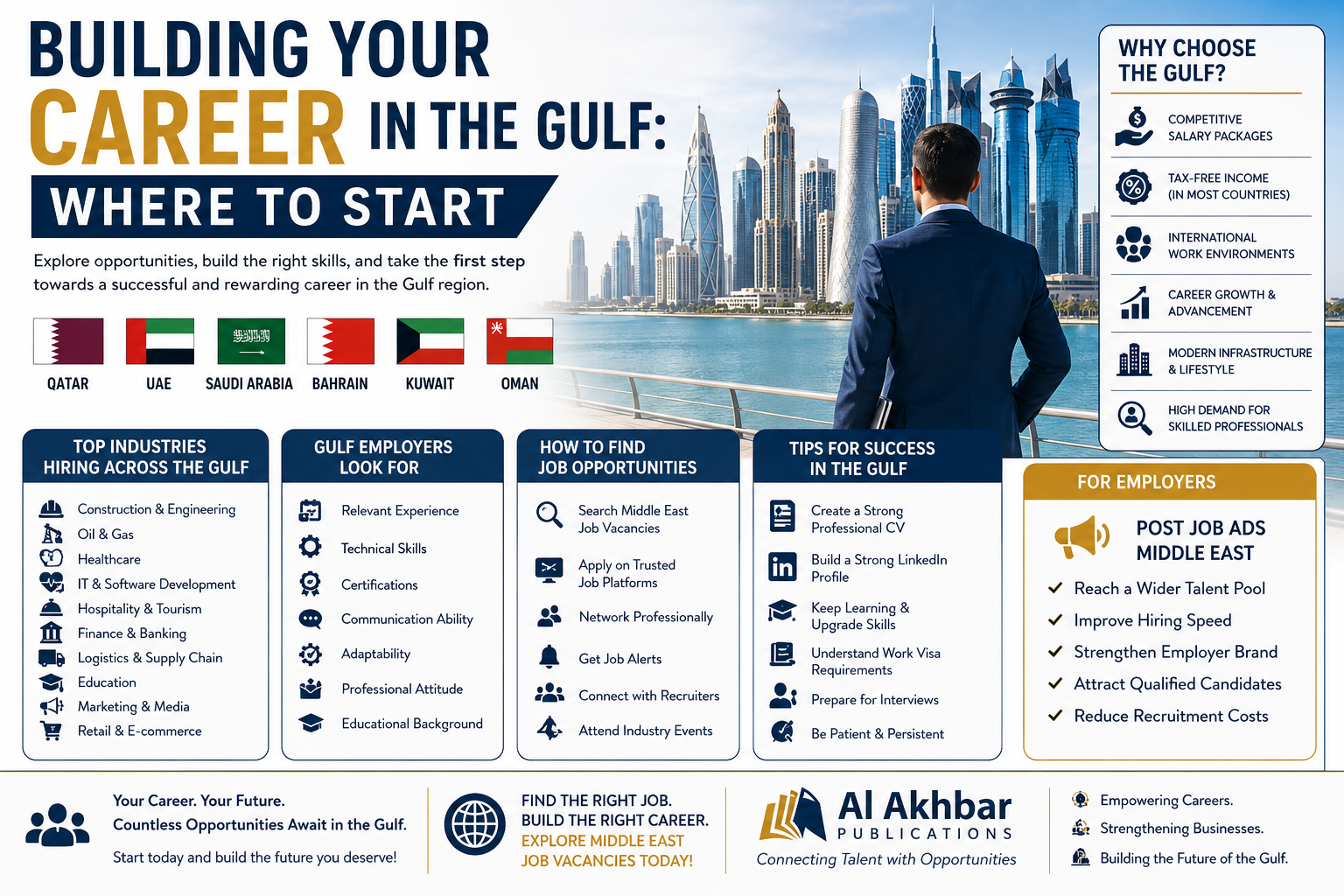
The Gulf region has become one of the world’s most attractive destinations for professionals seeking career growth, higher salaries, international exposure, and long-term opportunities. Countries like Qatar, the UAE, Saudi Arabia, Bahrain, Kuwait, and Oman continue expanding their industries, creating strong demand for skilled workers across multiple sectors.
From construction and healthcare to technology, hospitality, finance, and digital marketing, Gulf employers are constantly searching for qualified talent. As a result, many professionals now actively search for Middle East job vacancies to explore opportunities that align with their experience and career goals.
At the same time, businesses across the region increasingly use digital recruitment platforms to post job ads Middle East and connect with skilled candidates more efficiently. Platforms like Al Akhbar Publications help bridge the gap between employers and job seekers by supporting career visibility and recruitment opportunities across the Gulf region.
Why the Gulf Remains a Top Career Destination
The Gulf continues attracting professionals from around the world because of its strong economies, infrastructure growth, and tax-friendly income structures in several countries.
Professionals are drawn to the region because of:
- Competitive salary packages
- International work environments
- Career advancement opportunities
- Growing business sectors
- Modern infrastructure
- Professional networking opportunities
- High demand for skilled labor
Many industries in the Gulf are rapidly expanding due to government investments, tourism growth, digital transformation, and large-scale development projects.
Industries Hiring Across the Gulf
One of the biggest advantages of working in the Gulf is the wide range of industries actively recruiting professionals.
Popular sectors include:
- Construction and engineering
- Oil and gas
- Healthcare
- IT and software development
- Hospitality and tourism
- Education
- Finance and banking
- Logistics and supply chain
- Marketing and media
- Retail and e-commerce
Professionals searching for Middle East job vacancies often find opportunities available for both entry-level and experienced positions.
Understanding Gulf Job Market Expectations
The Gulf job market is highly competitive, especially for international applicants. Employers usually prioritize candidates who demonstrate professionalism, relevant experience, and strong communication skills.
Employers commonly evaluate:
- Educational background
- Work experience
- Industry certifications
- Communication ability
- Technical skills
- Adaptability
- Professional attitude
Candidates who customize their applications for Gulf employers often improve their chances of receiving interview opportunities.
Creating a Strong CV for Gulf Employers
A professional CV plays a major role in securing interviews in the Gulf region.
A strong Gulf-focused CV should include:
- Professional summary
- Relevant work experience
- Key achievements
- Technical skills
- Certifications
- Language proficiency
- Contact details
- Updated LinkedIn profile
Recruiters often prefer clean and well-structured resumes that clearly highlight achievements and responsibilities.
Applicants should avoid overly lengthy resumes and instead focus on relevant qualifications.
Importance of Online Job Platforms
Digital recruitment platforms have transformed the Gulf hiring process. Most employers now use online systems to advertise vacancies and manage applications.
Job seekers regularly use recruitment portals to:
- Search new openings
- Upload resumes
- Apply directly
- Track applications
- Connect with recruiters
- Receive job alerts
Businesses also rely on these platforms to post job ads Middle East and reach larger talent pools more efficiently.
Al Akhbar Publications helps support professional visibility by connecting businesses and job seekers through career-focused publishing opportunities.
Networking Can Open More Opportunities
Professional networking remains one of the most effective ways to find career opportunities in the Gulf.
Networking helps professionals:
- Discover hidden job opportunities
- Build industry relationships
- Learn about hiring trends
- Gain referrals
- Increase professional visibility
Useful networking channels include:
- Industry conferences
- Professional groups
- Recruitment events
- Business seminars
- Online communities
Strong professional relationships often help candidates access opportunities before they are publicly advertised.
Understanding Work Visas and Sponsorship
Most Gulf countries require employer sponsorship for foreign workers. Understanding visa requirements before applying can help candidates prepare more effectively.
Important considerations include:
- Employment visa procedures
- Work permit requirements
- Contract terms
- Medical examinations
- Residency regulations
Each Gulf country has different labor laws and visa systems, so applicants should always review official employment guidelines carefully.
Skills Currently in High Demand
Certain skills remain especially valuable in Gulf job markets due to ongoing digital and economic transformation.
High-demand skills include:
- Data analysis
- Digital marketing
- Software development
- Cybersecurity
- AI and automation
- Project management
- Healthcare specialization
- Financial analysis
- Engineering expertise
- Sales and customer service
Professionals who continuously improve their skills often remain more competitive in Gulf recruitment markets.
Importance of Professional Branding
Modern recruitment is no longer based only on resumes. Employers also evaluate online presence and professional branding.
Professional branding includes:
- LinkedIn optimization
- Portfolio development
- Industry visibility
- Professional communication
- Online credibility
Candidates with strong personal branding often attract more recruiter attention.
This is why many professionals now actively engage in online networking and career-focused content platforms.
How Employers Reach Talent in the Gulf
Companies recruiting in the Gulf increasingly rely on digital publishing and online advertising strategies to attract qualified candidates.
Businesses commonly:
- Post online job listings
- Promote vacancies through media platforms
- Use recruitment agencies
- Advertise on professional networks
- Target international talent pools
The demand to post job ads Middle East continues growing as companies compete for skilled professionals across expanding industries.
Challenges Job Seekers May Face
Although the Gulf offers many opportunities, candidates may also encounter challenges during the job search process.
Common difficulties include:
- High competition
- Delayed hiring processes
- Skill mismatch
- Visa processing timelines
- Salary negotiation concerns
Job seekers should remain patient, organized, and proactive throughout their applications.
Consistent applications and networking efforts often improve long-term results.
Tips for Fresh Graduates Entering the Gulf Market
Fresh graduates can also build successful careers in the Gulf by focusing on skill development and entry-level opportunities.
Helpful strategies include:
- Building internships experience
- Learning digital skills
- Improving communication ability
- Developing professional portfolios
- Earning certifications
- Networking consistently
Graduates should also remain open to trainee programs and junior-level positions that provide long-term growth opportunities.
Why Digital Visibility Matters for Employers
Employers also benefit significantly from online recruitment visibility.
Effective recruitment advertising helps businesses:
- Reach wider talent pools
- Improve hiring speed
- Strengthen employer branding
- Attract qualified candidates
- Reduce recruitment costs
Platforms like Al Akhbar Publications help businesses improve recruitment visibility while supporting career growth opportunities across Gulf markets.
Preparing for Interviews in the Gulf
Interview preparation remains essential for successful hiring outcomes.
Candidates should prepare by:
- Researching the company
- Understanding industry trends
- Practicing communication skills
- Preparing salary expectations
- Reviewing job requirements
- Demonstrating professionalism
Employers in the Gulf often value confidence, clarity, adaptability, and strong work ethics during interviews.
Future Career Growth in the Gulf
The Gulf region continues investing heavily in:
- Smart cities
- Tourism
- Technology
- Infrastructure
- Renewable energy
- Healthcare
- Financial services
These developments are expected to create even more employment opportunities in the coming years.
Professionals who adapt to changing market demands and continue learning new skills are likely to benefit most from future growth.
Conclusion
The Gulf remains one of the most promising regions for professionals seeking career advancement, international experience, and long-term opportunities. With growing industries and increasing demand for skilled talent, thousands of professionals continue searching for Middle East job vacancies across multiple sectors.
Success in the Gulf job market requires strong preparation, professional branding, continuous skill development, and strategic networking. At the same time, businesses looking to post job ads Middle East are increasingly relying on digital platforms to connect with qualified candidates efficiently.
Through career-focused publishing and recruitment visibility, Al Akhbar Publications continues supporting both employers and job seekers in navigating the evolving Gulf employment landscape.